
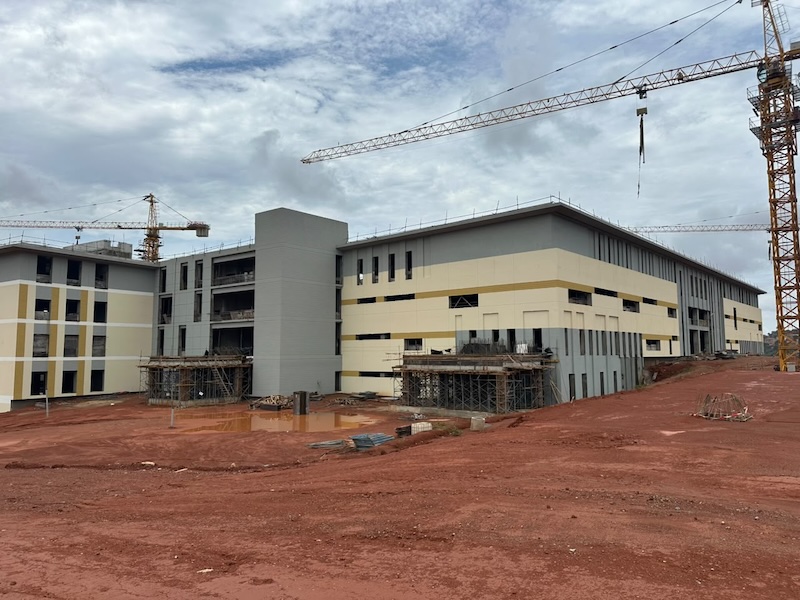
FINASI Lubowa Hospital: Uganda MPs Denied Site Access
Summary
- FINASI/ISHU, the contractor for the International Specialized Hospital of Uganda in Lubowa, denied access to opposition Members of Parliament.
- The contractor stated that the decision was based on strict adherence to safety protocols at the construction site.
- FINASI/ISHU explicitly denied that their action was intended to obstruct parliamentary oversight.
- The incident highlights potential legal and reputational risks for contractors managing public projects when restricting access to official oversight bodies.
- The project site had been officially handed over to the contractor prior to the incident.
What Happened at Lubowa Hospital
Denying access to elected officials, particularly those tasked with parliamentary oversight, can carry substantial legal and reputational risks.
A recent incident saw opposition Members of Parliament (MPs) turned away from the construction site of the International Specialized Hospital of Uganda (ISHU) in Lubowa. The contractor responsible for the project, FINASI/ISHU, confirmed that these parliamentary representatives were indeed denied entry to the ongoing development. This event quickly drew attention, raising questions about transparency and access to public works projects.
The denial of access to the site, where the International Specialized Hospital of Uganda is being built, occurred during what was presumably an attempt by the MPs to conduct an oversight visit. Such visits are a standard part of parliamentary duties, aimed at ensuring accountability and proper execution of projects funded by public resources. The contractor's decision to prevent the MPs from entering the premises became a focal point of discussion regarding the balance between operational security and legislative scrutiny.
FINASI's Rationale and Rebuttal
FINASI/ISHU, the contractor overseeing the International Specialized Hospital of Uganda project, subsequently issued a statement addressing the incident. The company asserted that its decision to deny access to the opposition MPs was strictly predicated on adherence to established safety protocols. This explanation positioned the action as a necessary measure to protect individuals on an high-risk construction site, emphasizing the inherent dangers present in such environments.
Crucially, FINASI/ISHU explicitly refuted any suggestion that their actions were intended to impede or stifle parliamentary oversight. The contractor maintained that the enforcement of FINASI safety protocols Uganda was the sole driver behind the denial of access, rather than a deliberate attempt to obstruct the legislative body's investigative functions. This clarification aimed to frame the incident as a matter of operational procedure rather than a challenge to governmental accountability.
Legal and Oversight Implications
The incident involving FINASI Lubowa hospital MPs access denied underscores significant considerations for contractors engaged in large-scale public infrastructure projects. Denying access to elected officials, particularly those tasked with parliamentary oversight, can carry substantial legal and reputational risks. While safety is paramount on any construction site, the manner in which access is managed for official visitors, such as Members of Parliament, requires careful navigation to avoid perceptions of secrecy or obstruction.
Companies like FINASI/ISHU, operating on projects of national importance such as the International Specialized Hospital of Uganda, must ensure their site access policies are robust and clearly communicated, especially when interacting with governmental bodies. The tension between maintaining stringent FINASI safety protocols Uganda and facilitating legitimate Lubowa hospital construction oversight highlights a critical area where legal counsel is often required to balance operational demands with transparency obligations. This incident serves as a reminder of the delicate interface between private contractors and public accountability mechanisms.
Project Background and Context
The International Specialized Hospital of Uganda (ISHU) in Lubowa represents a significant national undertaking, with FINASI/ISHU serving as the primary contractor. The project site itself had been officially handed over, indicating a formal commencement of construction activities and the transfer of responsibility for the development to the contractor. This official handover signifies a stage where the project is fully operational under the contractor's management.
The ongoing construction of the International Specialized Hospital of Uganda is a high-profile endeavor, naturally attracting scrutiny from various stakeholders, including parliamentary representatives. The contractor's role extends beyond construction to managing public relations and interactions with oversight bodies, ensuring that while progress is made, accountability standards are also met. The incident regarding FINASI Lubowa hospital MPs access denied thus places a spotlight on the broader operational and governance challenges inherent in such major public works.
Practical Implications
This incident highlights potential legal and reputational risks for contractors operating on public projects when denying access to parliamentary oversight bodies, requiring legal counsel to review site access policies and advise on managing interactions with official visitors while upholding safety standards.
Source
How does this affect you?
Get an AI analysis of this article grounded in your jurisdictions, practice areas, and any policy documents you've uploaded to Wansom.
Finish Reading the Full Story and the Expert Analysis.
Get the latest legal & regulatory intelligence in Uganda
Wansom is AI and can make mistakes.