
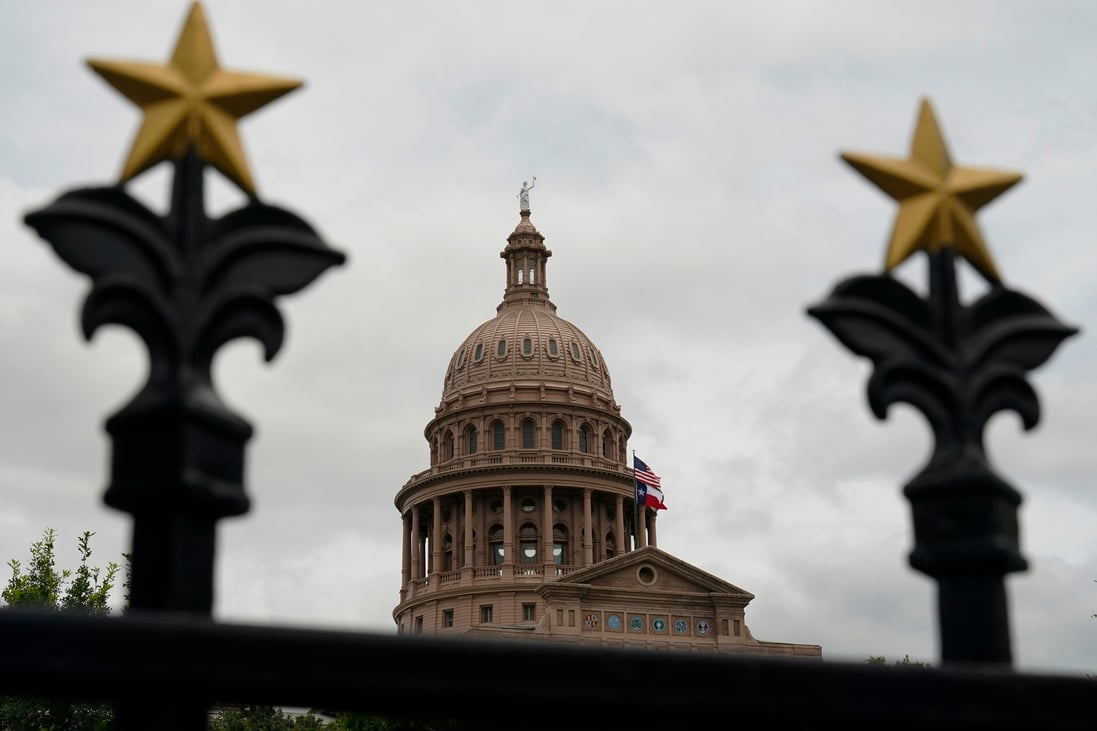
Fifth Circuit Hears Texas SB 17 Challenge Over Foreign Property Rights
Summary
- Two Chinese nationals are challenging Texas Senate Bill 17, which restricts property purchases by individuals linked to certain foreign countries.
- Plaintiffs Min Huang and Qiong Dai, who own rental properties in Houston, argue the law unconstitutionally blocks their plans for further real estate acquisitions.
- A lower court dismissed their claims in December 2025, ruling that foreign citizens living abroad generally lack U.S. constitutional rights.
- At the Fifth Circuit, attorneys debated the plaintiffs' standing and constitutional rights, citing planned purchases and the location of property and enforcement.
- Texas argues the plaintiffs' plans are too speculative and they lack a sufficient connection to the U.S. to assert constitutional claims, also citing sovereign immunity.
The Challenge to Texas SB 17
The appellate court's decision is poised to clarify the scope of constitutional protections available to foreign nationals, particularly those residing outside the United States, when challenging state-level restrictions on property ownership.
A federal appellate court recently heard arguments in a case challenging Texas Senate Bill 17 (SB 17), a state law that restricts real estate purchases by individuals linked to certain foreign nations. Two Chinese nationals, Min Huang, who resides in Shanghai, and Qiong Dai, living in New Zealand, are seeking to overturn the legislation. Both individuals currently own rental properties in the Houston area and have expressed intentions to acquire additional real estate within Texas.
SB 17, which became effective in September 2025, broadly prohibits individuals and entities connected to China, Russia, Iran, and North Korea from obtaining interests in Texas real estate, with only limited exceptions. These countries are specifically identified in U.S. intelligence assessments. The plaintiffs contend that this law unconstitutionally prevents them from making further property investments.
In December 2025, a lower court dismissed their claims, with former U.S. District Judge Alan D. Albright, a Donald Trump appointee, who retired from the bench on August 31, 2026, and is now in private practice, concluding that foreign citizens residing outside the United States generally do not possess constitutional rights. Judge Albright subsequently stayed the remainder of the case, following the Fifth Circuit's decision in December 2025 in a related challenge, `Wang v. Paxton`, which affirmed the lower court's dismissal for lack of standing.
Contesting Constitutional Rights and Standing
During the appellate hearing, attorney Justin Sadowsky, representing the plaintiffs, asserted that the Constitution safeguards their planned property acquisitions. He argued that constitutional rights apply to actions occurring within the United States, to property located within the United States, and when U.S. courts take action against a third party. Sadowsky emphasized that his clients would travel to Texas on visitor visas to finalize purchases, the properties are situated in Texas, and any enforcement would occur through Texas courts.
Chief U.S. Circuit Judge Jennifer Walker Elrod, a George W. Bush appointee, questioned the court's ability to assist the Chinese citizens following the lower court's dismissal and whether individuals living abroad possess a constitutional right to purchase Texas property without physically entering the country. Sadowsky maintained the case's viability due to a third plaintiff whose claims had not been dismissed, though he acknowledged the potential for mootness if those claims were also dismissed. He further contended that the law targets the property itself, granting buyers a protected interest upon purchase, and that the Constitution protects transactions involving U.S. property even when buyers remain overseas. When U.S. Circuit Judge Carl E. Stewart, a Bill Clinton appointee, inquired about the speculative nature of the plaintiffs' purchase plans, Sadowsky responded that their development interest mirrors that of any other individual, and that those who have purchased or plan to purchase properties will indeed execute those plans. He also pointed to newly proposed attorney general regulations, including an enforcement task force and reporting requirements, as evidence of the state's intent to enforce the law.
Conversely, Assistant Solicitor General Benjamin Mendelson, representing Texas, argued that the plaintiffs lack standing because they "alleged no specific plans to purchase any real estate in Texas." Citing precedent, Mendelson stated that the standard for standing requires an event to be "imminent," not merely "probable," and indeed "certainly impending." Mendelson further asserted that sovereign immunity bars the lawsuit, that foreign citizens abroad lack a cause of action under the equitable doctrine of `Ex parte Young`, and that the plaintiffs do not have a "substantial connection" to the United States sufficient to claim constitutional rights. He concluded that "A proposal doesn’t do anything," noting that no one has been arrested or prosecuted under the statute.
Broader Implications for Property Rights
The Fifth Circuit's forthcoming decision holds significant implications for the rights of foreign nationals to own property within U.S. states. The appellate court's decision is poised to clarify the scope of constitutional protections available to foreign nationals, particularly those residing outside the United States, when challenging state-level restrictions on property ownership. This ruling will also establish a clearer standard for what constitutes sufficient standing for plaintiffs to challenge such laws, especially concerning future economic activities.
This case, alongside the `Wang v. Paxton` challenge, underscores the ongoing legal scrutiny of state legislative efforts to regulate foreign investment in real estate based on nationality or ties to specific foreign governments. The outcome will set a crucial precedent for how states can enact and enforce such restrictions, potentially influencing similar legislative initiatives across the country and shaping legal advice for foreign clients considering real estate investments in Texas.
Practical Implications
Lawyers advising foreign clients on real estate investments in Texas must closely monitor the Fifth Circuit's decision on SB 17, as it will clarify the constitutional rights of non-resident foreign nationals to own property and the enforceability of state-level restrictions. This case also highlights critical standing issues for plaintiffs challenging such laws, which could impact future litigation strategies.
Source
How does this affect you?
Get an AI analysis of this article grounded in your jurisdictions, practice areas, and any policy documents you've uploaded to Wansom.
Wansom is AI and can make mistakes.