
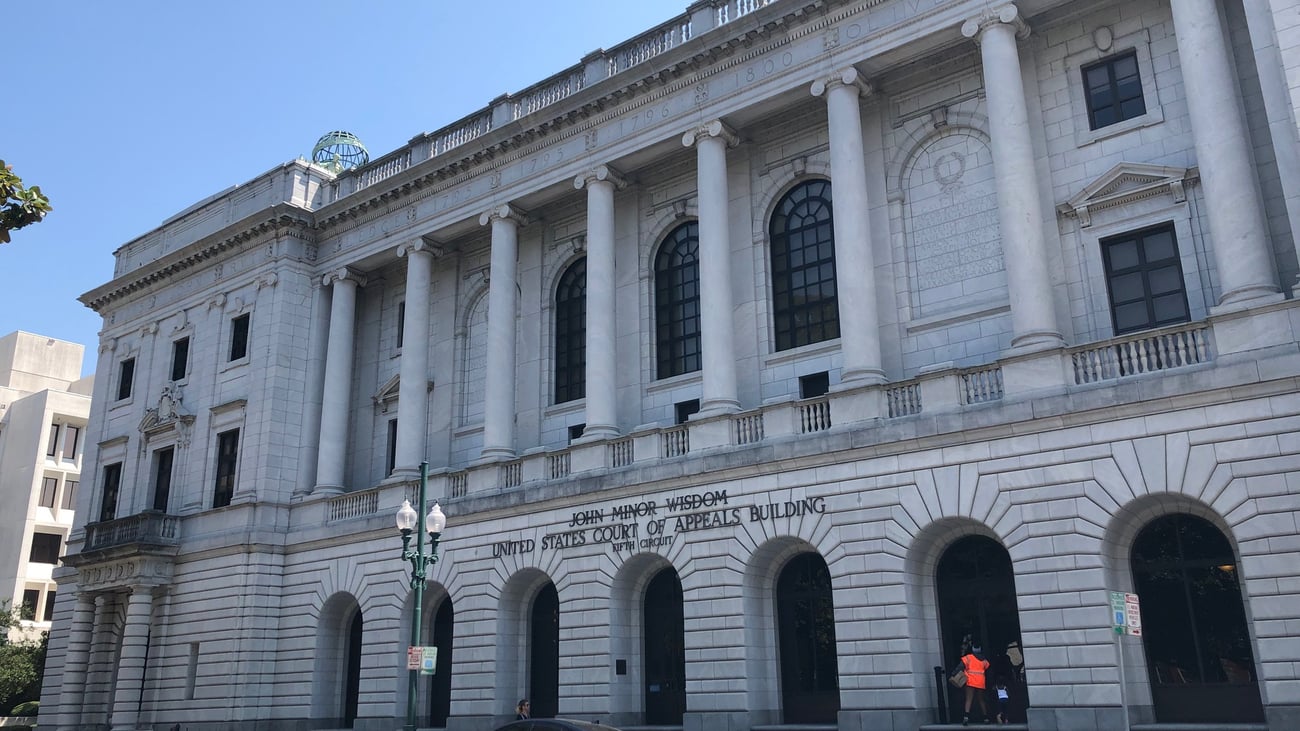
Fifth Circuit: Delfin LNG Environmental Standing Denied
Summary
- The Fifth Circuit Court of Appeals dismissed an environmental challenge to the Delfin LNG project, citing a lack of Article III standing.
- Environmental groups failed to demonstrate that any of their members would suffer a concrete, particularized injury from the offshore LNG terminal.
- The court emphasized that "concern without injury is not standing," thereby declining to review the merits of the Maritime Administration's license.
- This ruling allows the nation's first offshore LNG export terminal, located 40 miles off Cameron Parish, Louisiana, to proceed with its development.
- The decision highlights the stringent requirements for environmental litigants to prove direct harm in order to challenge agency approvals for large infrastructure projects.
Fifth Circuit Upholds Delfin LNG License
Concern without injury is not standing.
The Fifth Circuit Court of Appeals recently affirmed the Maritime Administration's (MARAD) license for the Delfin LNG project, the nation's inaugural offshore liquefied natural gas export terminal. A panel of judges declined to address the substantive legal arguments raised by environmental organizations, instead dismissing their challenge due to a fundamental lack of Article III standing. This decision allows the project, situated approximately forty miles off Cameron Parish, Louisiana, to proceed.
Environmental groups, including the Center for Biological Diversity, the Sierra Club, and the Habitat Recovery Project, had petitioned the court to vacate MARAD's March 2025 license. Their primary contention was that MARAD had failed to conduct adequate additional review following significant changes to the project's financing structure. A 2024 letter from MARAD itself had previously indicated that these modifications were substantial enough to warrant further scrutiny. However, after an executive order directed the agency to swiftly assess whether the changes presented a "seriously different picture" of environmental harm, MARAD concluded that the modifications actually reduced potential impacts before issuing the license.
Strict Requirements for Environmental Standing
U.S. Circuit Judge Don Willett, writing for the panel, underscored that the court's jurisdiction is predicated on petitioners demonstrating a concrete and particularized injury directly traceable to the challenged decision. "Concern without injury is not standing," Judge Willett emphasized, clarifying that courts are not established to resolve every public controversy but rather to address actual harms. The environmental groups submitted five declarations from members, yet the court found none sufficiently compelling to establish the requisite standing for an environmental challenge.
For instance, commercial and recreational fisherman Eddie LeJuine, who fishes along Calcasieu Lake and up to 30 miles offshore, stated that habitat destruction and industrialization had made fishing significantly harder. However, the court found he failed to specifically link these difficulties to Delfin's facilities or differentiate the project's impact from broader industrial development in the vast Gulf of Mexico, which spans approximately 600,000 square miles. Similarly, a Sierra Club field manager expressed concerns about Rice's whales, greenhouse gas emissions, and recreational activities but did not identify any personal stake or specific activity that the offshore LNG terminal would impair. Declarations from a scientist and a Center for Biological Diversity attorney described only general research interests, while a resident living near the onshore facilities predicted worsening air quality, traffic, and wildlife conditions without tying these risks directly to Delfin's operations. The court ultimately concluded that "a speculative, undifferentiated risk of future harm is not enough" to satisfy Article III standing requirements, thus precluding review of whether MARAD violated the Deepwater Port Act, the National Environmental Policy Act (NEPA), or the Administrative Procedure Act.
Implications for Offshore Energy Development
This ruling reinforces the stringent Article III standing requirements for environmental litigants, emphasizing that a concrete, particularized, and project-specific injury must be demonstrated to challenge agency decisions. The Fifth Circuit's decision means the MARAD Delfin LNG license validity remains unchallenged on its merits, allowing the project to advance. The Department of Transportation announced in June that construction of Delfin LNG’s first floating unit is already moving forward, bolstered by a $5 billion investment decision.
Exports from the facility are anticipated to commence in 2030, with the terminal projected to export approximately 1.8 billion cubic feet of natural gas per day at full capacity. MARAD Administrator Stephen Carmel noted that securing the license for this pioneering offshore LNG terminal took nearly a decade, reflecting the complexities inherent in such novel undertakings. The court's decision, authored by Judge Willett, an appointee of President Donald Trump, underscores the procedural hurdles faced by groups seeking to block large-scale infrastructure projects, particularly in the context of offshore LNG terminal legal challenges.
Practical Implications
This ruling reinforces the stringent Article III standing requirements for environmental litigants, emphasizing that a concrete, particularized, and project-specific injury must be demonstrated to challenge agency decisions. Lawyers advising environmental groups or clients on large infrastructure projects must meticulously establish direct harm to avoid procedural dismissal, regardless of the substantive environmental concerns.
Source
How does this affect you?
Get an AI analysis of this article grounded in your jurisdictions, practice areas, and any policy documents you've uploaded to Wansom.
Finish Reading the Full Expert Analysis.
Wansom is AI and can make mistakes.