
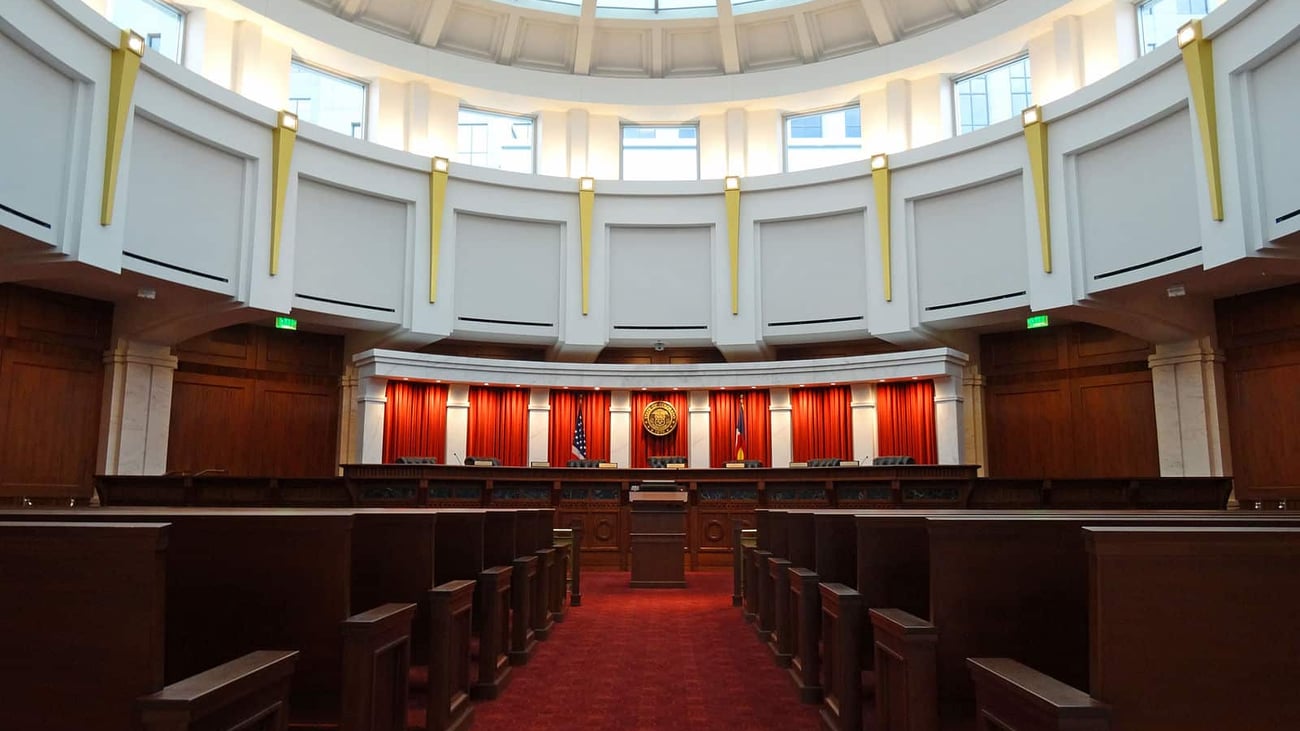
Colorado Supreme Court: Whistleblower's Suit Against State Judicial System Dismissed
Summary
- A federal judge dismissed a lawsuit brought by Christopher Gregory against the state judicial system, citing sovereign and qualified immunity.
- The suit alleged that Supreme Court justices covered up a $2.7 million bribery scheme and fired Gregory in retaliation.
- The ruling highlights the limits of judicial accountability in Colorado, where even allegations of corruption may not be enough to overcome claims of immunity.
- Gregory plans to continue fighting to bring the matter of corruption to light.
Whistleblower's Suit Against State Judicial System Dismissed
Where executive officials serve in quasi-judicial roles, they are entitled to the absolute immunity afforded to judges, prosecutors and jurors.
A federal judge has dismissed a lawsuit brought by Christopher Gregory, a former executive director of Colorado's Commission on Judicial Discipline, against the state judicial system. The suit alleged that Supreme Court justices covered up a $2.7 million bribery scheme and fired Gregory in retaliation. However, Senior U.S. Judge Kathryn Vratil ruled that the defendants are entitled to sovereign and qualified immunity, citing their status as arms of the State of Colorado.
The lawsuit was one of several filed by Gregory, who has been critical of what he sees as judicial misconduct and corruption within the state's court system. He has accused officials of attempting to cover up a bribery scheme involving former chief of staff Mindy Masias, who was facing termination over financial problems in 2019.
Gregory claims that state auditors found evidence of officials collecting speaking and consulting fees while on state time, as well as attempts to secure a lucrative contract for Masias after her departure. However, the contract was later cancelled following media reporting.
Relevant Legal Context
The dismissal highlights the limits of judicial accountability in Colorado, where even allegations of bribery and corruption may not be enough to overcome claims of sovereign and qualified immunity. The ruling is significant because it suggests that state officials can shield themselves from scrutiny by invoking their status as quasi-judicial roles.
In her opinion, Judge Vratil wrote that executive officials serving in these roles are entitled to absolute immunity, similar to judges, prosecutors, and jurors. This means that even if Gregory's allegations of misconduct are true, the defendants may not be held accountable for their actions.
The decision also raises questions about the role of judicial staff in non-judicial roles and whether they should be entitled to immunity.
Why It Matters
The dismissal of Gregory's lawsuit has significant implications for anyone seeking to hold state officials accountable for misconduct. It highlights the need for greater transparency and accountability within the judicial system, as well as the importance of protecting whistleblowers who come forward with allegations of corruption.
As one legal expert noted, 'This decision sends a chilling message to those who would seek to expose wrongdoing within the government.' The ruling also underscores the need for reform in Colorado's judicial system, where officials may feel emboldened to engage in corrupt practices without fear of consequences.
Practical Implications
This dismissal highlights the limits of judicial accountability, as even allegations of bribery and corruption may not be enough to overcome claims of sovereign and qualified immunity. Lawyers should watch for similar attempts to shield state officials from scrutiny.
Source
How does this affect you?
Get an AI analysis of this article grounded in your jurisdictions, practice areas, and any policy documents you've uploaded to Wansom.
Wansom is AI and can make mistakes.