
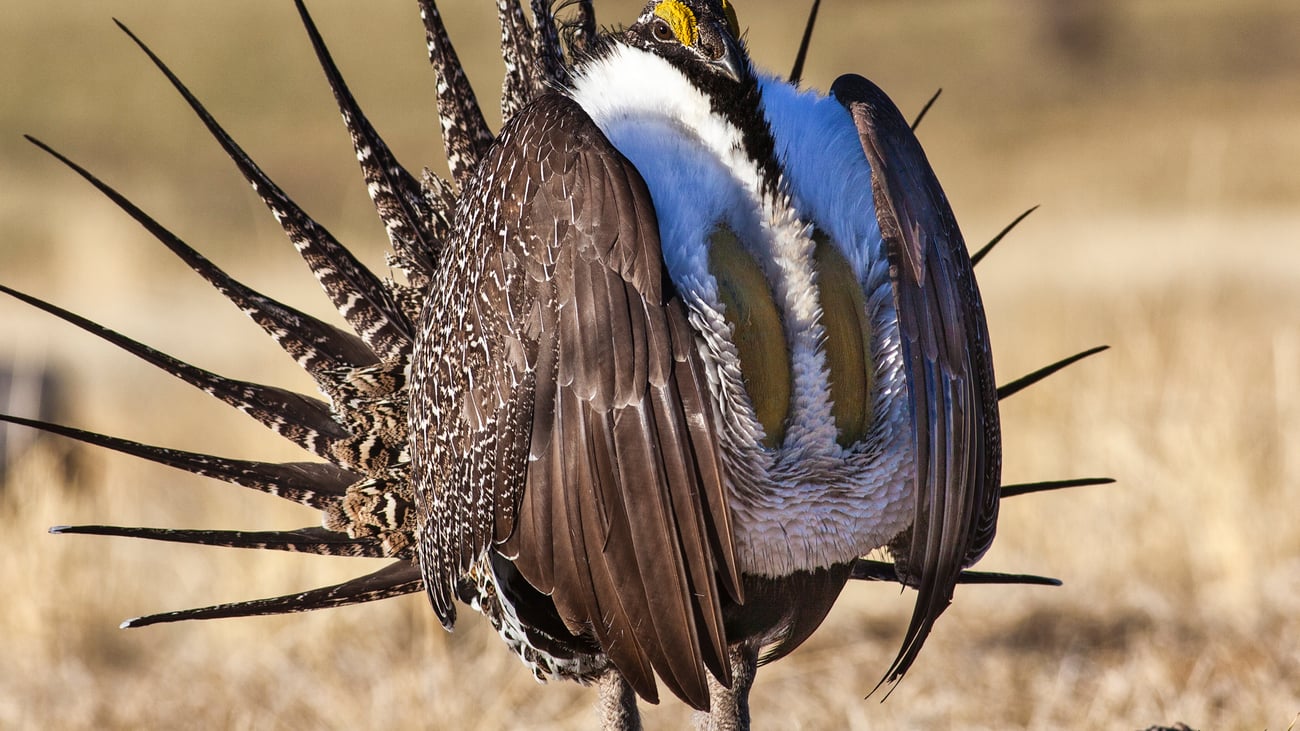
Judge Simon: Oregon BLM Sage Grouse Grazing Injunction Blocks 2025 Plan
Summary
- A federal judge has ordered the U.S. Bureau of Land Management (BLM) to prevent livestock grazing in 22,000 acres of Oregon's sage grouse research areas.
- The ruling found the BLM's 2025 land use plan violated the Federal Land Policy and Management Act, National Environmental Policy Act, and Administrative Procedure Act.
- Violations included failing to explain changes to key definitions, not allowing meaningful public comment, and arbitrarily altering minimum research acreage.
- U.S. District Judge Michael Simon mandated the BLM reopen the public comment period and provide better justifications for its plan changes.
- The court chose not to vacate the 2025 plan entirely, citing potential environmental disruption and unnecessary fencing if the 2015 plan were reinstated.
Federal Judge Blocks Grazing in Oregon Sage Grouse Habitats
This ruling underscores the necessity for federal agencies to offer clear, non-arbitrary justifications for alterations to land use plans, especially when environmental protections are reduced.
A federal judge has mandated that the U.S. Bureau of Land Management (BLM) must prevent livestock grazing across significant sage grouse research areas in Oregon. The ruling, issued by U.S. District Judge Michael Simon, stems from a legal challenge brought by the Oregon Natural Desert Association (ONDA) against the BLM's 2025 land use plan, which the court found to have unlawfully diminished protections for these critical habitats.
The dispute centers on 15 designated key research natural areas, originally established under a 2015 sage grouse conservation plan to serve as control sites. These areas were intended to remain free of livestock grazing, allowing researchers to study the effects of grazing on sagebrush ecosystems. The 2015 plan protected approximately 22,000 acres from grazing, but the BLM's subsequent 2025 plan drastically reduced this protected acreage to about 3,700 acres. Judge Simon, an appointee of Barack Obama, issued an injunction in April 2025, effectively barring grazing on the original 22,000 acres.
This is not ONDA's first legal encounter with the BLM over these protections. The conservation group initially sued the agency in 2019, alleging delays in implementing the 2015 conservation plan. That lawsuit resulted in a 2022 court order compelling the BLM to comply. ONDA initiated the current litigation after the BLM released its 2025 plan, which significantly rolled back the previously established safeguards.
Multiple Federal Law Violations Identified
Judge Simon's decision highlighted several critical failures by the BLM to adhere to federal environmental and administrative laws. The court found that the agency violated a key mandate of the Federal Land Policy and Management Act (FLPMA) by inadequately addressing the impacts of grazing on the wilderness characteristics of wilderness study areas (WSAs) located within the key research natural areas. The BLM is legally prohibited from managing WSAs in a manner that compromises their suitability for preservation, yet its impairment analysis was deemed by the judge to be overly general and insufficient.
Furthermore, the BLM was found to be in violation of the National Environmental Policy Act (NEPA). The agency failed to provide a substantive discussion regarding changes to crucial definitions within its 2025 plan, specifically for terms such as "relatively unaltered," "key research natural areas," and "baseline reference area." Compounding this NEPA violation, the BLM also neglected to offer a meaningful opportunity for public comment on these significant definitional alterations.
Finally, the court determined that the BLM's actions constituted a violation of the Administrative Procedure Act (APA). The agency altered its stance on the minimum acreage necessary for effective sage grouse research without providing a clear, reasoned explanation for this change. Judge Simon characterized this lack of justification as an "unexplained inconsistency," concluding that it rendered the agency's decision arbitrary and capricious. While the BLM offered valid reasons for some reductions in ungrazed acreage from the 2015 plan, it failed to do so for every modification.
Court Orders Explanation, Not Vacatur
Despite finding multiple violations of federal environmental law, Judge Simon opted not to vacate the entire 2025 land use plan. Instead, the court ordered the BLM to reopen the public comment period and to provide a more comprehensive explanation for the changes it introduced. This specific remedy was chosen to avoid potential negative consequences that a full vacatur might entail.
According to the judge, vacating the 2025 plan would have forced the BLM to revert to the 2015 plan, which included provisions for fencing that he deemed unnecessary. Such a reversion, Simon noted, could lead to further "environmental disruption" within the key research natural areas and potentially impair the wilderness characteristics of the wilderness study areas. He underscored that such an outcome would be akin to "Sisyphean construction," suggesting that an immediate return to the older plan would create new, avoidable problems rather than solving the core issues. The Oregon Natural Desert Association had sought a permanent injunction to implement the 2015 closures.
Practical Implications
This ruling highlights that federal agencies must provide clear, non-arbitrary justifications for changes to land use plans, particularly when reducing environmental protections, and strictly adhere to public comment requirements under NEPA and APA. Lawyers advising clients on federal land use, environmental impact assessments, or agency rulemaking should scrutinize the agency's rationale for policy shifts and ensure proper procedural compliance to identify potential grounds for challenge.
Source
How does this affect you?
Get an AI analysis of this article grounded in your jurisdictions, practice areas, and any policy documents you've uploaded to Wansom.
Finish Reading the Full Story and the Expert Analysis.
Wansom is AI and can make mistakes.