
USDA: Federal Workers Sue Over Forced Relocations, Attrition
Summary
- Federal workers, including the American Federation of Government Employees, have sued the USDA over a reorganization plan involving forced relocations and office closures.
- The lawsuit alleges the USDA's plan violates the Administrative Procedure Act by being arbitrary, capricious, and intended to cause significant employee attrition.
- Plaintiffs claim the USDA failed to assess how attrition would impact its mandated responsibilities, including critical programs like SNAP and WIC.
- Despite receiving overwhelmingly negative public comments and congressional directives against restructuring without approval, the USDA is proceeding with the plan.
- The legal action seeks a federal court order to declare the USDA and its secretary exceeded their authority and to stop all forced relocations and office closures.
Lawsuit Challenges USDA Reorganization
The plaintiffs are therefore seeking a federal court order declaring that the USDA and its secretary have overstepped their constitutional and statutory authority.
Federal workers, represented by the American Federation of Government Employees and other plaintiffs, have initiated a lawsuit against the U.S. Department of Agriculture (USDA) this week, challenging a sweeping reorganization plan. The legal action contends that the USDA's proposed changes, which include office closures and forced relocations, are designed to compel employees out of their positions, leading to significant attrition.
This alleged strategy, the plaintiffs argue, constitutes a violation of the Administrative Procedure Act (APA), asserting that the department's actions are arbitrary, capricious, and contrary to established law. They further claim that such an outcome would strip the agency of vital knowledge and experience, thereby hindering its capacity to fulfill its mandated responsibilities, including critical initiatives like the Supplemental Nutrition Assistance Program (SNAP) and the Special Supplemental Nutrition Program for Women, Infants, and Children (WIC).
Controversial Relocation Plan and Its Goals
The contentious reorganization plan, publicly announced by Agriculture Secretary Brooke Rollins in July 2025, outlines a significant restructuring of the USDA. Its primary objectives, described as four 'pillars,' include a reduction in overall staff numbers, the relocation of numerous employees away from Washington, D.C., the streamlining of management layers, and the consolidation of various departmental functions.
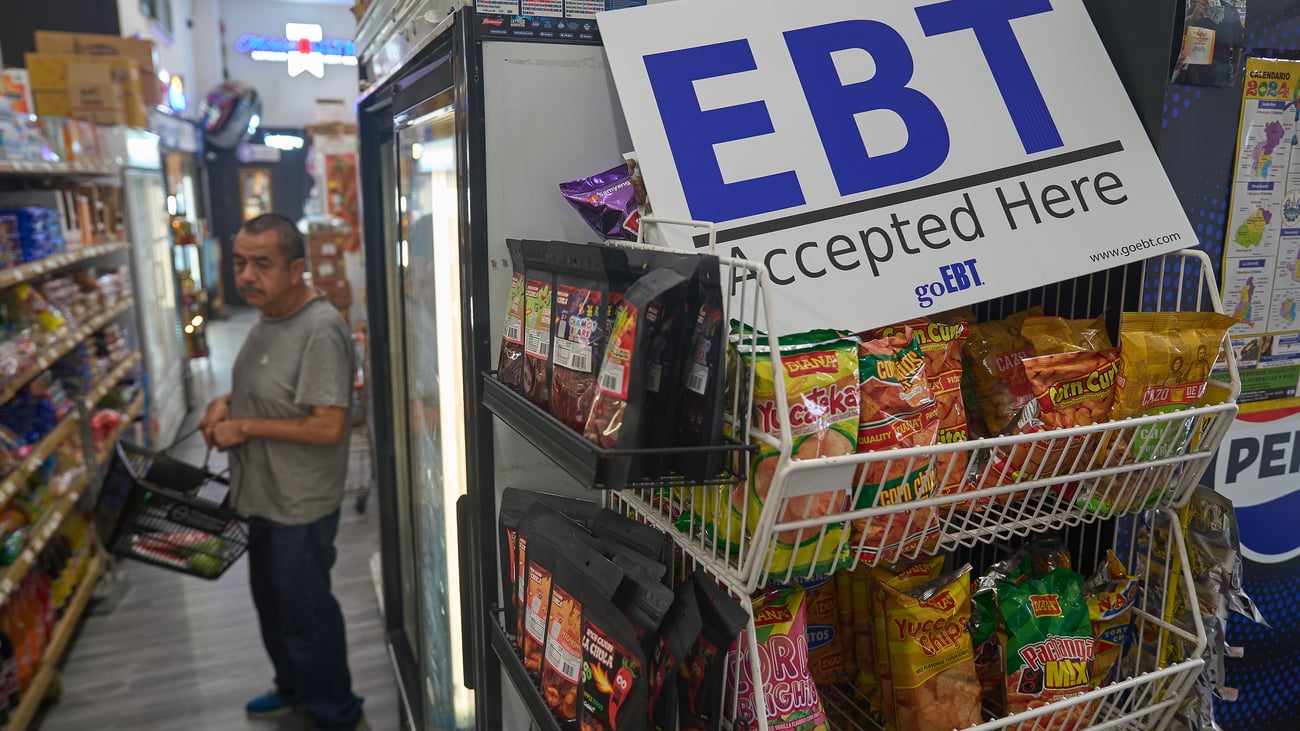
Plaintiffs assert that the USDA's leadership is fully aware that these impending moves will compel many employees to choose between their professional careers and their family lives, intentionally leading to a substantial exodus of experienced personnel. The plaintiffs contend that the USDA's actions directly threaten the agency's ability to perform its statutorily authorized and mandated functions, particularly impacting crucial initiatives such as the Supplemental Nutrition Assistance Program (SNAP) and the Special Supplemental Nutrition Program for Women, Infants, and Children (WIC). The importance of such programs has been underscored in the past, for example, when federal judges ordered continued SNAP funding during a government shutdown, as evidenced by an EBT Accepted Here banner at El Recuerdo Market in Los Angeles on October 31, 2025.
Allegations of Legal Violations and Impact
A central tenet of the lawsuit's argument is the USDA's alleged failure to conduct any assessment regarding how projected employee attrition might compromise its ability to fulfill its legally mandated responsibilities. This omission, alongside other departmental actions, forms the basis of the claim that the USDA has acted arbitrarily, capriciously, and contrary to law, thereby violating the Administrative Procedure Act.
Despite delaying the plan's implementation last year to solicit public feedback, the USDA received an overwhelmingly negative response. Out of 46,845 comments submitted, a significant 82% expressed opposition, primarily citing concerns over workforce attrition and a weakened operational capacity, with the Forest Service's ability to manage public lands highlighted as a specific example. Although the USDA issued a summary of these comments in December, it provided no official response to the concerns raised.
Furthermore, plaintiffs point out that Congress had explicitly directed the USDA against undertaking any restructuring or downsizing initiatives without prior legislative approval. While the department did inform congressional committees about its intentions this past spring, it also acknowledged that these actions triggered prohibitions outlined in appropriations acts, yet proceeded with releasing public information about enacting the plan.
Forced Moves and Judicial Intervention Sought
While the Agriculture Department engaged in impact bargaining with some employee unions concerning the timing of notices, it notably refused to negotiate over the core elements of the reorganization plan itself, including office closures or the broader employee relocations. This stance comes as many USDA employees previously based in Washington, D.C., have already been compelled to relocate, and a more extensive wave of mandatory transfers is anticipated.
These imminent moves are expected to be formalized through 'management-directed reassignment letters,' which will specify an employee's new assigned location, the deadline for accepting the relocation, and the final date by which the move must occur.
The plaintiffs are therefore seeking a federal court order declaring that the USDA and its secretary have overstepped their constitutional and statutory authority. Crucially, they are petitioning the court to halt all ongoing office closures and prevent further forced relocations, aiming to protect federal workers from these disruptive changes and preserve the agency's operational integrity.
Source
Source: Reporting based on CN coverage.
How does this affect you?
Get an AI analysis of this article grounded in your jurisdictions, practice areas, and any policy documents you've uploaded to Wansom.
Finish Reading the Full Story and the Expert Analysis.
Wansom is AI and can make mistakes.