
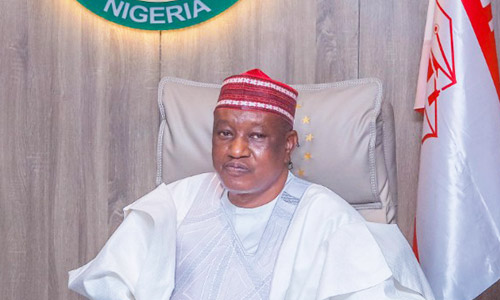
Federal High Court Kano: Blocks INEC Gwarzo Kano NDC Nomination for Governor
Summary
- A Federal High Court in Kano issued an interim order against the Independent National Electoral Commission (INEC).
- The order restrains INEC from publishing any governorship candidate submitted by the Nigeria Democratic Congress (NDC) for the 2027 Kano State election.
- Justice Samuel Amobeda issued the interim order, pending the hearing of a motion challenging the NDC's nomination process.
- This court action clarifies why INEC withheld Gwarzo's name from the Kano governorship list.
Judicial Restraint on INEC's Candidate Publication
Lawyers advising political parties or candidates must ensure meticulous adherence to party nomination procedures and electoral guidelines, as judicial intervention can swiftly impact candidate eligibility and election processes.
The Federal High Court in Kano has issued a significant interim order, preventing the Independent National Electoral Commission (INEC) from publishing the name of any individual nominated by the Nigeria Democratic Congress (NDC) as its governorship candidate for the upcoming 2027 Kano State governorship election. This judicial intervention, handed down by Justice Samuel Amobeda, effectively freezes the electoral body's ability to proceed with the candidate list for the NDC until further court proceedings. The order specifically addresses a pending motion that contests the legitimacy of the NDC's internal nomination process, casting a shadow over the party's preparations for the crucial state election.
This development provides clarity regarding the absence of certain names from INEC's prospective candidate roster. Specifically, certified court documents confirm that this interim order is the precise reason why INEC has withheld the name of Gwarzo from the Kano governorship list. The court's decision underscores the judiciary's role in overseeing the integrity of pre-election activities, particularly when disputes arise concerning how political parties select their flag-bearers. The injunction ensures that the electoral commission cannot finalize the NDC's candidate submission until the underlying challenge to the party's primary process is resolved through due legal process.
Scrutiny of Party Nomination Processes
The core of the legal challenge revolves around the Nigeria Democratic Congress's (NDC) internal nomination procedures. The motion currently before the Federal High Court in Kano alleges irregularities or non-compliance within the party's process for selecting its governorship candidate. Such challenges are not uncommon in Nigeria's political landscape, where the internal workings of political parties often become subjects of intense scrutiny and legal disputes, particularly in the lead-up to major elections like the Kano 2027 governorship election. The interim order serves as a stark reminder to political entities that their internal democratic processes must withstand judicial examination.
This specific INEC candidate list court order highlights the critical importance of meticulous adherence to established party constitutions and electoral guidelines during the candidate selection phase. Any perceived deviation or procedural misstep can lead to legal challenges that, as seen in this instance, can result in significant delays and even the temporary disqualification of a party's nominee from the electoral race. The ongoing legal battle underscores the necessity for political parties to conduct their nomination exercises with utmost transparency and strict compliance to avoid judicial impediments that could derail their electoral ambitions.
Implications for Electoral Integrity and Compliance
The INEC Gwarzo Kano NDC nomination case carries substantial implications for both political parties and the Independent National Electoral Commission. For political parties, it reinforces the imperative for robust and legally sound internal nomination processes. Lawyers advising political parties or candidates must ensure meticulous adherence to party nomination procedures and electoral guidelines, as judicial intervention can swiftly impact candidate eligibility and election processes. This case highlights the risk of court orders restraining electoral bodies due to challenges against internal party processes, necessitating proactive compliance to avoid disqualification. Failure to do so can lead to costly legal battles, delays, and potential disqualification of candidates, ultimately affecting a party's ability to contest elections effectively.
For INEC, the interim order demonstrates the commission's obligation to respect judicial directives, even when they impact the timely progression of electoral preparations. The electoral body must navigate these legal complexities, ensuring that its candidate lists accurately reflect the outcomes of both party nominations and subsequent judicial rulings. The decision by Justice Samuel Amobeda underscores the judiciary's role as a crucial arbiter in maintaining the integrity of the electoral system, ensuring that all participants, including political parties and electoral bodies, operate within the bounds of the law. This ongoing legal challenge will undoubtedly shape how future nomination disputes are handled, emphasizing the need for clear, defensible processes from the outset.
Practical Implications
Lawyers advising political parties or candidates must ensure meticulous adherence to party nomination procedures and electoral guidelines, as judicial intervention can swiftly impact candidate eligibility and election processes. This case highlights the risk of court orders restraining electoral bodies due to challenges against internal party processes, necessitating proactive compliance to avoid disqualification.
Source
How does this affect you?
Get an AI analysis of this article grounded in your jurisdictions, practice areas, and any policy documents you've uploaded to Wansom.
Wansom is AI and can make mistakes.