
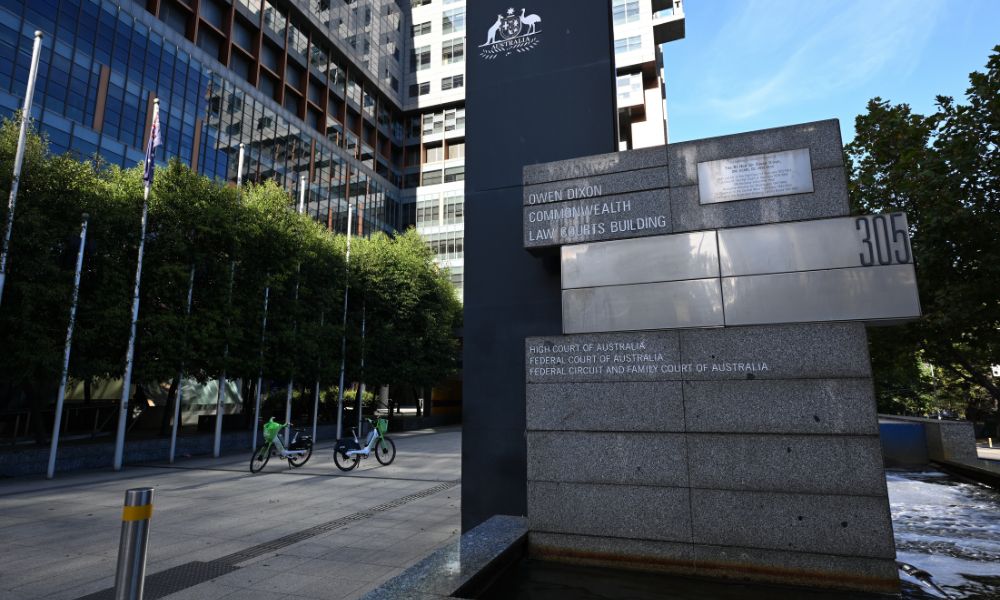
Federal Court Rules X Corp Not Subject to Second Online Safety Standard
Summary
- The Federal Court has ruled that X Corp is not subject to a second online safety standard.
- The court held that a social media platform cannot also be considered a messaging service.
- The ruling has significant implications for social media companies operating in Australia, particularly with regards to online safety standards and service classification under the Online Safety Act 2021.
What Happened
The court found that the Act created distinct categories of service, and that the wording pointed to a single classification rather than two.
The Federal Court has made a significant ruling in X Corp v eSafety Commissioner, freeing the company from compliance with a second online safety standard. The court's decision centered on the classification of X Corp's services under the Online Safety Act 2021 and the potential for conflicting obligations. In a key finding, the court held that a social media platform cannot also be considered a messaging service, which would have subjected X Corp to both the Social Media Services Online Safety Code (SMS Code) and the Online Safety (Relevant Electronic Services – Class 1A and Class 1B Material) Industry Standard 2024 (RES Standard). The court's ruling has implications for social media companies navigating online safety standards, particularly with regards to service classification under the Online Safety Act 2021.
Legal Context
The case turned on the interpretation of the Online Safety Act 2021 and its interaction with other regulations. The court examined the structure and wording of the Act, including sections 13, 14, and 145, which govern service classification and industry codes. The eSafety Commissioner argued that a service could fall into more than one category, but the court disagreed, finding that the Act created distinct categories of service. This reading was supported by the Act's structure, which limits the Commissioner's power to make standards and favors industry codes over standards. The court also rejected the Commissioner's concern about providers 'self-selecting' their obligations, holding that classification is an objective question rather than a choice.
Why It Matters
The ruling has significant implications for social media companies operating in Australia, particularly with regards to online safety standards. Lawyers advising these companies on compliance should be aware of the potential for conflicting obligations and the importance of accurate service classification under the Online Safety Act 2021. The court's decision also highlights the need for clarity in regulations governing online services, to prevent providers from being left with unclear or conflicting obligations. As the online landscape continues to evolve, this ruling will likely have far-reaching implications for companies navigating complex regulatory environments.
Practical Implications
Lawyers advising social media companies on online safety standards should watch for the implications of this ruling, particularly in relation to the classification of services under the Online Safety Act 2021 and the potential for conflicting obligations.
Source
How does this affect you?
Get an AI analysis of this article grounded in your jurisdictions, practice areas, and any policy documents you've uploaded to Wansom.
Wansom is AI and can make mistakes.