
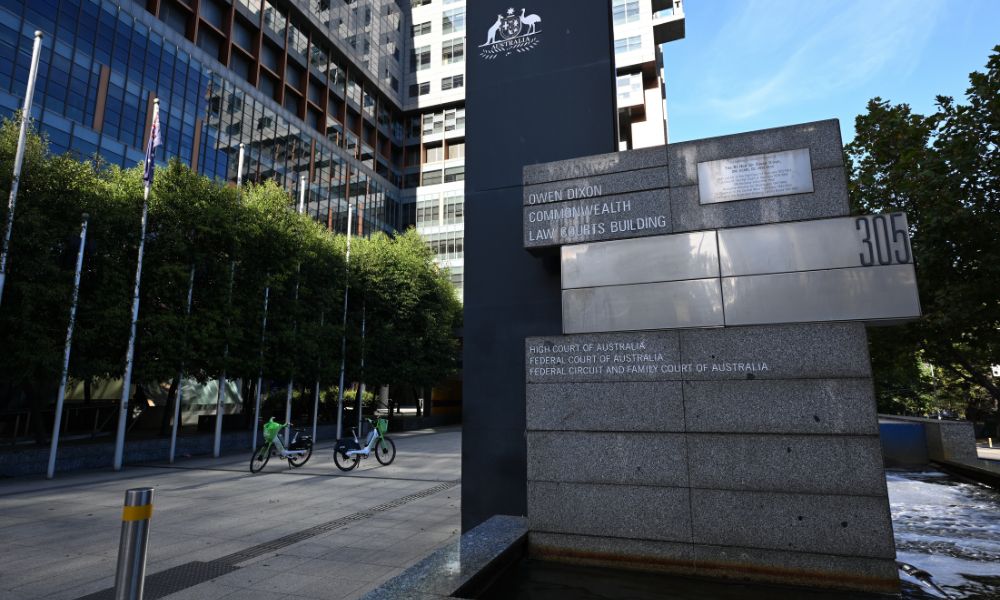
Federal Court: Separate Planet Innovation Founder Vote Ordered for Scheme
Summary
- The Federal Court ordered separate shareholder voting groups for Planet Innovation's founders and general shareholders in a proposed takeover.
- Founders, who are also executive directors, were uniquely offered the opportunity to invest $8 million in the acquirer's parent company.
- General shareholders were offered $1.60 cash per share, totaling over $116 million, despite an independent expert valuing shares higher.
- ASIC confirmed it would not oppose the scheme, and the court accepted the acquirer's funding plan despite some gaps.
- Both shareholder meetings are scheduled for September 21, 2026, with a subsequent court hearing to follow.
Court Mandates Separate Founder Vote
This significant sum, representing a considerable portion of the overall transaction value, was deemed sufficient justification for placing the founders into their own voting group, underscoring the importance of equitable treatment in schemes of arrangement.
The Federal Court recently intervened in a significant corporate acquisition, mandating a separate shareholder vote for the founders of Planet Innovation Holdings Ltd (Planet Innovation) during a proposed scheme of arrangement. On August 18, 2026, in the matter of *Planet Innovation Holdings Ltd* [2026] FCA 1194, the court ordered the creation of two distinct shareholder meetings under section 411(1) of the Corporations Act 2001 (Cth). This decision arose from the planned takeover of Planet Innovation by Meiban Innovation (Melbourne) Pty Ltd (Meiban), an indirect subsidiary of Singapore-based Meiban United Pte. Ltd.
Meiban, which already held a 19.9 percent stake in the unlisted Planet Innovation, sought to acquire all remaining shares. The offer presented to general shareholders was $1.60 cash per share, amounting to a total consideration of $116,890,523 for the outstanding equity. However, a key aspect of the deal involved a preferential arrangement for Planet Innovation's four executive directors, who were also its founders and collectively owned 33.38 percent of the company.
These four founders were uniquely positioned to purchase shares in Meiban United, the ultimate parent company of the acquirer, for $2 million each, totaling an $8 million investment. This differential benefit, unavailable to other shareholders, prompted the Federal Court to establish separate shareholder voting groups. The court's directive ensures that the general body of shareholders and the founder group would each hold their own meeting to consider the scheme of arrangement, reflecting the distinct interests at play in this Australian corporate M&A law transaction.
Differential Treatment Justifies Separation
The court's decision to segregate the founder vote was rooted in the substantial nature of their unique financial participation. While acknowledging that prior deals had seen senior management reinvesting in acquiring entities, the court distinguished this particular Meiban Innovation Planet Innovation takeover due to the sheer scale of the founders' $8 million investment. This significant sum, representing a considerable portion of the overall transaction value, was deemed sufficient justification for placing the founders into their own voting group, underscoring the importance of equitable treatment in schemes of arrangement.
Despite the independent expert, Moore Australia (Vic) Pty Ltd, valuing Planet Innovation shares at a higher range of $2.25 to $2.48—above the $1.60 cash offer—the expert still endorsed the deal as reasonable and in the best interests of shareholders. The Federal Court noted this expert opinion but clarified that it did not negate the necessity for separate meetings. Furthermore, the court addressed concerns regarding the acquirer's funding, acknowledging that Meiban was a new entity without a trading history and its parent had not directly guaranteed payment to shareholders.
The court also recognized that Planet Innovation could not enforce a related support commitment of at least $33 million. Nevertheless, the court accepted that the buyer's conditional loan finance could be further scrutinized at a subsequent hearing, concluding that the existing funding structure provided a sound enough basis for shareholders to evaluate the proposed acquisition.
Regulatory Nod and Path Forward
Adding to the regulatory landscape surrounding the proposed acquisition, the corporate watchdog, ASIC, communicated its position to Planet Innovation's directors. On August 17, 2026, ASIC confirmed that it did not intend to oppose the scheme of arrangement, signaling a green light from the regulator for the process to proceed.
Both the general shareholder meeting and the separate founder meeting have been scheduled for September 21, 2026. These meetings will allow each distinct group to cast their votes on the proposed scheme. Following these crucial shareholder deliberations, a further hearing is slated to take place, where the court will review the outcomes and potentially provide final approval for the scheme's implementation, concluding this phase of the Australian corporate M&A law process.
Practical Implications
This ruling highlights the Federal Court's willingness to mandate separate shareholder voting groups in schemes of arrangement where certain shareholders receive differential benefits, even if an independent expert supports the overall deal. Lawyers advising on M&A transactions should carefully assess potential conflicts of interest and differential treatment among shareholder groups to anticipate court requirements for separate meetings, which can impact deal complexity and approval timelines.
Source
How does this affect you?
Get an AI analysis of this article grounded in your jurisdictions, practice areas, and any policy documents you've uploaded to Wansom.
Wansom is AI and can make mistakes.