
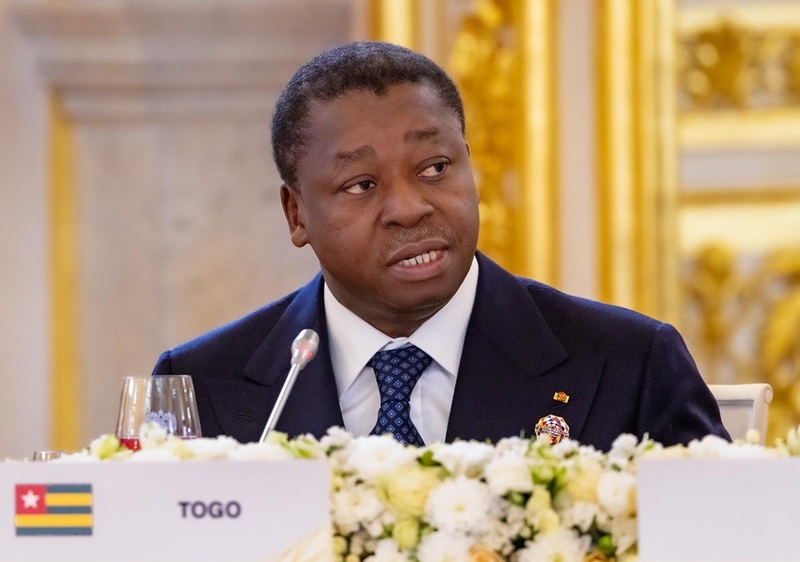
Faure Gnassingbé ECOWAS Court Togo: 5th Republic Unconstitutional, Plans Early Elections
Summary
- The ECOWAS Court of Justice ruled that Togo's Fifth Republic represents an "unconstitutional change of government."
- President Faure Gnassingbé is attempting to counter this decision by proposing early legislative elections as soon as 2027.
- The Togolese government is engaging a divided opposition to rally support for these potential early elections.
- High-ranking officials, including Minister Mama Omorou and Secretary General Sandra Ablamba Johnson, have been involved in public outreach efforts.
- Sandra Ablamba Johnson distributed school kits to female students in Blitta-Gare on September 9 as part of these initiatives.
The ECOWAS Court's Stance
The ECOWAS Court of Justice has issued a significant ruling concerning Togo's political structure, declaring that the nation's Fifth Republic constitutes an "unconstitutional change of government."
The ECOWAS Court of Justice has issued a significant ruling concerning Togo's political structure, declaring that the nation's Fifth Republic constitutes an "unconstitutional change of government." This pronouncement from the regional judicial body has set the stage for a period of heightened political activity within Togo, as the government seeks to navigate the implications of such a finding. The court's decision directly challenges the legitimacy of the current constitutional framework, creating a complex legal and political environment for the West African nation.
In response to this judicial determination, President Faure Gnassingbé is reportedly orchestrating efforts to mitigate the impact of the ECOWAS Court's judgment. His administration is actively pursuing a strategy centered on engaging the country's political opposition, which is described as divided, with proposals for potential early legislative elections. These elections could occur as early as 2027, signaling a proactive move by the Togolese leadership to address the concerns raised by the regional court. The objective behind these overtures is to counter the judicial finding and potentially re-legitimize the government's standing through a renewed electoral mandate.
Government's Political Strategy
The Togolese government's approach to the ECOWAS Court's ruling involves a multi-pronged strategy, including direct engagement with political adversaries and public outreach initiatives. The administration is working to consolidate support, even among a fragmented opposition, for the concept of bringing forward legislative polls. This push for early elections, potentially by 2027, is seen as a direct response aimed at neutralizing the regional court's declaration of an unconstitutional governmental shift. The focus on electoral processes underscores an attempt to re-establish constitutional legitimacy in the face of external judicial scrutiny.
As part of these broader efforts, several high-ranking government ministers have undertaken various engagements across the country. Among these officials was Mama Omorou, the Minister of National Education, whose participation highlights the comprehensive nature of the government's outreach. These ministerial movements are indicative of a concerted campaign to project stability and responsiveness, even as the nation grapples with the implications of the ECOWAS Court's judgment. The government appears to be mobilizing its resources to demonstrate its commitment to addressing the current political climate.
Public Engagement and Outreach
Further illustrating the government's strategy to address the political climate, Sandra Ablamba Johnson, who serves as the Secretary General of the Presidency of the Council, participated in a public event on Wednesday, September 9. Her presence at the Blitta-Gare college courtyard, located approximately 300 kilometers from the capital city of Lomé, was part of a community engagement effort. During this event, Ms. Johnson was observed distributing school kits to female students, an action that combines public service with a visible governmental presence in the regions.
This type of public appearance by senior officials, including the distribution of educational materials, can be interpreted as a component of the broader governmental strategy to connect with the populace and project an image of active governance. Such initiatives often serve to reinforce the government's role in public welfare, potentially aiming to garner public support amidst the legal and political challenges posed by the ECOWAS Court's ruling. The visibility of figures like Ms. Johnson and Minister Omorou in various capacities underscores the administration's concerted effort to manage perceptions and maintain public confidence.
Implications of the Ruling
The ECOWAS Court's determination that Togo's Fifth Republic represents an "unconstitutional change of government" introduces significant legal and political uncertainty for the nation. This ruling directly questions the foundational legality of the current administration and its constitutional framework. For legal practitioners and international observers, this creates a complex scenario regarding the legitimacy of governmental actions, including legislative processes and international agreements. The court's decision could potentially lead to further legal challenges or increased international pressure on Togo to address the constitutional irregularities identified.
In this context, the Togolese government's proposal for early legislative elections by 2027, spearheaded by President Faure Gnassingbé, can be seen as an attempt to re-establish a clear mandate and address the legitimacy deficit highlighted by the ECOWAS Court. The success of this strategy hinges on the government's ability to unite a divided opposition and ensure a credible electoral process. The situation underscores the delicate balance between national sovereignty and regional judicial oversight, with profound implications for Togo's political stability and its adherence to democratic principles as defined by regional bodies.
Practical Implications
The ECOWAS Court's ruling on the unconstitutional change of government in Togo creates significant legal and political uncertainty. Lawyers should advise clients on potential risks related to government legitimacy, electoral processes, and the stability of the legal framework, particularly concerning contracts and investments in Togo, as the situation may lead to further legal challenges or international pressure.
Source
How does this affect you?
Get an AI analysis of this article grounded in your jurisdictions, practice areas, and any policy documents you've uploaded to Wansom.
Finish Reading the Full Story and the Expert Analysis.
Get the latest legal & regulatory intelligence in Togo
Wansom is AI and can make mistakes.