
European Airlines: False Bomb Threats Trigger Widespread Hoax Disruptions
Summary
- Multiple European flights faced alleged bomb threats on a recent Tuesday, all confirmed as hoaxes.
- Incidents involved Ryanair, LOT, SAS, and Wizz Air, leading to diversions, airport closures, and extensive security checks.
- The Italian Air Force escorted one Ryanair flight to Rome, while Polish airports implemented runway closures and passenger disembarkation.
- Spanish and Bulgarian authorities also responded to threats, inspecting aircraft and finding no explosives.
- A similar bomb threat on Monday caused a flight bound for Bulgaria to divert to Hungary.
What Happened
The recent wave of airline hoax threats Europe highlights the persistent challenge of maintaining European aviation security incidents preparedness against malicious but non-existent dangers.
On a recent Tuesday, multiple flights across Europe were targeted by alleged bomb threats, all of which were subsequently confirmed to be hoaxes. These widespread false bomb threats European airlines triggered significant operational disruptions, including diversions, extensive security searches, and in one instance, an escort by the Italian Air Force. Fortunately, no injuries were reported across any of the affected flights or airports. Airlines impacted by these airline hoax threats Europe included Polish carrier LOT, Scandinavian Airlines (SAS), Wizz Air, and Ryanair. These Tuesday events followed a similar incident on Monday, where a flight destined for Bulgaria was diverted to Hungary mid-air due to a comparable bomb threat.
Among the incidents, a Ryanair flight originating from Lisbon landed at Rome’s Fiumicino airport after an email claimed a bomb was on board. Following its arrival, police bomb disposal experts conducted thorough security checks of all passengers, crew, and baggage, ultimately finding no explosives. A separate email reported a bomb on another Ryanair flight, this one traveling from Dublin to Rome. This aircraft was escorted to Fiumicino by the Italian Air Force, where identical ground security procedures were performed, again yielding no discovery of explosive devices.
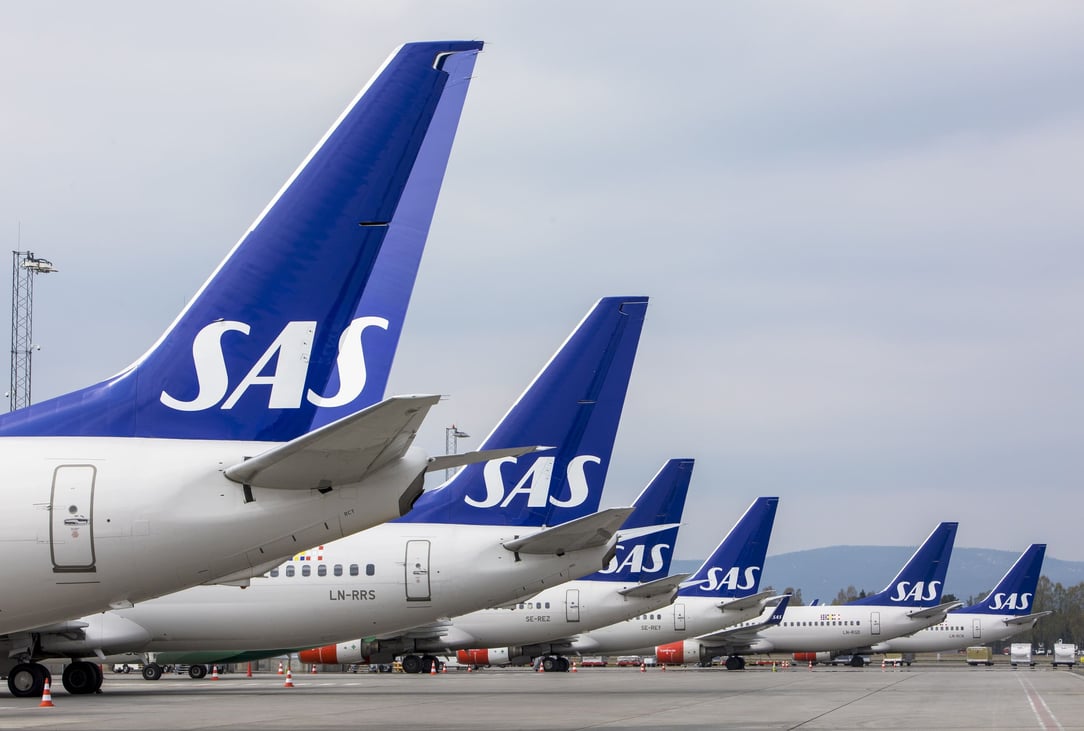
In Poland, a morning flight operated by LOT from London Heathrow, bound for Warsaw’s Chopin Airport, was diverted to Modlin Airport following a bomb threat, leading to a temporary closure of Modlin Airport. LOT later confirmed that a search of the aircraft had concluded with "nothing found." Passengers from this flight underwent border control before being transported by coach to Chopin Airport. Separately, Chopin Airport received intelligence regarding a potentially dangerous item on an SAS flight from Copenhagen. Standard safety protocols were immediately activated, leading to the closure of one of the airport’s runways. Passengers disembarked, and the plane landed without incident, not as an emergency. The matter was subsequently referred to Polish police for investigation.
Security Responses and Operational Impact
The series of false bomb threats European airlines on Tuesday prompted immediate and extensive security responses across the continent. In Italy, the receipt of email threats concerning Ryanair flights led to rapid deployment of police bomb disposal experts at Fiumicino airport, who meticulously inspected aircraft, passengers, crew, and luggage. The involvement of the Italian Air Force to escort one of the threatened Ryanair flights underscored the seriousness with which these alerts are treated, despite their eventual classification as hoaxes.
Polish authorities also reacted swiftly to the threats impacting LOT and SAS flights. The diversion of the LOT flight to Modlin Airport necessitated its temporary closure, disrupting normal operations until the all-clear was given. Similarly, the threat concerning the SAS flight at Chopin Airport resulted in the implementation of standard safety procedures, including the closure of a runway and the controlled disembarkation of passengers, demonstrating robust airport protocols in action.
Further south, Spanish officials in Murcia confirmed the absence of explosives on a Ryanair plane that had arrived from Manchester after a bomb threat. The flight, carrying 121 individuals including crew, underwent security checks for passengers, crew, and the aircraft itself, with the Spanish government delegate in the Murcia region, Francisco Lucas, confirming the all-clear. Concurrently, Bulgarian authorities at Sofia International Airport inspected two aircraft that had received bomb threats while in transit on Tuesday. These planes, originating from Bergamo, Italy, and Dublin, Ireland, were checked by the Specialized Counter-Terrorism Unit upon landing, with no explosives detected. Notably, neither of these Bulgarian-bound flights required diversion, indicating varied responses based on threat assessment or operational circumstances.
Broader Implications for Aviation Security
The recent wave of airline hoax threats Europe highlights the persistent challenge of maintaining European aviation security incidents preparedness against malicious but non-existent dangers. While all threats proved to be false, the mandatory security protocols triggered by such alerts lead to significant operational disruptions, including flight delays, diversions, and temporary airport closures. The involvement of multiple airlines, including Ryanair bomb threat incidents and the broader Wizz Air flight disruption (as an impacted airline), underscores the systemic vulnerability of the aviation sector to such malicious acts.
These incidents, though ultimately harmless in terms of explosives, impose substantial costs on airlines and airports, diverting critical resources and causing inconvenience to thousands of travelers. The fact that one of the initial bomb threat reports in Bulgaria came from a pilot, who received information through airline channels, suggests the intricate communication networks that must activate in response to such alerts. The referral of the SAS incident to Polish police further emphasizes the criminal nature of these hoaxes and the ongoing efforts to investigate their origins.
The consistent pattern of these false bomb threats European airlines necessitates continuous review and enhancement of security protocols, communication strategies, and emergency response plans across the continent. Such events serve as critical stress tests for the entire aviation security framework, from in-flight procedures to ground operations and inter-agency coordination.
Practical Implications
This series of false bomb threats underscores the critical need for airlines and their legal/compliance teams to review and stress-test their emergency response protocols and security compliance frameworks. Lawyers advising aviation clients should assess potential liabilities arising from disruptions and ensure robust communication strategies with regulatory bodies are in place.
Source
How does this affect you?
Get an AI analysis of this article grounded in your jurisdictions, practice areas, and any policy documents you've uploaded to Wansom.
Wansom is AI and can make mistakes.