
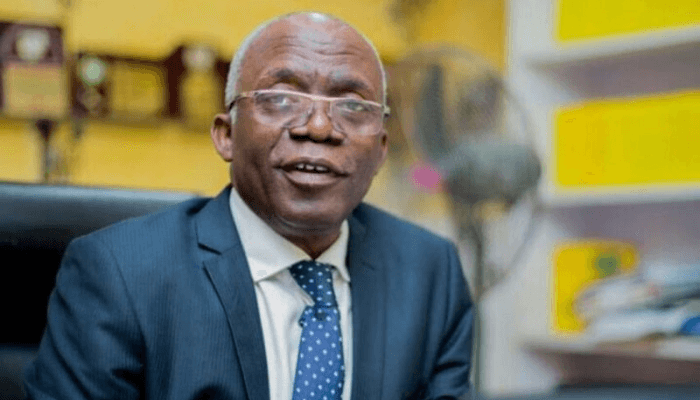
Falana Demands N33.75bn EFCC Cash Transfer Probe Over Missing Funds
Summary
- Human rights lawyer Femi Falana has urged the Economic and Financial Crimes Commission to investigate N33.75 billion in unaccounted funds.
- The funds were originally designated for cash transfers to vulnerable Nigerians.
- Falana, who chairs the Alliance on Surviving COVID-19 and Beyond, also called for the prosecution of those responsible.
- He further demanded the recovery of the missing N33.75 billion.
Call for Investigation into Unaccounted Funds
The call for both prosecution and recovery by a figure of Falana's stature underscores a broader societal demand for accountability from public officials and agencies responsible for managing resources intended for the populace.
Human rights advocate and Senior Advocate of Nigeria, Femi Falana, has formally requested the Economic and Financial Crimes Commission (EFCC) to launch an investigation into a significant financial discrepancy. The focus of this inquiry is an alleged failure to properly account for N33.75 billion, a substantial sum initially earmarked for direct cash transfers to some of Nigeria's most vulnerable citizens. This call by Falana underscores a growing demand for transparency and accountability in the management of public funds, particularly those intended for social welfare initiatives.
Falana's intervention comes amidst concerns over the integrity of programs designed to alleviate poverty and provide support to disadvantaged populations. His petition to the anti-graft agency highlights the critical need to trace the whereabouts of these funds and ascertain why they have reportedly not reached their intended beneficiaries. As a prominent legal figure, his involvement lends considerable weight to the demand for a thorough and impartial examination of the matter.
Allegations and the EFCC's Mandate
The core of the allegation centers on N33.75 billion that was specifically allocated for cash transfer programs aimed at vulnerable Nigerians. This substantial amount was intended to provide direct financial relief, yet its disbursement and accounting have reportedly fallen short, prompting Falana's urgent appeal to the EFCC. The Economic and Financial Crimes Commission, as Nigeria's primary anti-corruption body, is now tasked with scrutinizing these claims of unaccounted public money.
Beyond merely investigating the disappearance of funds, Falana has explicitly urged the EFCC to pursue a dual objective: the prosecution of any individuals found culpable in the mismanagement or diversion of these funds, and the diligent recovery of the entire N33.75 billion. This comprehensive demand emphasizes not only the identification of wrongdoing but also the imperative to restore public resources that were designated for critical social support. The agency's response to this call will be a key indicator of its commitment to combating financial malfeasance within government programs.
Implications for Public Accountability
Femi Falana's proactive stance on this issue is particularly significant given his role as Chairman of the Alliance on Surviving COVID-19 and Beyond (ASCAB), an organization dedicated to advocating for social justice and good governance. His leadership in ASCAB reinforces the public interest dimension of this investigation, positioning the probe into the N33.75 billion as a matter of national importance concerning the welfare of vulnerable communities. The alleged misappropriation of funds meant for direct poverty alleviation schemes raises serious questions about the oversight mechanisms in place for such critical social intervention programs.
This development signals potential increased scrutiny by the EFCC on public funds, particularly those designated for social intervention programs in Nigeria. The call for both prosecution and recovery by a figure of Falana's stature underscores a broader societal demand for accountability from public officials and agencies responsible for managing resources intended for the populace. The outcome of this investigation could set a precedent for how allegations of financial impropriety in social welfare initiatives are handled, potentially leading to heightened compliance demands and more rigorous oversight in the future.
Practical Implications
This development signals potential increased scrutiny by the EFCC on public funds, particularly those designated for social intervention programs in Nigeria. Lawyers advising clients involved in public sector financial management or social welfare initiatives should anticipate heightened compliance demands and potential investigations into fund disbursement and accountability.
Source
How does this affect you?
Get an AI analysis of this article grounded in your jurisdictions, practice areas, and any policy documents you've uploaded to Wansom.
Finish Reading the Full Story and the Expert Analysis.
Wansom is AI and can make mistakes.