
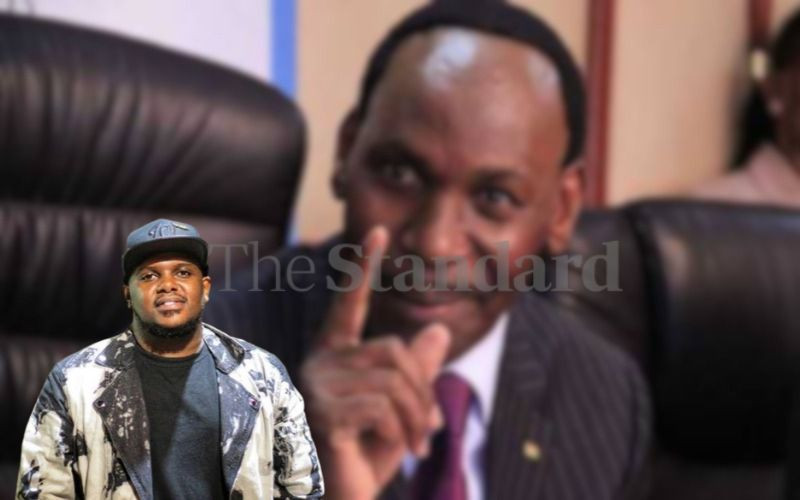
Milimani Court: Ezekiel Mutua Ordered to Pay Nonini KSh 3M for Defamation
Summary
- Ezekiel Mutua has been ordered to pay musician Nonini Sh3 million in a defamation case.
- The ruling by Milimani Commercial Magistrate J. Gitau also requires Mutua to remove defamatory social media posts within 14 days.
- The dispute stemmed from a public disagreement in early 2024 concerning the management of artist royalties by the Music Copyright Society of Kenya (MCSK).
- Mutua's defamatory remarks falsely portrayed Nonini, whose real name is Hubert Mbuku Nakitare, as a fugitive evading the law.
- The court awarded Sh2.5 million in general damages and Sh500,000 in exemplary and aggravated damages, noting Nonini's status as a public figure.
Court Mandates Payment in Defamation Case
This judgment underscores the significant financial and reputational risks associated with making unsubstantiated claims on social media, particularly when targeting prominent individuals.
A Kenyan court has ordered Ezekiel Mutua, the former chief executive of the Music Copyright Society of Kenya (MCSK), to pay musician Hubert Mbuku Nakitare, widely known as Nonini, a sum of Sh3 million for defamatory statements. The judgment, delivered by Milimani Commercial Magistrate J. Gitau on October 26, 2026, found that Mutua's remarks falsely depicted Nonini as an individual evading legal processes. In addition to the monetary award, the court mandated Mutua to remove the offending social media posts from his platforms within 14 days of the ruling.
The court determined that the statements, which were disseminated on social media, were highly likely to inflict damage upon the musician's professional and personal standing. Specifically, the magistrate noted that the comments had the effect of portraying Nonini as a "fugitive who is outside the country in a bid to evade the law," thereby causing significant reputational harm. This judgment underscores the significant financial and reputational risks associated with making unsubstantiated claims on social media, particularly when targeting prominent individuals.
Origins of the Royalty Dispute
The legal battle between Mutua and Nonini originated from a public disagreement in early 2024 concerning the administration and distribution of royalties collected for Kenyan artists by MCSK. Nonini testified that he had been a member of MCSK for many years but formally withdrew from the society in May 2022, after a 24-year career in the music industry, due to his dissatisfaction with the substantial royalties he claimed he had not received.
The conflict intensified in January 2024 when MCSK announced a royalty distribution to its members, which subsequently ignited a widespread public debate regarding the amounts artists were actually receiving and the transparency of the society's financial accounting. Nonini, seeking clarity, obtained a letter addressed to the Kenya Copyright Board detailing MCSK's collections and expenditures. He then shared this financial information on his social media accounts, asserting that artists deserved full transparency regarding the handling of their earnings. According to court testimony, Mutua responded to these actions by publishing remarks on his X account, suggesting that Nonini was residing in the United States to evade legal obligations. Nonini further accused Mutua of making similar defamatory remarks during a radio interview. The musician consistently maintained that these allegations were baseless, malicious, and severely damaging to his public image. In February 2024, Nonini publicly threatened legal action, demanding the removal of the posts and an unconditional apology. Mutua, however, denied the defamation claims, arguing the suit lacked merit and disputing Nonini's reasons for leaving MCSK, while also rejecting allegations of corruption within the society.
Judicial Findings and Damages Awarded
In its judgment, the court concluded that Nonini had successfully established his defamation case against Mutua on a balance of probabilities. The judicial review of the contested remarks persuaded the court that such statements were indeed likely to cause reputational damage, as they painted the plaintiff as a law-evading fugitive. The magistrate further elaborated that the published remarks were capable of diminishing Nonini's standing in the estimation of reasonable members of society.
The court meticulously assessed the compensation, taking into account prior legal precedents involving defamatory publications and the extent of the reputational injury suffered by the affected parties. A crucial factor in the assessment was Nonini's status as a public figure, which the court acknowledged would lead to a far-reaching impact from the defamatory remarks. Consequently, the court awarded Nonini Sh2.5 million in general damages and an additional Sh500,000 in exemplary and aggravated damages, culminating in the total Sh3 million payout. Furthermore, Mutua was ordered to bear the full costs associated with the suit. This significant award underscores the serious legal consequences for individuals who make unsubstantiated claims, particularly against public figures, in the digital sphere.
Broader Context of Royalty Disputes
This specific ruling against Ezekiel Mutua and in favor of Nonini is set against a larger backdrop of ongoing disputes within Kenya's music industry regarding royalty payments. Throughout 2024, numerous artists publicly challenged the distribution practices of MCSK and similar collective management organizations. During a televised discussion in March of that year, Nonini himself had vocally argued that artists were not receiving equitable compensation from the usage of their creative works. The judgment serves as a stark reminder of the legal repercussions for individuals, especially those in public-facing roles, who engage in social media commentary without verifying facts, particularly when such commentary targets other public figures and risks their reputation.
Practical Implications
This ruling highlights the significant financial and reputational risks associated with making defamatory statements on social media, particularly when targeting public figures. Lawyers should advise clients, especially those in public-facing roles or with a strong online presence, on the importance of verifying information before publication to avoid substantial damages awards and legal costs in Kenyan defamation suits.
Source
How does this affect you?
Get an AI analysis of this article grounded in your jurisdictions, practice areas, and any policy documents you've uploaded to Wansom.
Finish Reading the Full Story and the Expert Analysis.
Wansom is AI and can make mistakes.