
Expiration Accord Pêche Sénégal UE: EU Confirms No Renewal for 2024
Summary
- The fishing protocol between Senegal and the EU expired in 2024 and was not renewed, despite European catches representing only 0.3% of Senegalese fishing.
- Aude Maio-Coliche, head of the EU delegation in Senegal, confirmed the mutual decision to end the accord while ongoing discussions focus on surveillance and catch analysis.
- Negotiations are underway for a new cooperation framework, with Senegal prioritizing the fight against overfishing and illegal, unreported, and unregulated fishing.
- European companies in Senegal contribute significantly to the economy, providing 60,000 formal jobs, which is about 20% of the national total.
- The EU also provides substantial financial aid, committing 500 million euros in grants and subsidies to Senegal for 2021-2027, and supports security initiatives.
Expiration of the EU-Senegal Fishing Accord
Both the EU and Senegal are actively engaged in négociations pêche Sénégal UE to establish a new framework for cooperation, aiming to overcome existing impasses and forge a mutually beneficial, "win-win" agreement.
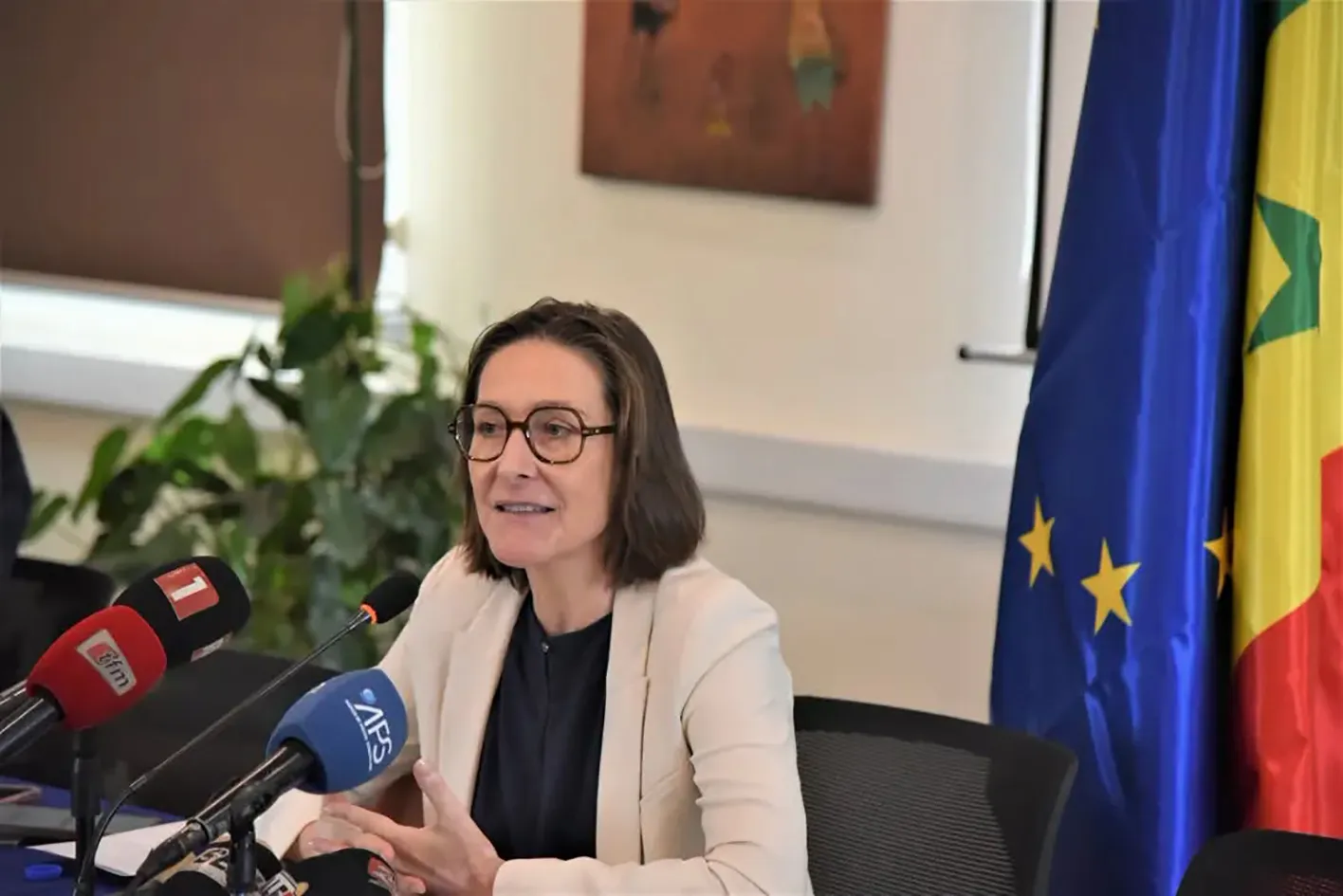
Aude Maio-Coliche, who leads the European Union delegation in Senegal, recently met with journalists in Dakar on November 26, 2026, approximately one month after assuming her role on October 27. During this meeting, she addressed the status of the fishing protocol between Senegal and the EU, confirming its expiration in 2024 without subsequent renewal. This significant development marks a shift in the long-standing maritime cooperation between the two entities.
According to Maio-Coliche, European fishing activities under the previous accord represented a mere 0.3% of Senegal's total fishing output. The decision to conclude the agreement was a mutual one, with the EU opting not to extend it, a choice made with the full assent of the Senegalese authorities. Despite the formal expiration of the accord pêche Sénégal UE, dialogue between the parties continues, focusing on critical aspects such as surveillance and the analysis of catches.
Ongoing Negotiations for a New Framework
Both the EU and Senegal are actively engaged in négociations pêche Sénégal UE to establish a new framework for cooperation, aiming to overcome existing impasses and forge a mutually beneficial, "win-win" agreement. A primary concern for Dakar in these discussions is the imperative to address overfishing and to implement robust measures against pêche illicite non réglementée Sénégal, which encompasses illegal, undeclared, and unregulated fishing practices.
Furthermore, the specifics of how control mechanisms will be structured within any future agreement remain a key point of examination. The outcome of these discussions will determine the operational parameters for European vessels in Senegalese waters and the broader scope of maritime collaboration, emphasizing sustainable practices and regulatory compliance.
Broader Economic and Strategic Ties
Beyond the fishing sector, the European Union maintains a substantial economic footprint in Senegal, playing a crucial role in the nation's formal employment landscape. Aude Maio-Coliche highlighted that entreprises européennes Sénégal emploi account for 60,000 formal jobs, representing approximately 20% of the country's total formal employment. This impact is significant, considering that nearly 1,000 European entities operate in Senegal, with Eurocham alone representing 212 companies.
These European businesses are recognized for their contributions to tax revenues and their adherence to stringent labor and social protection standards. The cooperation économique UE Sénégal extends to strategic areas, including European support for Senegalese border protection and efforts to combat terrorism and extremism, undertaken at the request of the Senegalese government. Commercially, the EU remains Africa's leading trade partner, with exchanges valued at approximately 365 billion euros, even amidst increasing trade between Russia and the continent. The EU has also committed 500 million euros in grants and subsidies to Senegal for the 2021-2027 period, equivalent to about 327.5 billion FCfa, underscoring the depth of their partnership.
Practical Implications
Lawyers advising clients in the fishing sector operating between Senegal and the EU should monitor the ongoing negotiations for a new cooperation framework, particularly regarding changes to fishing quotas, surveillance, and measures against illegal, unreported, and unregulated (IUU) fishing, as the previous protocol has expired without renewal. This presents regulatory uncertainty and potential shifts in operational compliance requirements for affected businesses.
Source
Source: Original reporting via Le Soleil
How does this affect you?
Get an AI analysis of this article grounded in your jurisdictions, practice areas, and any policy documents you've uploaded to Wansom.
Finish Reading the Full Story and the Expert Analysis.
Get the latest legal & regulatory intelligence in Senegal
Wansom is AI and can make mistakes.