
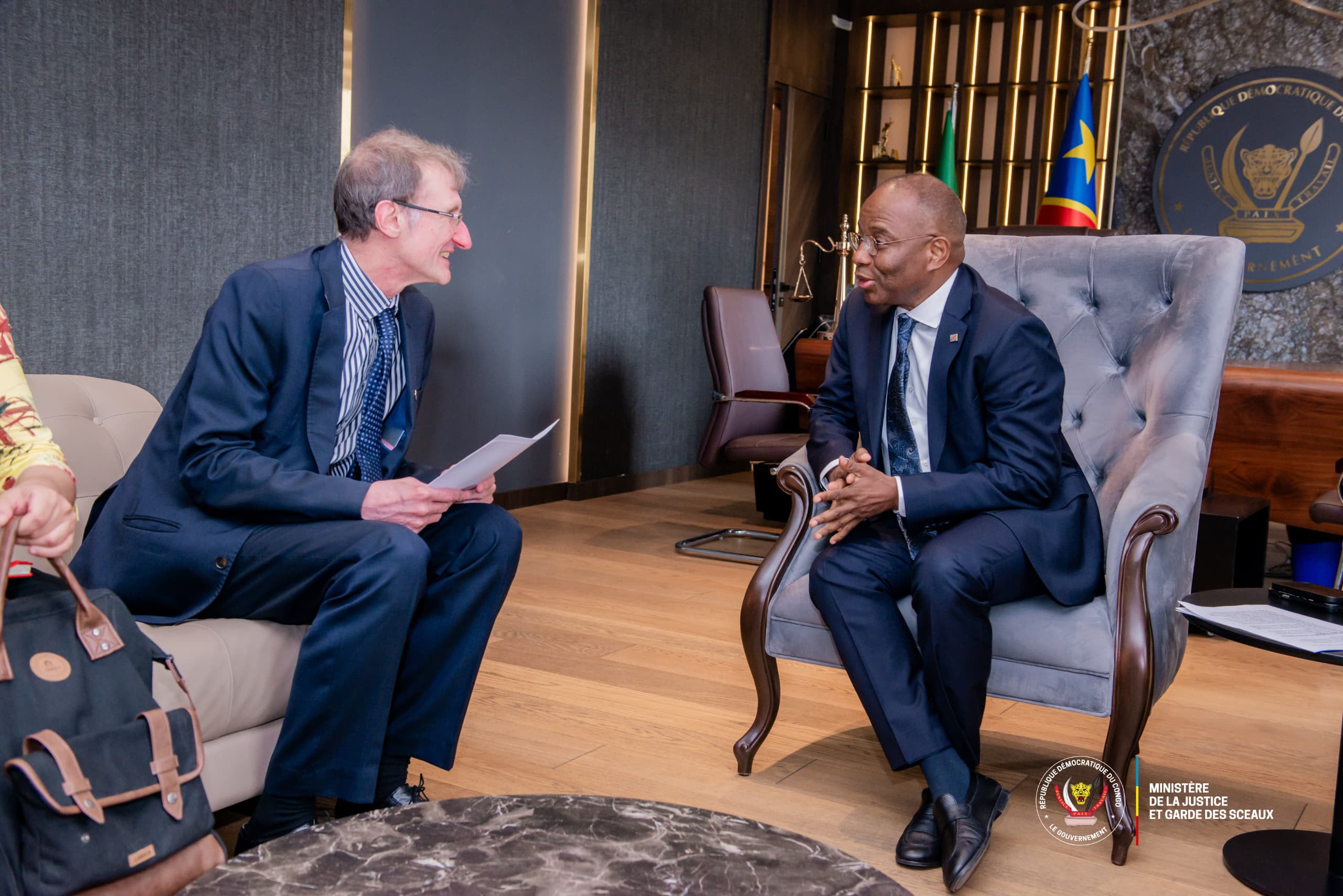
European Union: DRC Judicial Reform Support Pledged to Modernize Justice Sector
Summary
- The European Union has reaffirmed its commitment to supporting judicial reforms in the Democratic Republic of Congo.
- Douglas Carpenter, head of the EU delegation in the DRC, made this announcement on September 24, 2026, in Kinshasa.
- The statement followed a meeting between Carpenter and Guillaume Ngefa, the DRC's Minister of Justice.
- The EU's support targets the implementation of priority reforms within the Congolese justice sector.
Recent Developments
A well-functioning and independent judiciary is a cornerstone of good governance, essential for protecting human rights, fostering economic development, and ensuring social cohesion.
The European Union has formally reiterated its commitment to assisting the Democratic Republic of Congo in advancing crucial reforms within its justice sector. This significant declaration was made by Douglas Carpenter, who leads the EU delegation in the DRC, following a meeting held in Kinshasa on Thursday, September 24, 2026. Carpenter's statement underscores the ongoing partnership between the EU and the Congolese government, specifically targeting the modernization and strengthening of the nation's legal framework.
The pronouncement came after Carpenter's discussions with Guillaume Ngefa, the DRC's Minister of Justice. This high-level engagement highlights the strategic importance both parties place on enhancing the rule of law and improving judicial processes across the vast Central African nation. The focus on "priority reforms" indicates a shared understanding of the most pressing challenges facing the Congolese legal system and a concerted effort to address them through structured support and collaboration. This initiative aligns with broader efforts for European Union DRC judicial reform support.
Strategic Partnership for Justice Sector Modernization
The commitment from the European Union signifies a pivotal moment for the Democratic Republic of Congo's aspirations for a more robust and equitable legal system. The EU's willingness to provide comprehensive support for implementing these essential changes is expected to contribute significantly to the overall stability and functionality of the justice sector. This collaboration, often referred to as UE soutien réforme judiciaire RDC, aims to tackle systemic issues that have historically impacted the efficiency and fairness of judicial proceedings.
Such international backing is critical for the DRC justice sector modernization EU efforts, as it often involves not just financial aid but also technical expertise, capacity building, and institutional strengthening. The dialogue between figures like Douglas Carpenter RDC justice and Minister Guillaume Ngefa justice minister RDC is instrumental in identifying specific areas where EU assistance can yield the most impactful results. The focus on "priority reforms" suggests a targeted approach, ensuring that resources are directed towards areas that will have the most profound and immediate positive effects on the legal landscape and public trust. This sustained engagement is a cornerstone of Congo legal system development EU strategies.
Broader Impact on Rule of Law and Governance
The European Union's pledge to support judicial reform in the Democratic Republic of Congo extends beyond mere procedural adjustments; it represents a fundamental investment in the nation's rule of law initiatives. A well-functioning and independent judiciary is a cornerstone of good governance, essential for protecting human rights, fostering economic development, and ensuring social cohesion. The announced support is therefore a critical component of the broader RDC rule of law initiatives, aiming to create a more predictable and transparent legal environment for all citizens and entities operating within the country.
The long-term implications of this commitment could be transformative for the DRC. By strengthening the justice sector, the EU and DRC are working towards a system where legal decisions are consistent, accessible, and free from undue influence. This not only bolsters public confidence in state institutions but also sends a clear signal to international partners and investors about the country's dedication to upholding legal standards. The continued dialogue and cooperation, exemplified by the meeting between the head of the EU delegation and the Minister of Justice, are vital for translating these reform ambitions into tangible improvements on the ground, ultimately contributing to a more stable and just society.
Practical Implications
Lawyers and compliance officers operating in the DRC should monitor the progress of these EU-backed judicial reforms for potential impacts on legal predictability, enforcement mechanisms, and the overall business environment, which could influence litigation strategies and compliance frameworks.
Source
How does this affect you?
Get an AI analysis of this article grounded in your jurisdictions, practice areas, and any policy documents you've uploaded to Wansom.
Finish Reading the Full Story and the Expert Analysis.
Get the latest legal & regulatory intelligence in DR Congo
Wansom is AI and can make mistakes.