
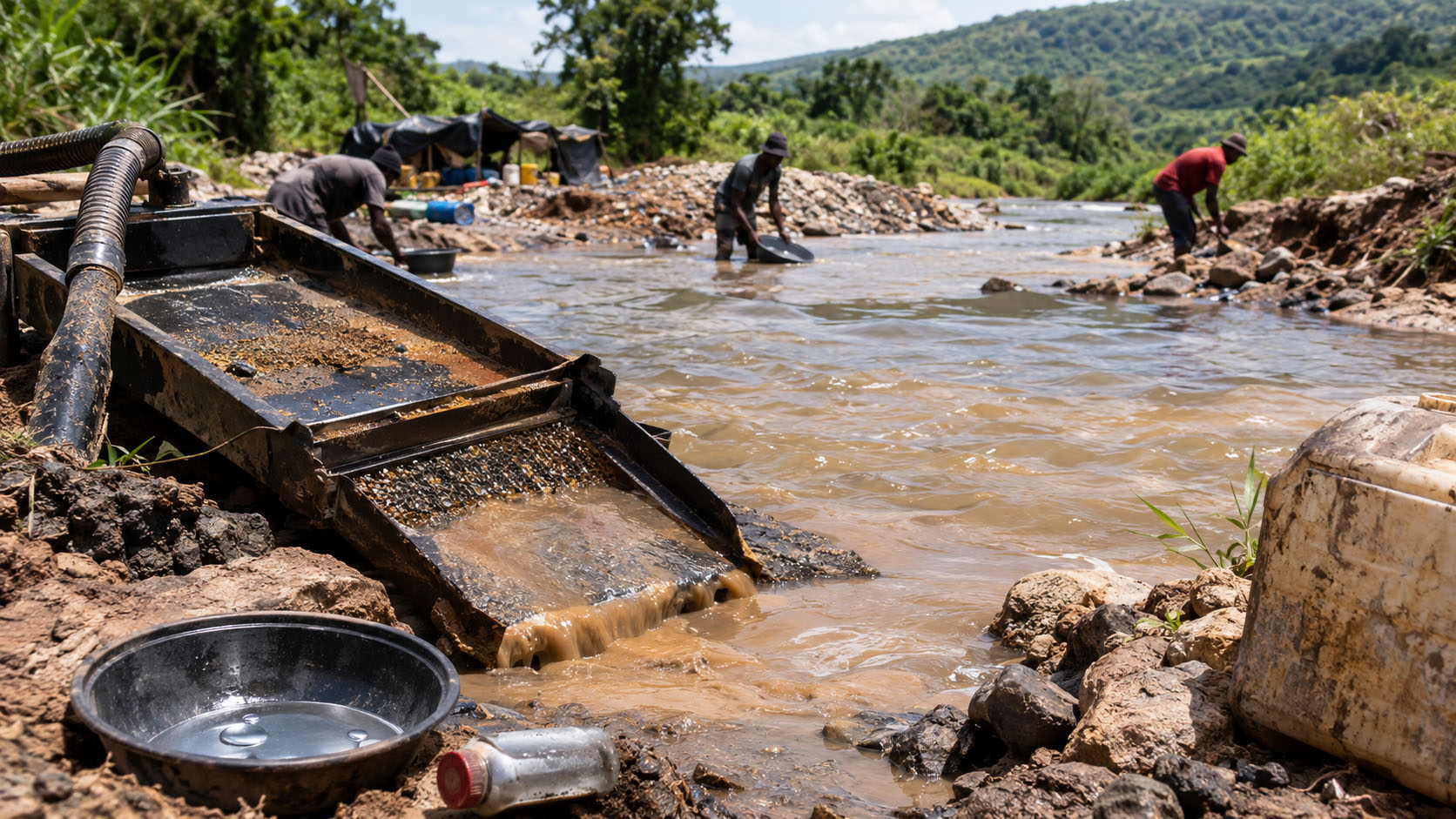
Eswatini: Zama Zamas Phophonyane Pollution Sparks Water Crisis
Summary
- Illegal miners, known as zama zamas, are reportedly polluting Eswatini's Phophonyane River.
- Thousands of emaSwati in Pigg's Peak and northern Hhohho, including Ntfonjeni and Matsamo, depend on the river for water.
- The return of these illicit mining activities has led to significant concerns about the river's water quality.
- The contamination poses a direct threat to the health and livelihoods of the dependent communities.
- The situation highlights critical issues regarding environmental law enforcement and water supply in the Hhohho district.
Critical Water Source Under Threat
The Phophonyane River, a vital water source for thousands of residents across Eswatini, is reportedly facing significant contamination due to a resurgence of illegal mining activities.
The Phophonyane River, a vital water source for thousands of residents across Eswatini, is reportedly facing significant contamination due to a resurgence of illegal mining activities. This critical waterway sustains communities primarily in Pigg's Peak and extends its life-giving flow to other northern Hhohho regions, including Ntfonjeni and Matsamo. The renewed presence of illicit mining operations has directly led to mounting concerns regarding the river's overall water quality, posing a direct threat to the health and livelihoods of those who rely on it daily.
Known locally as 'zama zamas,' these illegal miners are alleged to be the primary cause of the Phophonyane River contamination. Their unauthorized operations introduce pollutants into the river system, jeopardizing the integrity of the water supply for a substantial portion of the Hhohho district. The re-emergence of these activities has brought the issue of Eswatini zama zamas Phophonyane pollution to the forefront, demanding urgent attention from both regulatory bodies and local communities.
Community Dependence and Environmental Impact
The reliance of thousands of emaSwati on the Phophonyane River underscores the severe implications of its pollution. For many, this river is not merely a water source but a lifeline, supporting domestic use, agriculture, and potentially local ecosystems. The deterioration of water quality directly translates into Hhohho water supply issues, impacting daily life and potentially public health across the affected areas. The return of illegal mining activities has thus created an environmental crisis with profound social ramifications.
This widespread Eswatini water pollution from illegal mining operations highlights a broader challenge within the region. The specific nature of mining pollutants, which can include heavy metals and other toxic substances, poses long-term risks to both human health and the delicate aquatic environment of the Phophonyane River. Addressing this contamination is crucial not only for immediate public safety but also for the ecological sustainability of the area.
Navigating Legal and Regulatory Challenges
The ongoing pollution of the Phophonyane River by illegal miners brings into sharp focus the imperative for robust enforcement of Eswatini environmental law and existing mining regulations Eswatini. The activities of zama zamas represent a direct breach of legal frameworks designed to protect natural resources and public health. This situation necessitates a comprehensive response that includes stricter oversight and punitive measures against those engaging in illegal mining Eswatini.
For businesses and individuals operating near the Phophonyane River, particularly those with industrial or commercial interests, the escalating Eswatini zama zamas Phophonyane pollution underscores significant compliance risks. Compliance officers must proactively assess environmental liabilities and potential operational impacts stemming from the degraded water quality. Legal professionals, in turn, are advised to guide their clients on stringent adherence to water quality regulations and to prepare for potential litigation that could arise from affected communities or regulatory bodies seeking redress for environmental damage and public health concerns.
Practical Implications
Compliance officers in Eswatini should assess environmental risks and potential liabilities for operations near the Phophonyane River due to increased illegal mining pollution. Lawyers should advise clients on adherence to water quality regulations and potential litigation from affected communities or regulatory bodies.
Source
How does this affect you?
Get an AI analysis of this article grounded in your jurisdictions, practice areas, and any policy documents you've uploaded to Wansom.
Finish Reading the Full Story and the Expert Analysis.
Get the latest legal & regulatory intelligence in Eswatini
Wansom is AI and can make mistakes.