
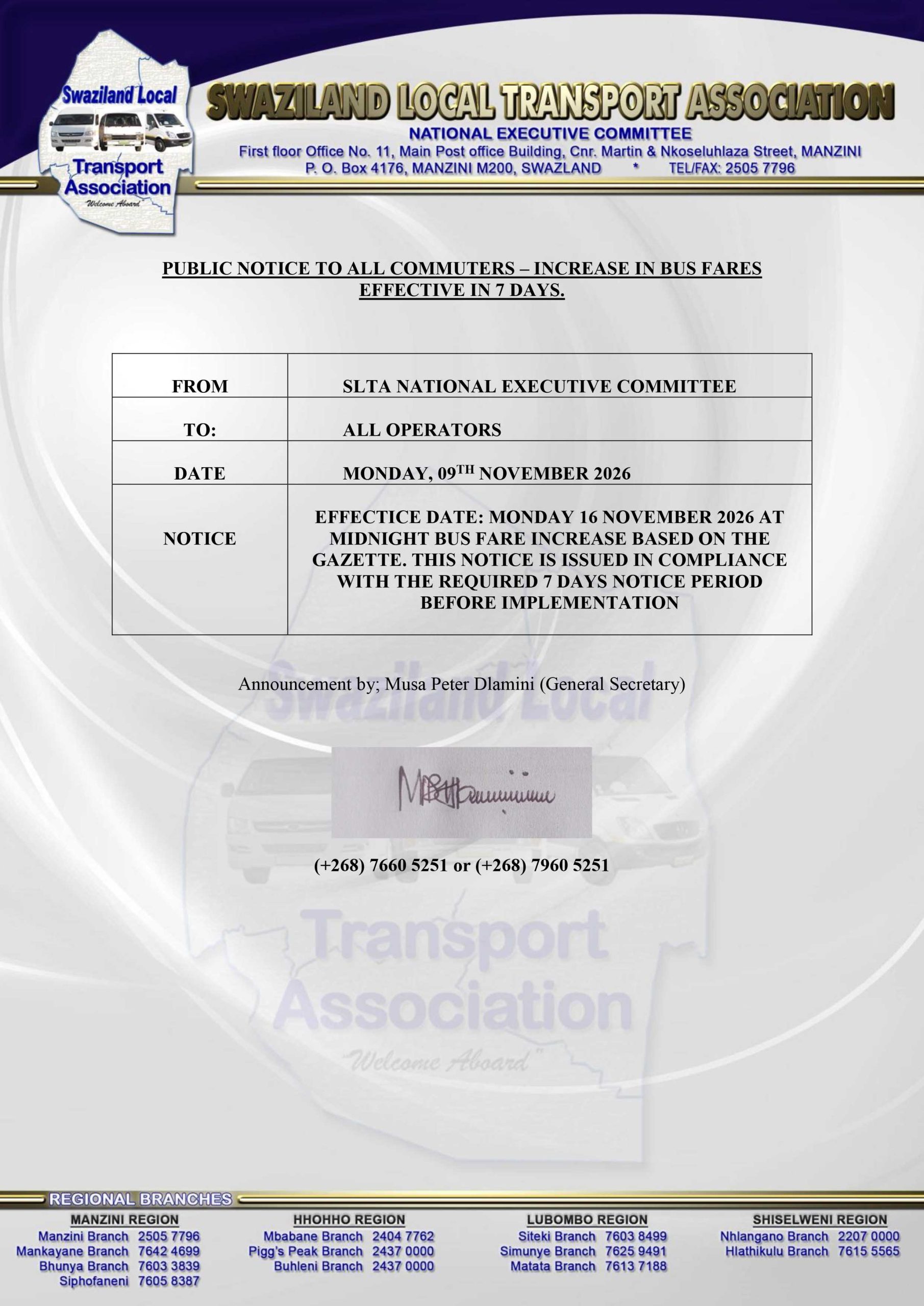
Eswatini: New Bus Fares 2026 Set to Rise November 16
Summary
- Commuters in Eswatini will face higher bus fares starting next week.
- The new tariffs are officially set to commence on Monday, November 16, 2026.
- Transport operators are required to display notices announcing the revised charges.
- The fare increase follows parliamentary approval of the Maximum Bus and Taxi Fares (Amendment) Regulations, 2026.
Impending Adjustments to Eswatini Bus Fares
The formal commencement date for these Eswatini new bus fares 2026 has been established as Monday, November 16, 2026.
Commuters utilizing public bus services across Eswatini are on the cusp of experiencing increased travel costs, as new bus fares are slated to come into effect next week. This significant change means that passengers will be required to pay revised tariffs for their journeys, marking a notable shift in the financial landscape of daily transportation for many. Transport operators are preparing to implement these adjustments, with a clear directive to publicly display notices detailing the updated charges. This measure is intended to ensure full transparency for the traveling public regarding the new pricing structure.
The formal commencement date for these Eswatini new bus fares 2026 has been established as Monday, November 16, 2026. This date signifies the official transition to the new tariff regime, impacting all relevant public transport routes. The requirement for operators to visibly communicate these changes underscores the importance of public awareness and smooth adoption of the revised fare system, which is a direct outcome of recent legislative processes.
Legislative Mandate for New Tariffs
The foundation for these impending fare increases lies in the recent parliamentary approval of the Maximum Bus and Taxi Fares (Amendment) Regulations, 2026. This legislative action provides the necessary legal framework and authority for the revised pricing structure to be implemented across the nation's public transport network. The regulations specifically outline the upper limits for charges that can be levied by both bus and taxi services, thereby standardizing the new Eswatini public transport tariffs.
The parliamentary endorsement of these regulations highlights the formal governmental oversight in determining public service costs. Such approvals are critical in shaping the economic realities for both transport providers and the millions of commuters who rely on these services daily. The process ensures that any adjustments to fares are not arbitrary but are instead a result of a considered legislative decision, aimed at balancing operational costs with public affordability.
Operational Compliance and Public Impact
For transport operators throughout Eswatini, the introduction of the Maximum Bus and Taxi Fares (Amendment) Regulations, 2026, mandates immediate and diligent action. They must not only update their internal fare collection systems but also ensure that the required public notices are prominently displayed, clearly communicating the new charges to passengers before the November 16, 2026, effective date. Adherence to these updated Swaziland transport regulations is paramount for all licensed operators to maintain compliance and avoid potential penalties. This period presents a critical window for operators to align their practices with the new legal requirements.
Conversely, passengers must prepare for the financial implications of these higher fares, which will directly affect their daily or occasional travel budgets. While the precise magnitude of the increase is not specified, the confirmation of a general upward adjustment necessitates a recalibration of personal transport expenses. This development reflects the dynamic nature of public transport economics, where regulatory changes directly translate into tangible impacts on the daily lives of Eswatini's populace. The new Eswatini new bus fares 2026 represent a significant shift for all stakeholders in the public transport sector.
Practical Implications
Lawyers advising transport operators in Eswatini should inform clients of the impending fare increase and ensure compliance with the new Maximum Bus and Taxi Fares (Amendment) Regulations, 2026, effective November 16, 2026.
Source
How does this affect you?
Get an AI analysis of this article grounded in your jurisdictions, practice areas, and any policy documents you've uploaded to Wansom.
Finish Reading the Full Story and the Expert Analysis.
Get the latest legal & regulatory intelligence in Eswatini
Wansom is AI and can make mistakes.