
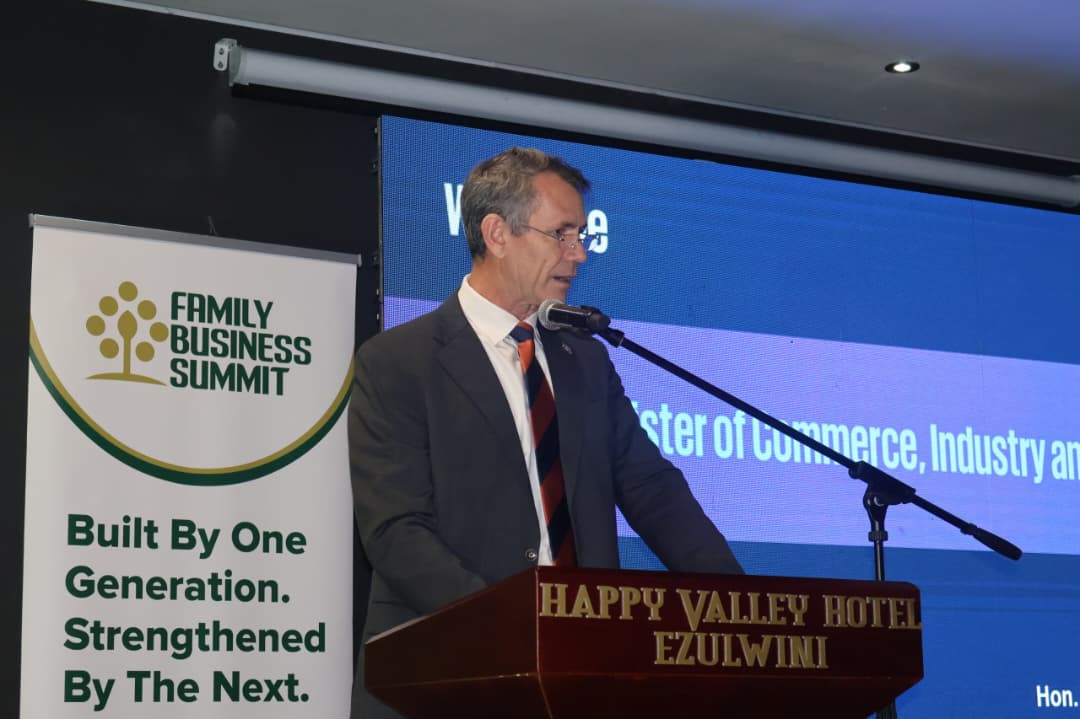
Eswatini Minister Neal: Calls for Family Business Succession Plans
Summary
- Eswatini's Minister for Finance, Neal Rijkenberg, has urged family-owned businesses to establish succession and governance structures.
- The Minister emphasized that these structures are vital for businesses to survive beyond their founders and grow into major enterprises.
- He highlighted the ongoing challenge in Eswatini of businesses failing to transition successfully from one generation to the next.
- The statement, made in Ezulwini, signals a governmental focus on improving long-term business continuity and corporate oversight.
Minister Challenges Eswatini Family Businesses
The Minister's remarks were not merely advisory but framed as a necessary step for these entities to evolve into substantial enterprises.
Eswatini's Minister for Finance, Neal Rijkenberg, has issued a direct challenge to the nation's family-owned enterprises, urging them to prioritize and implement robust succession and governance structures. Speaking from Ezulwini, the Minister underscored the critical importance of these frameworks for the long-term viability and expansion of businesses beyond their founding generations. This public call highlights a governmental focus on improving the resilience and growth potential of a significant segment of the Eswatini economy.
The Minister's remarks were not merely advisory but framed as a necessary step for these entities to evolve into substantial enterprises. He emphasized that without clear plans for leadership transition and sound corporate oversight, many family businesses risk stagnation or failure. This proactive stance by Minister Neal Rijkenberg signals a heightened expectation from the government regarding the strategic planning of Eswatini family businesses, particularly concerning their future leadership and operational integrity.
Addressing a Persistent National Challenge
Minister Rijkenberg explicitly identified the failure of businesses to successfully transition from their founders to subsequent generations as a persistent and significant challenge for Eswatini. This observation points to a systemic issue within the nation's business landscape, where the entrepreneurial spirit of a founding generation often struggles to translate into sustainable, multi-generational corporate entities. The absence of structured Eswatini family business succession planning can lead to instability, loss of institutional knowledge, and ultimately, the demise of otherwise promising ventures.
This challenge is not unique to Eswatini but holds particular significance for its economic development, given the prevalence of family-owned businesses. The Minister of Finance Eswatini succession concerns are therefore deeply intertwined with the broader economic health and stability of the kingdom. His statement serves as a stark reminder that while establishing a business is an achievement, ensuring its continuity and growth through effective intergenerational transfer is equally, if not more, crucial for national prosperity.
Implications for Corporate Governance and Continuity
The Minister's public challenge carries significant implications for corporate governance succession within Eswatini. It suggests that the government is keenly aware of the vulnerabilities inherent in businesses lacking formal succession and governance protocols. For legal professionals advising Eswatini family businesses, this signals a potential for increased scrutiny and perhaps future policy developments aimed at encouraging or even mandating better practices in this area. Proactive engagement with clients on these issues is therefore paramount.
Strengthening Eswatini corporate governance succession and ensuring family business continuity Eswatini requires more than just informal agreements; it demands legally sound frameworks, clear operational guidelines, and transparent decision-making processes. The Minister's call for businesses to 'put structures in place' directly addresses the need for formalizing these critical aspects of business management. This focus on robust Eswatini intergenerational business transfer mechanisms is essential not only for individual enterprise longevity but also for fostering a more stable and predictable economic environment across the nation.
Practical Implications
Lawyers advising Eswatini family businesses should note the Minister of Finance's public challenge, which signals a governmental focus on improving succession planning and governance. This indicates a potential for future policy developments or increased scrutiny, making it crucial to proactively review and strengthen clients' intergenerational transfer and corporate governance structures.
Source
How does this affect you?
Get an AI analysis of this article grounded in your jurisdictions, practice areas, and any policy documents you've uploaded to Wansom.
Finish Reading the Full Story and the Expert Analysis.
Get the latest legal & regulatory intelligence in Eswatini
Wansom is AI and can make mistakes.