
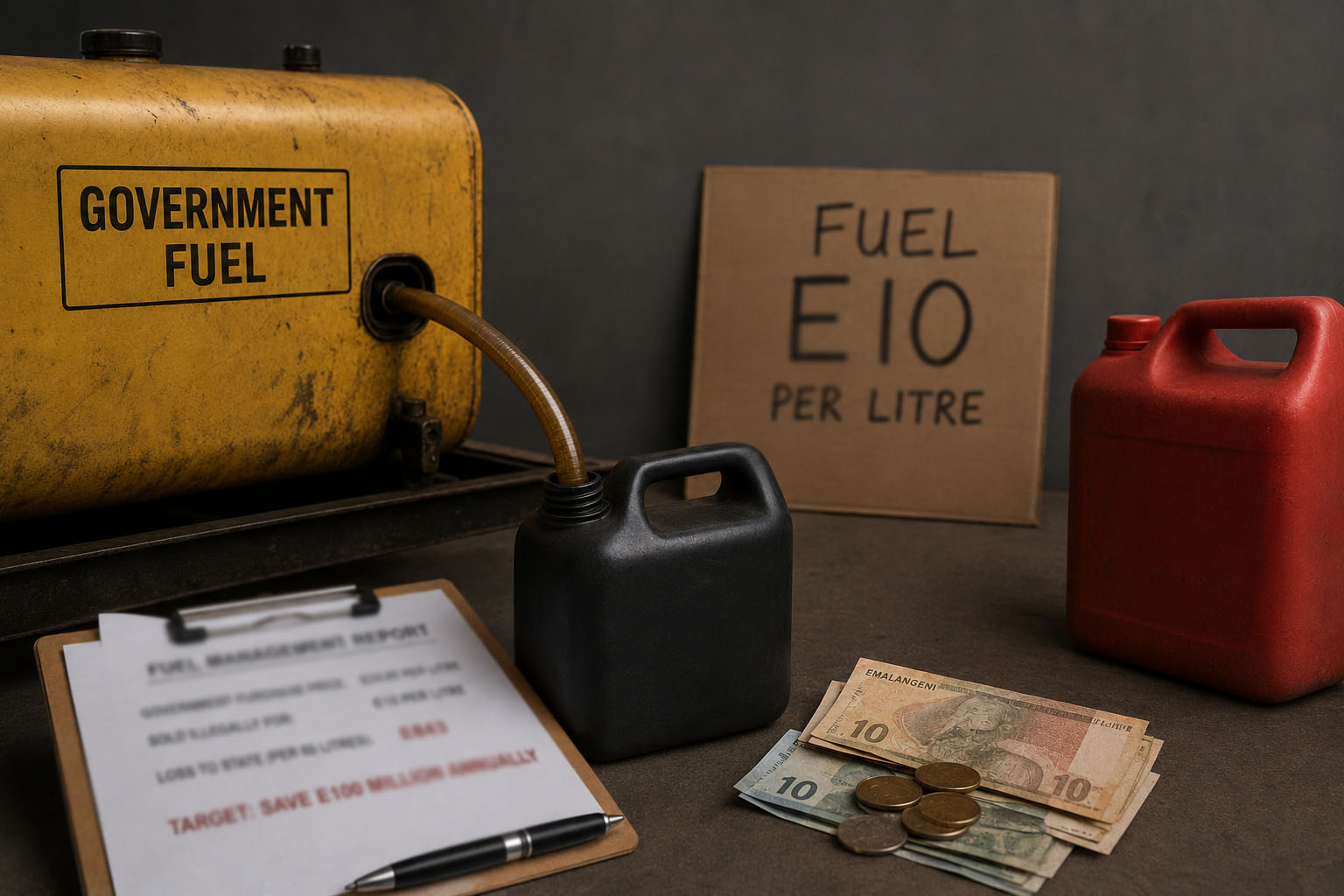
SZ Ministry: Uncovers E10-a-Litre Government Fuel Racket
Summary
- An internal investigation has uncovered allegations of a costly public-sector fuel racket.
- Government fuel, intended for public machinery, was allegedly siphoned off and sold.
- The illicitly obtained fuel was reportedly sold to businesspeople for as little as E10 per litre.
- The probe is being conducted by the Ministry of Public Works and Transport, led by Chief Ndlaluhlaza Ndwandwe.
- The inquiry aims to determine the extent of losses suffered due to alleged corruption and abuse of government resources.
Allegations of Fuel Misappropriation Emerge
The exposure of such a scheme underscores the vulnerability of public assets to internal malfeasance and highlights the critical need for robust oversight and accountability mechanisms within government departments.
An internal probe initiated by the Ministry of Public Works and Transport, under the leadership of Chief Ndlaluhlaza Ndwandwe, has brought to light serious allegations concerning the misappropriation of government fuel. The investigation centers on claims that fuel designated for public machinery was illicitly diverted and subsequently sold off. This alleged scheme reportedly involved transactions with various businesspeople, who were able to acquire the government-owned fuel at a significantly reduced rate, purportedly as low as E10 per litre.
These revelations have unveiled what authorities are describing as a costly and extensive public-sector fuel racket. The findings are part of a broader inquiry by the Ministry, specifically designed to ascertain the full extent of financial losses incurred by the government due to these alleged illicit activities.
Unpacking the Scope of Alleged Corruption
The ongoing internal inquiry by the Ministry of Public Works and Transport is specifically designed to ascertain the full extent of financial losses incurred by the government due to these alleged illicit activities. The scope of the investigation is broad, encompassing not only the direct siphoning and sale of fuel but also the wider implications of corruption and the abuse of government resources. Such practices, if substantiated, represent a significant breach of public trust and a direct drain on taxpayer funds intended for essential public services and infrastructure maintenance.
The focus of the investigation is on understanding how such a system could operate and the mechanisms through which public assets were allegedly exploited for private gain. This detailed examination aims to uncover the systemic vulnerabilities that allowed for the alleged siphoning of fuel and its subsequent sale to private entities at a fraction of its value.
Why This Racket Matters
The alleged E10-a-litre fuel racket carries substantial implications beyond the immediate financial losses. Government machinery, which relies on this fuel for operations ranging from road maintenance to public works projects, would have been directly impacted by the diversion of its allocated resources. This could lead to delays in critical public services, increased operational costs due to fuel shortages, or the need to purchase replacement fuel at market rates, thereby compounding the financial burden on the public purse.
Furthermore, the exposure of such a scheme underscores the vulnerability of public assets to internal malfeasance and highlights the critical need for robust oversight and accountability mechanisms within government departments. The alleged abuse of government resources erodes public confidence in administrative integrity and the efficient use of national funds, making the outcome of this investigation crucial for future governance.
The Path Forward for Accountability
The initiation of an internal investigation by the Ministry of Public Works and Transport signals a proactive approach to addressing the allegations of widespread corruption. Led by Chief Ndlaluhlaza Ndwandwe, the probe aims to meticulously uncover the details of the alleged racket, identify those responsible, and quantify the full financial damage inflicted upon the public sector.
The findings of this investigation will be crucial in determining the next steps, which could range from disciplinary actions against implicated individuals to potential criminal prosecutions, as well as the implementation of enhanced controls to prevent similar abuses in the future. This internal scrutiny is a vital step towards restoring integrity and ensuring the responsible management of government resources, reinforcing the principle that public assets must serve the public good.
Source
How does this affect you?
Get an AI analysis of this article grounded in your jurisdictions, practice areas, and any policy documents you've uploaded to Wansom.
Wansom is AI and can make mistakes.