
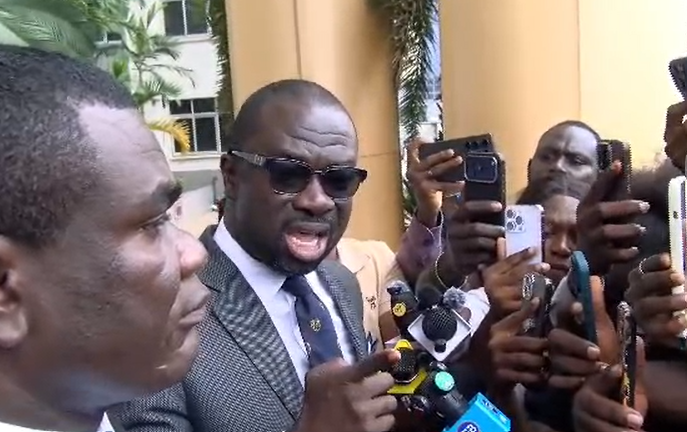
EOCO: Manhyia South MP Parliamentary Privilege Does Not Halt Investigations
Summary
- The Economic and Organised Crime Office (EOCO) stated that a Member of Parliament's status does not end an investigation or place them beyond the law.
- This statement followed an attempted arrest of Manhyia South MP Nana Agyei Baffour Awuah on September 23, 2026, in connection with an ongoing investigation.
- The MP reportedly sought sanctuary in Parliament precincts, despite Parliament being on recess.
- EOCO acknowledges constitutional privileges but maintains its right to pursue statutory duties, clarifying that privilege is not absolute immunity.
- The investigation into the Manhyia South MP remains active, with EOCO committed to respecting the Constitution and rule of law.
Investigation Underway
This clarifies EOCO's stance that parliamentary privilege does not grant absolute immunity from investigation for Members of Parliament in Ghana.
The Economic and Organised Crime Office (EOCO) recently issued a significant clarification regarding the scope of its investigative powers, particularly concerning Members of Parliament in Ghana. This official statement was prompted by an incident involving Nana Agyei Baffour Awuah, the Manhyia South MP, whom EOCO attempted to apprehend on Wednesday, September 23, 2026. The attempted arrest is directly linked to an ongoing investigation being conducted by the office.
Following the incident, the Manhyia South MP reportedly sought refuge within the precincts of Parliament, a move that occurred despite Parliament being in recess at the time. These events led the Economic and Organised Crime Office Ghana to make a public declaration, aiming to delineate its operational principles and its interpretation of parliamentary privilege when faced with criminal inquiries involving elected officials.
Clarifying Parliamentary Privilege
In its official communication, EOCO emphatically stated that a Member of Parliament's status does not, by itself, serve to terminate an active investigation or place an individual beyond the reach of legal processes. While the office explicitly acknowledges and respects the constitutional privileges and immunities afforded to Ghana MPs, it concurrently affirmed its unwavering commitment to ensuring all its operations fully comply with the nation's Constitution and its applicable laws. This position is crucial for understanding the limits of Ghana MP immunity.
The agency further clarified that its stance does not, in any way, signify an intent to disregard parliamentary privilege or any other constitutional protections. EOCO reiterated its pledge not to undertake any action inconsistent with these established safeguards. However, it firmly asserted that parliamentary membership alone does not function as an automatic shield against ongoing inquiries, nor does it exempt an individual from legal accountability. This clarifies EOCO's stance that parliamentary privilege does not grant absolute immunity from investigation for Members of Parliament in Ghana, emphasizing a balanced approach to EOCO powers Members of Parliament.
Implications for Law Enforcement
The investigation involving the Manhyia South MP, Nana Agyei Baffour Awuah, remains active, according to the Economic and Organised Crime Office. The agency has affirmed its unwavering commitment to continuing to discharge its statutory responsibilities. This commitment is consistently balanced with a steadfast respect for the Constitution, the overarching rule of law, and the parliamentary privileges enjoyed by Members of Parliament. The attempted arrest and subsequent statement highlight the ongoing tension between these principles.
This development sets a significant precedent for how law enforcement agencies like EOCO intend to operate when investigating Members of Parliament. It underscores the practical limits of Ghana MP immunity, suggesting that while constitutional protections are upheld, they are not absolute barriers to legitimate criminal investigations. Lawyers advising MPs or clients under investigation should note that while constitutional protections are respected, law enforcement agencies like EOCO will continue to pursue their statutory duties, implying that privilege is not an automatic shield against inquiry. The statement reinforces the fundamental principle that no one, regardless of their parliamentary status, is entirely above the law, ensuring that parliamentary privilege attempted arrest scenarios are handled within legal frameworks.
Practical Implications
This development clarifies EOCO's stance that parliamentary privilege does not grant absolute immunity from investigation for Members of Parliament in Ghana. Lawyers advising MPs or clients under investigation should note that while constitutional protections are respected, law enforcement agencies like EOCO will continue to pursue their statutory duties, implying that privilege is not an automatic shield against inquiry.
Source
How does this affect you?
Get an AI analysis of this article grounded in your jurisdictions, practice areas, and any policy documents you've uploaded to Wansom.
Finish Reading the Full Story and the Expert Analysis.
Get the latest legal & regulatory intelligence in Ghana
Wansom is AI and can make mistakes.