
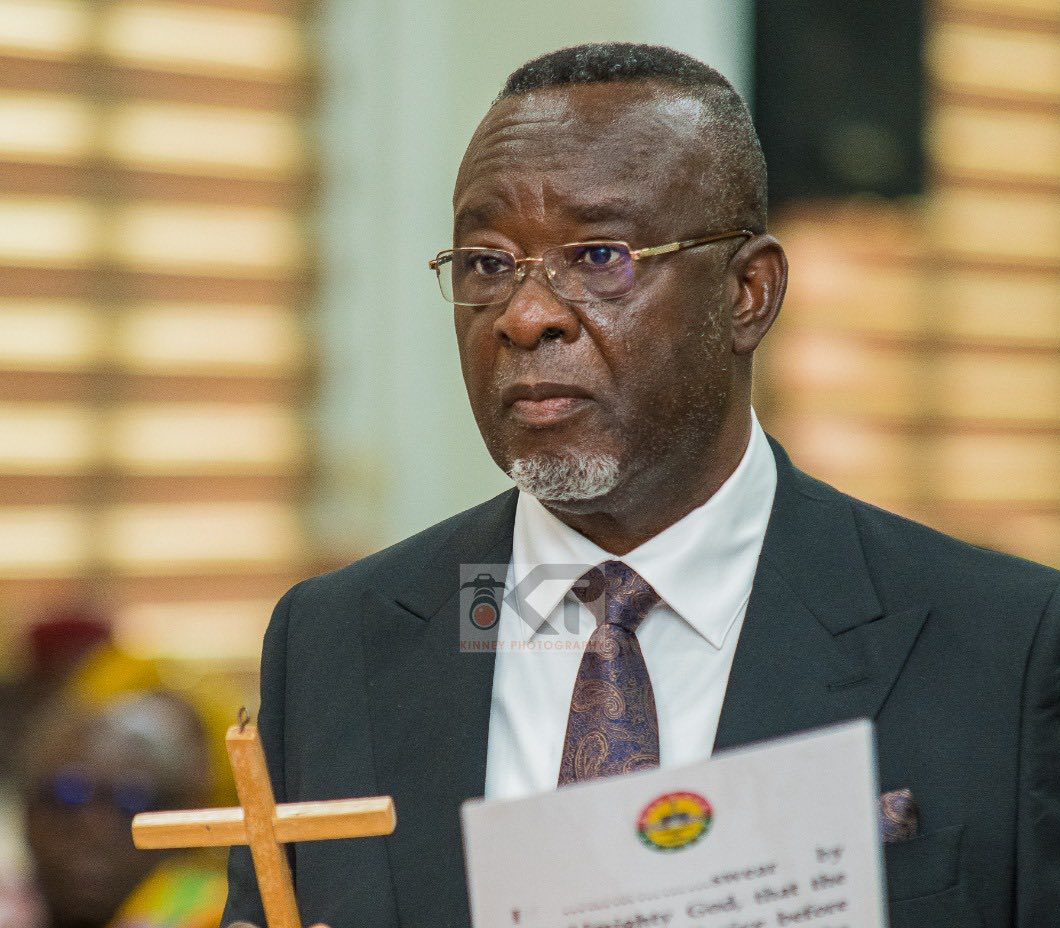
Afenyo-Markin: Ghana Court Premises Arrests Need Chief Justice Review
Summary
- Minority Leader Alexander Afenyo-Markin has urged the Chief Justice to investigate law enforcement's practice of attempting arrests on court premises.
- This call followed an alleged attempt by officers, believed to be from the Economic and Organised Crime Office (EOCO), to arrest Manhyia South MP Nana Agyei Baffour Awuah at the Accra High Court on Wednesday, September 23.
- Mr. Afenyo-Markin questioned whether agencies like EOCO are permitted to enter court grounds solely to apprehend individuals.
- He also highlighted a potential deviation from established parliamentary procedures for state agencies seeking the presence of Members of Parliament.
- The Minority Leader's intervention signals a need for clarity on the conduct of law enforcement within judicial precincts and adherence to protocols concerning elected officials.
Incident Sparks Call for Review
This development signals a potential review by the Chief Justice of Ghana regarding the permissible scope of law enforcement operations, specifically arrests, within court premises.
Minority Leader Alexander Afenyo-Markin has formally requested that the Chief Justice of Ghana undertake a comprehensive examination of the procedures governing law enforcement agencies' attempts to effect arrests within court premises. This urgent appeal stems from a recent incident involving Manhyia South MP Nana Agyei Baffour Awuah, which has brought the issue of Afenyo-Markin Ghana court premises arrests into sharp focus.
The alleged incident occurred on Wednesday, September 23, following the MP's appearance at the Accra High Court. Officers, reportedly from the Economic and Organised Crime Office (EOCO), are said to have attempted to apprehend Mr. Awuah as he was exiting the courtroom. Mr. Afenyo-Markin addressed a press conference in Parliament to voice his profound concerns regarding the conduct of investigating bodies operating within the judiciary's precincts.
According to the Minority Leader, MP Awuah, who is a lawyer, had just concluded defending a client in court when EOCO personnel allegedly positioned themselves to intercept him. This purported 'ambush' on court grounds, as described by Mr. Afenyo-Markin, raises critical questions about the boundaries of law enforcement activities in spaces traditionally considered sanctuaries of justice.
Scrutiny on Law Enforcement Conduct
Mr. Afenyo-Markin's primary concern centers on whether investigating agencies possess the authority to enter judicial facilities with the explicit intention of arresting a suspect or an accused individual. He emphasized that the Chief Justice must provide definitive guidance on this matter, asserting that the justice delivery system itself requires clarity on such protocols.
He specifically questioned the legitimacy of an agency like the Economic and Organised Crime Office Ghana (EOCO) or any other investigative body, establishing a presence on court premises solely to accost a person. The Minority Leader stressed the importance of evaluating this practice within its proper context, highlighting the need for a clear understanding of permissible Ghana law enforcement court conduct to uphold the integrity of judicial proceedings and the rights of individuals.
This intervention underscores the broader debate surrounding Ghana Chief Justice court arrests and the operational autonomy of law enforcement within the judicial sphere, prompting a re-evaluation of established norms and expectations.
Protocols for Parliamentarians
Beyond the immediate incident, Mr. Afenyo-Markin also expressed alarm over what he perceives as a deviation from the long-standing and established procedures for state agencies seeking the presence of Members of Parliament. He outlined the conventional process, which mandates that bodies such as the Office of the Special Prosecutor, the Ghana Police Service, and EOCO formally communicate their requests to the Speaker of Parliament.
Upon receiving such a request, the Speaker is expected to refer the matter to Parliament’s leadership. Subsequently, the leadership collaborates with the legal directorate to facilitate arrangements for the Member of Parliament to make themselves available to the investigating body. This Ghana parliamentary arrest procedure is not intended to grant preferential treatment but is a protocol established due to the unique nature of an MP's duties and responsibilities.
Mr. Afenyo-Markin noted that all state security agencies have historically observed this procedure. Consequently, he posed a pointed question regarding the circumstances surrounding the alleged EOCO arrest Manhyia South MP incident, asking what fundamental aspect of these established protocols had changed to warrant such an approach.
Broader Implications for Justice System
The Minority Leader's call for intervention by the Chief Justice carries significant weight for the broader Ghanaian justice system. His concerns highlight the delicate balance between effective law enforcement and the sanctity of judicial spaces, as well as the constitutional roles of different state institutions.
This development signals a potential review by the Chief Justice of Ghana regarding the permissible scope of law enforcement operations, specifically arrests, within court premises. Lawyers and compliance officers should monitor any forthcoming directives or policy clarifications from the Chief Justice or judicial service that could impact client advice on court appearances, rights during detention attempts, and the established protocols for engaging Members of Parliament.
Clarity on these matters is crucial not only for the protection of individuals appearing before the courts but also for maintaining public confidence in the rule of law and ensuring that all state agencies operate within clearly defined legal and procedural boundaries.
Source
How does this affect you?
Get an AI analysis of this article grounded in your jurisdictions, practice areas, and any policy documents you've uploaded to Wansom.
Finish Reading the Full Story and the Expert Analysis.
Get the latest legal & regulatory intelligence in Ghana
Wansom is AI and can make mistakes.