
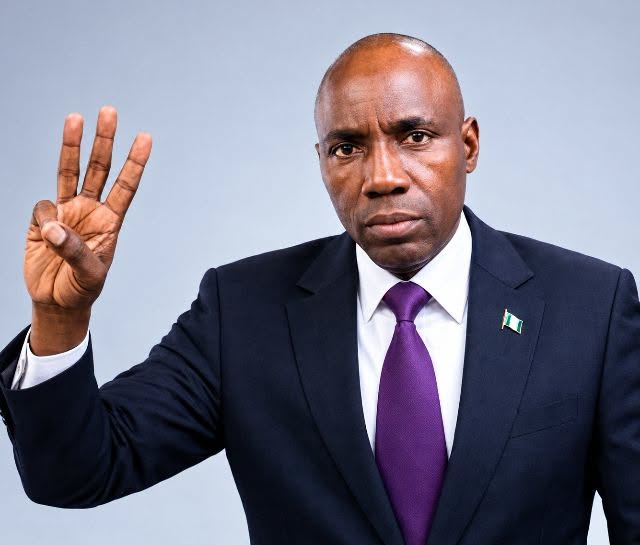
Lusaka High Court: Enock Tonga Release Order Ends Month-Long Detention
Summary
- Opposition leader Enock Roosevelt Tonga was released from detention following an order from the Lusaka High Court.
- He had been held for over a month in Kabwata Police cells after an incident at the Mulungushi Conference Center.
- The detention stemmed from his role as a Third Liberation Movement (3rd LM) election observer, where he questioned the Electoral Commission of Zambia over unverified results.
- During the incident, Mr. Tonga was reportedly assaulted by UPND cadres, an event captured on camera.
- The Lusaka High Court's intervention highlights judicial oversight in politically sensitive detentions.
What Happened
The Lusaka High Court's order for Enock Roosevelt Tonga's release carries significant implications beyond the immediate case, establishing a potential precedent for legal challenges against similar arrests in Zambia.
Enock Roosevelt Tonga, a prominent opposition leader and president of the Third Liberation Movement (3rd LM), recently secured his release from detention following an order from the Lusaka High Court. His confinement had lasted for over a month, with Mr. Tonga held within the Kabwata Police cells. The events leading to his detention originated during his duties as an election observer for the Third Liberation Movement (3rd LM) at the Mulungushi Conference Center, where he publicly challenged the Electoral Commission of Zambia (ECZ) over what he described as unverified election results.
The confrontation at the Mulungushi Conference Center escalated dramatically. While questioning the ECZ, Mr. Tonga was reportedly subjected to an assault by individuals identified as UPND cadres. This physical altercation was captured on camera, providing visual evidence of the incident. Following these events, Mr. Tonga was taken into custody, initiating his prolonged detention.
His release was not a routine administrative process but came about as a direct result of judicial intervention. The Lusaka High Court issued an order for his release, bringing an end to his confinement. This court directive marked a significant development in the case, highlighting the judiciary's role in addressing the circumstances of his detention.
Legal Context and Judicial Intervention
The decision by the Lusaka High Court to order the release of Enock Roosevelt Tonga underscores the critical role of judicial oversight in safeguarding individual liberties, particularly in politically charged environments. Mr. Tonga's detention, which lasted over a month, concluded only after the court's explicit directive. This intervention by the Lusaka High Court demonstrates its capacity to act as a crucial check on executive actions, especially concerning the rights of political figures and observers.
The court's order effectively challenged the legality or justification of Mr. Tonga's continued confinement at the Kabwata Police cells. Such rulings by the Zambia political detention court system are vital in ensuring that detentions, even in sensitive political contexts, adhere to due process and established legal frameworks. The incident, which began with an Electoral Commission of Zambia (ECZ) dispute, evolved into a matter requiring high-level judicial review to resolve the status of a detained opposition leader.
This judicial action reinforces the principle that no individual, regardless of the circumstances of their initial arrest or the political climate, should be held indefinitely without proper legal justification. The court's decision in the Enock Tonga release Lusaka High Court order serves as a powerful reminder of the judiciary's independence and its responsibility to uphold constitutional rights, even when faced with incidents like the Third Liberation Movement (3rd LM) Election observer incident.
Why It Matters
The Lusaka High Court's order for Enock Roosevelt Tonga's release carries significant implications beyond the immediate case, establishing a potential precedent for legal challenges against similar arrests in Zambia. This ruling provides a tangible example for legal practitioners seeking to contest the detention of individuals, particularly those involved in political observation or dissent, who may find themselves held without clear legal grounds for extended periods. The fact that the court intervened to secure Mr. Tonga's freedom after over a month in Kabwata Police cells highlights the judiciary's willingness to scrutinize detentions that might otherwise be perceived as politically motivated.
This case, stemming from an Electoral Commission of Zambia (ECZ) dispute and the subsequent Third Liberation Movement (3rd LM) Election observer incident, reinforces the importance of judicial oversight in maintaining a balance of power and protecting fundamental rights. The public nature of the assault by UPND cadres, reportedly captured on camera, and the subsequent prolonged detention of an opposition leader who questioned election results, brought the matter into sharp focus. The Lusaka High Court's decisive action in the Enock Tonga release Lusaka High Court order sends a clear message about the limits of state power and the recourse available through the legal system.
For lawyers and human rights advocates in Zambia, this judicial outcome could serve as a valuable reference point. It underscores the judiciary's role in safeguarding individual liberties and provides a potential pathway for challenging what might be considered arbitrary or politically motivated detentions. The ruling thus strengthens the framework for accountability and due process within the Zambian legal system, particularly in politically sensitive contexts.
Practical Implications
This case demonstrates the Lusaka High Court's intervention in political detentions, providing a potential precedent for lawyers challenging similar arrests in Zambia. It reinforces the importance of judicial oversight in safeguarding individual liberties, particularly in politically sensitive contexts.
Source
How does this affect you?
Get an AI analysis of this article grounded in your jurisdictions, practice areas, and any policy documents you've uploaded to Wansom.
Finish Reading the Full Story and the Expert Analysis.
Get the latest legal & regulatory intelligence in Zambia
Wansom is AI and can make mistakes.