
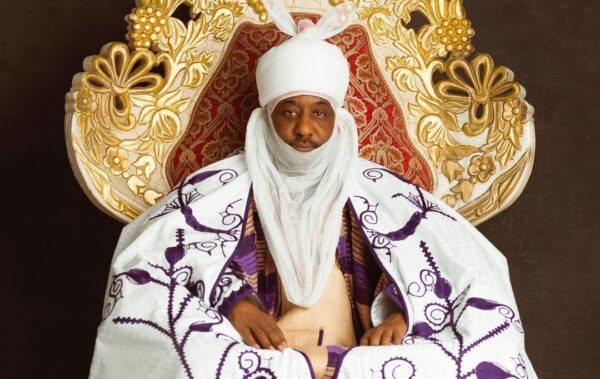
Emir Sanusi: Criticizes Nigeria's Anti-Corruption Partiality
Summary
- Emir Sanusi alleged partiality in Nigeria's anti-corruption efforts during a recent interview.
- His comments were made on Monday during a Channels Television interview in Lagos.
- Sanusi cited the detention of El-Rufai as an example of perceived bias in the anti-corruption war.
- The interview took place on the sidelines of the launch of 'The Unexplained Wealth Trilogy' by SAN Wahab Shittu.
- Sanusi's critique raises concerns about the fairness and potential political influence in Nigeria's anti-corruption campaign.
What Happened
The allegations of partiality in Nigeria's anti-corruption war, coming from a respected public intellectual and traditional ruler like Emir Sanusi, carry significant weight and could have far-reaching implications for public trust in governmental institutions.
On Monday, during an appearance on Channels Television, former Governor of the Central Bank of Nigeria and current Emir, Sanusi Lamido Sanusi, voiced significant concerns regarding the fairness of Nigeria's ongoing anti-corruption campaign. His remarks, made during an interview, specifically highlighted what he perceives as a lack of impartiality in the nation's efforts to combat graft. This public critique from a figure of Sanusi's stature draws attention to the integrity of the anti-corruption drive within Nigeria.
The interview with Channels Television took place on the sidelines of a book launch event held in Lagos. The occasion was the unveiling of ‘The Unexplained Wealth Trilogy’, a new publication authored by Wahab Shittu, a distinguished Senior Advocate of Nigeria (SAN). Sanusi's comments, delivered against this backdrop, underscore a growing discourse surrounding the effectiveness and equity of anti-corruption measures in the country. His intervention adds a powerful voice to the ongoing debate about how the fight against corruption is being waged across Nigeria, focusing on Emir Sanusi anti-corruption partiality Nigeria.
Scrutiny of Anti-Corruption Efforts
Emir Sanusi's central contention revolved around what he described as a discernible bias within the anti-corruption war. He pointed to instances that, in his view, suggest a selective application of justice, rather than a uniform approach to all alleged offenders. This assertion of partiality in Nigeria's anti-corruption war bias is a serious accusation, implying that the campaign may not be as even-handed as its proponents claim.
Among the specific examples cited by Sanusi to illustrate his point was the detention of former Kaduna State Governor, Nasir El-Rufai. While the source text only mentions "detention of El-Rufai" in the context of Sanusi's allegations, it implies Sanusi used this as an example to support his claim of bias. Sanusi's reference to the Sanusi El-Rufai detention serves as a concrete illustration of the perceived inconsistencies in how different individuals are treated under the anti-corruption framework, suggesting political motivations might influence enforcement actions.
Legal and Public Discourse Context
The setting for Emir Sanusi's remarks, the launch of ‘The Unexplained Wealth Trilogy’ by Senior Advocate of Nigeria Wahab Shittu, is particularly noteworthy. Shittu's book likely delves into legal mechanisms and challenges associated with prosecuting individuals who possess wealth disproportionate to their known income, a core aspect of anti-corruption efforts. The presence of a prominent legal mind like Shittu, alongside Sanusi's critical commentary, highlights the intersection of legal theory and practical enforcement in Nigeria's fight against financial malfeasance.
Sanusi's decision to articulate these concerns at an event focused on unexplained wealth, and during a Channels Television interview Sanusi, amplifies their impact. It positions his critique not merely as a casual observation but as a considered statement within a broader intellectual and legal discussion about accountability. The involvement of a Senior Advocate of Nigeria in authoring a book on this subject further legitimizes the conversation around the efficacy and fairness of the anti-corruption framework, providing a scholarly underpinning to the public debate.
Why It Matters
The allegations of partiality in Nigeria's anti-corruption war, coming from a respected public intellectual and traditional ruler like Emir Sanusi, carry significant weight and could have far-reaching implications for public trust in governmental institutions. When a figure of his standing suggests that the anti-corruption drive is not applied uniformly, it risks eroding confidence in the impartiality of law enforcement and judicial processes. Such pronouncements can fuel public skepticism regarding the true motives behind certain investigations and prosecutions.
This critique is particularly relevant in a nation where the fight against corruption is often a central theme in political discourse. Sanusi's comments could be interpreted as a call for greater transparency and accountability in how anti-corruption agencies operate, ensuring that all citizens, regardless of their political affiliations or social standing, are subjected to the same standards of scrutiny. The perception of selective enforcement, as highlighted by Sanusi, can undermine the moral authority of the anti-corruption campaign itself, potentially hindering its long-term success and legitimacy in the eyes of the populace.
Practical Implications
This article highlights a prominent public figure's criticism of the perceived fairness of Nigeria's anti-corruption efforts, which could indicate potential political influence or selective enforcement in future cases. Lawyers should monitor such public discourse as it may signal shifts in enforcement priorities or public perception of anti-corruption agencies, potentially impacting client defense strategies or compliance advice.
Source
How does this affect you?
Get an AI analysis of this article grounded in your jurisdictions, practice areas, and any policy documents you've uploaded to Wansom.
Finish Reading the Full Story and the Expert Analysis.
Get the latest legal & regulatory intelligence in Nigeria
Wansom is AI and can make mistakes.