
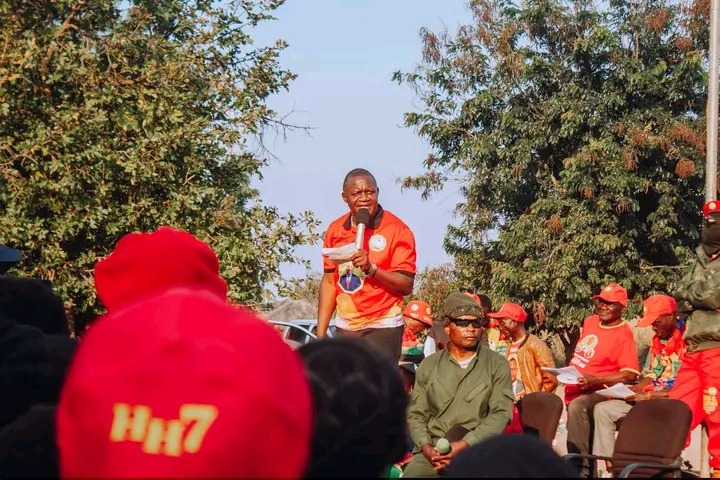
Elvis Nkandu: UPND Denies Directing Election Petitions
Summary
- UPND National Management Committee member Elvis Nkandu stated the party has not enticed anyone to petition an election.
- Nkandu also clarified that the UPND has not instructed any member to file election petitions.
- These statements refute allegations that losing UPND Members of Parliament were directed by the party to challenge their election results.
- The UPND maintains that decisions by its members to petition seats are individual choices, not party mandates.
Party Clarifies Stance on Election Challenges
The UPND, through Nkandu, maintains that it respects the autonomy of its members in such matters.
The United Party for National Development (UPND) has officially denied any involvement in encouraging or directing its members to challenge election outcomes. This clarification comes from Elvis Nkandu, a prominent member of the party's National Management Committee, who addressed recent speculation regarding the party's role in post-election legal proceedings. Nkandu's statement directly refutes claims that the UPND has either enticed or instructed individuals to file petitions following the recent elections.
Specifically, the allegations that Nkandu addressed centered on losing UPND Members of Parliament (MPs) who have opted to petition their respective seats. These petitions, which seek to overturn election results, have led to suggestions that the party itself was orchestrating these legal challenges. However, Nkandu firmly stated that the decisions by these former legislators to pursue legal recourse were made independently, without any form of party inducement or directive. The UPND, through Nkandu, maintains that it respects the autonomy of its members in such matters.
This public declaration by Elvis Nkandu aims to clarify the UPND's position on the ongoing election challenges. It underscores the party's stance that any UPND election petitions filed by its members are individual initiatives, not the result of a coordinated party strategy or instruction. The statement seeks to distance the party leadership from the direct initiation of these legal actions, emphasizing that members are acting on their own volition when pursuing such legal avenues.
Context of Zambian Election Petitions
Election petitions are a standard legal mechanism within Zambia's electoral framework, allowing candidates and parties to challenge results they believe to be flawed or unfairly obtained. These challenges are a critical component of ensuring electoral integrity and providing recourse for aggrieved parties. The decision by some losing UPND Members of Parliament to petition their seats falls within this established legal process, reflecting a common practice in Zambian election challenges where candidates seek judicial review of outcomes.
Allegations of political parties influencing or instructing their members to file such petitions are not uncommon in the highly charged environment following a general election. Such claims often arise from the perception that a party might seek to overturn unfavorable results through legal means, especially when a significant number of its candidates are involved in similar challenges. The Elvis Nkandu statement, therefore, directly addresses this specific type of political accusation, aiming to dispel any notion of central party command regarding these legal actions.
While the legal framework permits individuals to file petitions, the political implications of a party being seen to orchestrate widespread challenges can be significant. It can affect public perception of the electoral process and the party's commitment to democratic outcomes. Nkandu's clarification regarding UPND election petition instructions is thus a strategic move to manage the narrative surrounding the party's post-election activities and to reaffirm that individual members are exercising their legal rights independently.
Political Implications of Nkandu's Statement
The statement by Elvis Nkandu carries significant political weight for the UPND, particularly in shaping public and internal perceptions. By explicitly denying that the party enticed or instructed any of its losing MPs to petition their seats, the UPND leadership is attempting to project an image of adherence to democratic principles and respect for individual agency within the party. This stance could be interpreted as an effort to avoid accusations of manipulating the legal system for political gain, instead framing the petitions as legitimate exercises of legal rights by individual candidates.
Furthermore, Nkandu's refutation of these allegations could also serve to manage internal party dynamics. It clarifies that the party leadership is not imposing a uniform strategy for post-election legal challenges, potentially allowing for greater flexibility among its members. This approach might prevent internal dissent that could arise if members felt pressured into costly and potentially unsuccessful legal battles. The emphasis on individual decision-making regarding UPND losing MPs petitions highlights a decentralized approach to these specific legal actions.
Ultimately, the Elvis Nkandu statement is a crucial communication from the UPND, designed to control the narrative surrounding its engagement with the post-election legal landscape. It aims to reinforce the idea that while the party supports its members, the decision to pursue election challenges rests solely with the individual candidates, free from party coercion or instruction. This strategic communication is vital for maintaining the party's public image and internal cohesion amidst ongoing Zambian election challenges.
Practical Implications
This article reports a political statement from the UPND regarding internal party directives on election petitions. It does not introduce new legal precedent, alter filing deadlines, or create new compliance obligations for lawyers or compliance officers. Its relevance is primarily in understanding the political context surrounding election challenges in Zambia.
Source
How does this affect you?
Get an AI analysis of this article grounded in your jurisdictions, practice areas, and any policy documents you've uploaded to Wansom.
Finish Reading the Full Story and the Expert Analysis.
Wansom is AI and can make mistakes.