
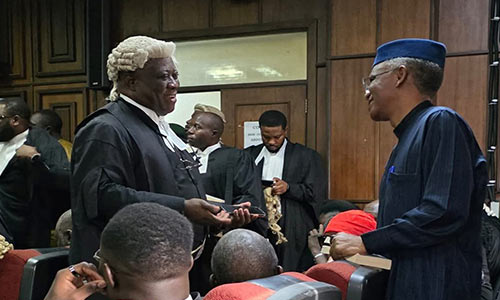
El-Rufai No-Case Submission Dismissal Abuja: FHC Orders Defence
Summary
- The Federal High Court in Abuja dismissed a no-case submission filed by former Kaduna State Governor Nasir El-Rufai.
- Justice Joyce Abdulmalik ruled that the prosecution had presented sufficient evidence in the case.
- El-Rufai is now ordered to present his defence in the trial concerning alleged unlawful telephone interception.
- The charges relate to the alleged illegal monitoring of communications involving National Security Adviser Nuhu Ribadu.
- This decision requires El-Rufai to respond to the charges rather than being acquitted at this stage of the proceedings.
What Happened
This Justice Joyce Abdulmalik ruling serves as a notable precedent, particularly for lawyers navigating similar defence strategies in cases involving allegations of unlawful interception.
The Federal High Court in Abuja recently delivered a significant ruling in the ongoing legal proceedings against former Kaduna State Governor, Nasir El-Rufai. The court, presided over by Justice Joyce Abdulmalik, dismissed a no-case submission presented by El-Rufai's legal team. This decision mandates the former governor to proceed with his defence in the trial, which centers on allegations of unlawful interception of telephone communications.
The charges specifically relate to the alleged illegal monitoring of conversations involving the current National Security Adviser, Nuhu Ribadu. The court's pronouncement effectively means that the prosecution has, in its view, presented enough preliminary evidence to warrant a full defence from the accused. This development marks a critical juncture in the high-profile case, moving it past the initial challenge to the sufficiency of the prosecution's evidence.
Legal Context
A no-case submission is a procedural mechanism in Nigeria's criminal justice system, allowing a defendant to argue that the prosecution has failed to establish a prima facie case against them, even if all the evidence presented by the prosecution were to be believed. If successful, such a submission leads to the acquittal of the defendant without the need for them to present any defence. However, in the case of the Nasir El-Rufai unlawful interception trial, Justice Abdulmalik's ruling determined that the prosecution had indeed furnished sufficient evidence to compel El-Rufai to open his defence.
The court's decision underscores the threshold for dismissing such submissions, indicating that the evidence presented by the prosecution, concerning the alleged unlawful interception of telephone communications, met the required standard. This ruling in the Federal High Court Abuja El-Rufai defence proceedings highlights the judiciary's assessment of the initial evidentiary burden placed on the state, requiring the accused to now respond to the allegations. The dismissal of the Nigeria criminal procedure no-case submission implies that the court found credible material that, if unchallenged, could lead to a conviction.
Why It Matters
The dismissal of El-Rufai's no-case submission in Abuja carries substantial implications, not only for the former governor but also for the broader legal community and the interpretation of evidence sufficiency in high-profile criminal trials. For Nasir El-Rufai, it means he must now present his side of the story, calling witnesses and tendering evidence to counter the prosecution's claims regarding the alleged unlawful interception of Nuhu Ribadu's telephone communications. This shifts the burden to the defence to refute the case built by the state.
This Justice Joyce Abdulmalik ruling serves as a notable precedent, particularly for lawyers navigating similar defence strategies in cases involving allegations of unlawful interception. It signals the court's stance on what constitutes "sufficient evidence" at the close of the prosecution's case, urging legal practitioners to meticulously evaluate the strength of their no-case submissions. The outcome of this specific trial will undoubtedly be closely watched, as it could influence future judicial approaches to evidence presentation and defence tactics in complex criminal matters across Nigeria.
Practical Implications
Lawyers should observe the court's threshold for dismissing no-case submissions in high-profile criminal trials, particularly concerning evidence sufficiency in unlawful interception charges, as this ruling sets a precedent for similar defence strategies.
Source
How does this affect you?
Get an AI analysis of this article grounded in your jurisdictions, practice areas, and any policy documents you've uploaded to Wansom.
Finish Reading the Full Story and the Expert Analysis.
Wansom is AI and can make mistakes.