
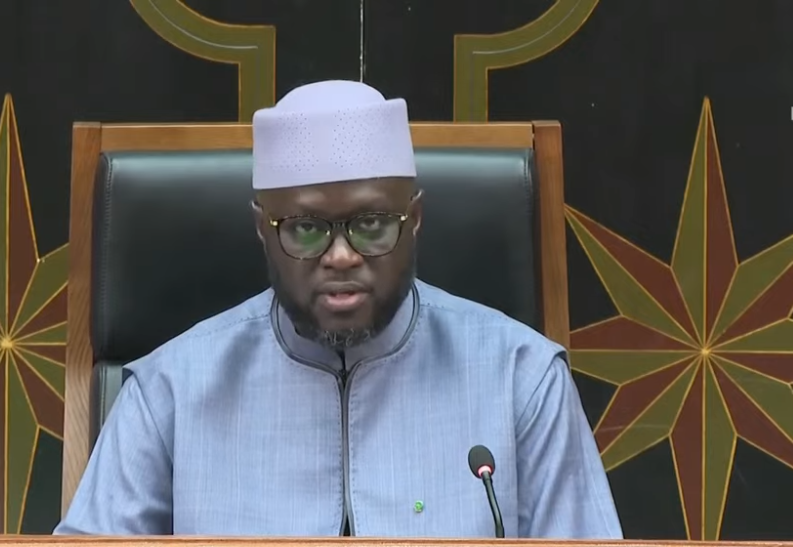
Senegal: El Malick Ndiaye Interpellé After 'En Pause' Remarks
Summary
- El Malick Ndiaye, the First Vice-President of the National Assembly, was apprehended in Senegal on Monday, September 28, 2026.
- His apprehension followed intense overnight debates concerning his statement that the country was "en pause."
- Aldiouma Sow, a political leader of Pastef and a leading figure of the pro-President Faye camp, issued a "riposte" in response to Ndiaye's controversial remarks.
- Separately, Lansana Gagny Sakho, the President of the Board of Directors of the Agency for the Promotion of Investments and Major Works (APIX-SA), called for a summit with President Bassirou Diomaye Faye.
Key Political Figure Apprehended in Senegal
When a public figure is "interpellé" by authorities for describing the country as being "en pause," it sends a potent and unambiguous signal about the potential consequences that can accompany critical or dissenting speech.
On Monday, September 28, 2026, a significant political development unfolded in Senegal with the apprehension of El Malick Ndiaye, the First Vice-President of the National Assembly. This action, often referred to as an "interpellation," indicates that Ndiaye was taken in by authorities for questioning. The move came amidst a backdrop of intense public and political debate that had dominated discussions throughout the preceding night. These debates were primarily fueled by Ndiaye's recent, provocative statements, wherein he characterized the nation as being "en pause," a phrase that quickly became a focal point of national conversation.
The decision to apprehend El Malick Ndiaye underscores the gravity with which his public pronouncements were perceived by certain segments of the political establishment. His critical assessment, suggesting a state of stagnation or inactivity within the country, had clearly garnered widespread attention and generated considerable controversy. This incident on the morning of September 28, 2026, therefore, represents a direct response to a period of heightened political rhetoric and public scrutiny surrounding Ndiaye's influential voice.
Political Reactions and Context
The controversial remarks made by El Malick Ndiaye, particularly his assertion that the country was "on pause," did not go unchallenged within the political arena. His statements directly provoked a strong "riposte" from Aldiouma Sow, a political leader of Pastef and a leading figure of the pro-President Faye camp, signaling a clear and immediate counter-response to Ndiaye's critical stance. Such a public rebuttal from a prominent figure like Sow highlights the contentious nature of the political discourse currently prevalent in Senegal, where differing viewpoints are met with swift and often forceful reactions.
The extensive overnight discussions leading up to Ndiaye's apprehension further illustrate a dynamic and often volatile environment where political speech is under constant scrutiny. The direct interplay between Ndiaye's critical assessment and Sow's public opposition exemplifies the intensity of the political dialogue unfolding across the nation. This incident, therefore, serves as a vivid illustration of the robust, albeit sometimes confrontational, nature of political engagement in Senegal, reflecting the broader challenges faced by public figures who articulate dissenting or critical perspectives.
Broader Political Landscape
Concurrently with the unfolding events surrounding El Malick Ndiaye, another significant political initiative was reported. Lansana Gagny Sakho, the President of the Board of Directors of the Agency for the Promotion of Investments and Major Works (APIX-SA), issued a notable "appel au sommet," or a call for a high-level summit, specifically directed towards President Bassirou Diomaye Faye. This invitation for a top-tier meeting signifies a separate, yet equally important, layer of political activity and strategic engagement within Senegal's leadership circles. While the precise subject matter intended for discussion at this proposed summit was not detailed, its announcement points to ongoing efforts to address pressing national issues through high-level dialogue and collaboration.
The timing of Sakho's initiative, occurring amidst the considerable controversy and subsequent apprehension of El Malick Ndiaye, suggests a period of heightened political dynamism and multifaceted engagement. Such calls for direct dialogue among key political figures are frequently indicative of critical junctures that necessitate concerted action, strategic alignment, or a re-evaluation of national priorities. The convergence of these distinct yet simultaneous political developments paints a comprehensive picture of a politically active and rapidly evolving landscape in Senegal on September 28, 2026.
Implications for Public Discourse
The apprehension of El Malick Ndiaye, directly following his critical commentary on the state of the nation, inevitably raises significant questions regarding the practical boundaries of political expression within Senegal. When a public figure is "interpellé" by authorities for describing the country as being "en pause," it sends a potent and unambiguous signal about the potential consequences that can accompany critical or dissenting speech. This particular incident could, therefore, exert a considerable influence on how other political commentators, activists, and ordinary citizens choose to articulate their views on national affairs and governmental performance in the future.
The legal and broader political ramifications of such an action are substantial, as they contribute to shaping the prevailing climate for public discourse and freedom of speech. The swift and public "riposte" from Aldiouma Sow further underscores the polarized nature of the contemporary political environment, where differing opinions can rapidly escalate into direct confrontations or official responses. This series of events, all unfolding on Monday, September 28, 2026, collectively highlights the delicate and often challenging balance that exists between the constitutional right to freedom of expression and the state's perceived need to respond to commentary that might be interpreted as challenging national stability or its public image.
Source
Source: Original reporting via Senego
How does this affect you?
Get an AI analysis of this article grounded in your jurisdictions, practice areas, and any policy documents you've uploaded to Wansom.
Finish Reading the Full Story and the Expert Analysis.
Get the latest legal & regulatory intelligence in Senegal
Wansom is AI and can make mistakes.