
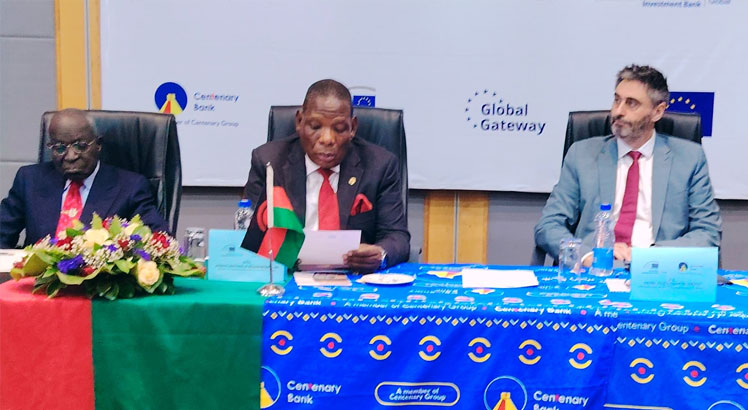
EIB, Centenary Bank Malawi Sign K15 Billion SME Financing Deal
The European Investment Bank (EIB) and Centenary Bank Malawi have formalized a €7.5 million (K15.1 billion) financing agreement in Lilongwe, specifically earmarked to support small-scale agricultural businesses and smallholder farmers. This substantial deal, announced by the Minister of Finance, Economic Planning and Decentralisation, Joseph Mwanamvekha, aims to significantly boost financial inclusion and improve access to much-needed capital within Malawi's vital agricultural sector. It represents a strategic partnership designed to address the persistent challenge of limited financing options for a demographic crucial to the nation's economy.
This financing deal carries significant legal implications across several domains. For the EIB and Centenary Bank, it necessitates adherence to both international lending standards and Malawi's domestic banking and financial regulations, including those related to anti-money laundering (AML) and combating the financing of terrorism (CFT). For the beneficiaries, the small-scale agricultural businesses and smallholder farmers, the legal aspects will involve navigating loan agreements, understanding collateral requirements, and ensuring compliance with the terms of the financing. The focus on this specific sector may also lead to the development of specialized legal instruments or simplified contractual frameworks to facilitate access for less sophisticated borrowers, potentially impacting property law concerning agricultural land and movable assets used as security.
The legal context for this transaction is multifaceted, drawing from Malawi's financial regulatory framework, primarily governed by the Reserve Bank of Malawi Act, the Banking Act, and other relevant financial services legislation. The EIB's involvement also implicates international agreements and treaties to which Malawi is a signatory, particularly those pertaining to development finance and international cooperation. Centenary Bank's lending operations will be subject to prudential regulations set by the Reserve Bank of Malawi, encompassing capital adequacy, loan loss provisioning, and consumer protection. The Minister's endorsement underscores the government's policy objectives in agricultural development and financial inclusion, which may influence future regulatory incentives or legislative reforms in these areas. Key parties include the European Investment Bank (EIB), Centenary Bank Malawi, and the Malawian Minister of Finance, Economic Planning and Decentralisation, Joseph Mwanamvekha, with small-scale agricultural businesses and smallholder farmers as the ultimate beneficiaries.
Practitioners advising financial institutions, agricultural enterprises, or individual farmers should thoroughly familiarize themselves with the specifics of this financing facility. They should be prepared to assist clients in understanding the application process, negotiating loan covenants, and structuring collateral arrangements that comply with both Malawian law and the requirements of the EIB and Centenary Bank. Attorneys should also monitor any related policy changes or regulatory incentives that may emerge from the government to further support the agricultural sector and financial inclusion, as these could influence future investment opportunities and the legal landscape for agricultural finance. This initiative highlights a growing trend of blended finance and public-private partnerships aimed at sustainable development.
How does this affect you?
Get an AI analysis of this article grounded in your jurisdictions, practice areas, and any policy documents you've uploaded to Wansom.
Finish Reading the Full Story and the Expert Analysis.
Get the latest legal & regulatory intelligence in Malawi
Wansom is AI and can make mistakes.