
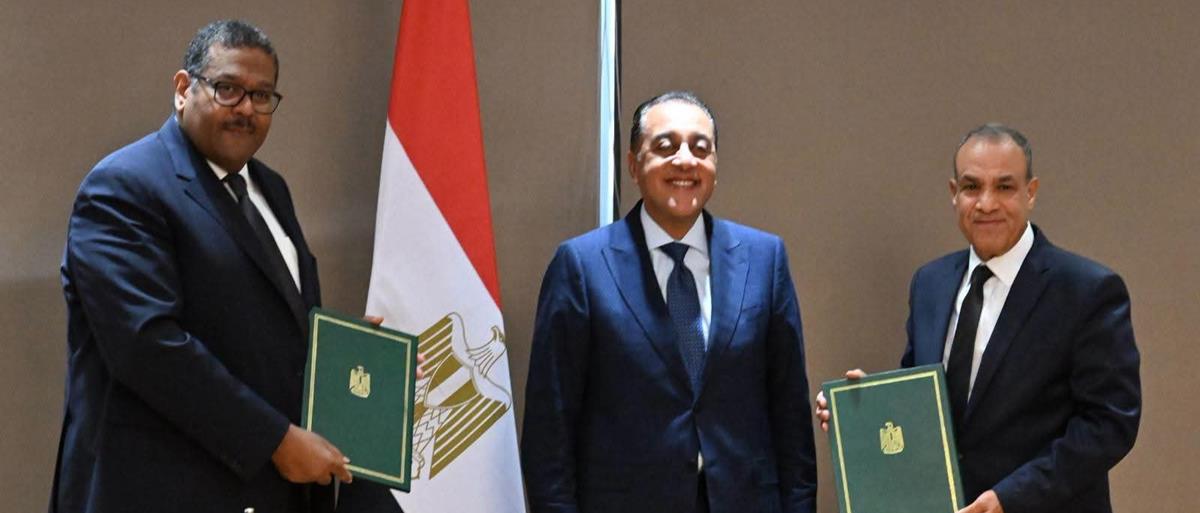
Egypt: World Bank Finalizes $1 Billion DPF Phase II Agreement
Summary
- Egypt's Minister of Foreign Affairs, Badr Abdelatty, signed a $1 billion financing agreement with the World Bank on November 1, 2026.
- The agreement was co-signed by Alwaleed Alatabani, Regional Director at the World Bank.
- This financing is designated as Phase II of the Development Policy Financing (DPF) program.
- Badr Abdelatty also serves as Egypt’s Governor to the World Bank.
- The substantial funding is expected to support Egypt's economic development and reforms.
Key Agreement Signed
The infusion of $1 billion into the Egyptian economy through this World Bank agreement signals potential for new government-backed projects and the acceleration of economic reforms.
A significant financial accord was formally established on Sunday, November 1, 2026, as Egypt’s Minister of Foreign Affairs, International Cooperation, and Expatriates Affairs, Badr Abdelatty, signed a $1 billion financing agreement with the World Bank. Minister Abdelatty, who also holds the position of Egypt’s Governor to the World Bank, co-signed the document with Alwaleed Alatabani, the Regional Director at the World Bank, marking a pivotal moment in the nation's ongoing economic strategy.
This substantial financial commitment falls under Phase II of the Development Policy Financing (DPF) program, indicating a continuation of a broader, multi-stage initiative aimed at supporting Egypt's development objectives. The agreement, often referred to as the Badr Abdelatty World Bank agreement, underscores the sustained partnership between Egypt and the international financial institution, reinforcing the country's access to crucial external funding for its strategic priorities.
Context of the Financing
The $1 billion DPF agreement represents a key component of Egypt's international cooperation financing efforts, providing a significant capital injection into the national economy. The designation as "Phase II" of the Development Policy Financing program suggests that this is not an isolated transaction but rather a subsequent stage in a structured framework designed to address specific policy goals and economic reforms within Egypt.
Such financing mechanisms typically support a range of government-led initiatives, from structural adjustments to sector-specific investments. The involvement of the Egypt foreign minister, Badr Abdelatty, in his capacity as Governor to the World Bank, highlights the high-level governmental commitment to securing and leveraging these international partnerships for national benefit. The Alwaleed Alatabani Egypt loan, facilitated through the World Bank, is poised to play a role in the country's fiscal planning for the coming years.
Economic and Regulatory Implications
The infusion of $1 billion into the Egyptian economy through this World Bank agreement signals potential for new government-backed projects and the acceleration of economic reforms. This substantial financing can provide critical liquidity and investment capacity, enabling the government to pursue initiatives that might otherwise be constrained by domestic funding limitations. The focus on Development Policy Financing implies that the funds are likely tied to specific policy actions or reforms, rather than individual projects, offering flexibility in their deployment across various sectors.
For legal professionals, particularly those specializing in project finance, public procurement, or regulatory compliance, this agreement could herald a period of increased activity. The deployment of these funds may lead to new tender opportunities and necessitate monitoring related legislative changes or regulatory adjustments that could arise from the implementation of associated economic programs. The Egypt World Bank $1 billion DPF agreement thus carries significant implications not only for the nation's economic trajectory but also for the legal and business landscape.
Practical Implications
This substantial financing agreement signals potential for new government-backed projects and economic reforms in Egypt. Lawyers specializing in project finance, public procurement, or regulatory compliance should monitor related legislative changes and tender opportunities arising from the deployment of these funds.
Source
How does this affect you?
Get an AI analysis of this article grounded in your jurisdictions, practice areas, and any policy documents you've uploaded to Wansom.
Wansom is AI and can make mistakes.