
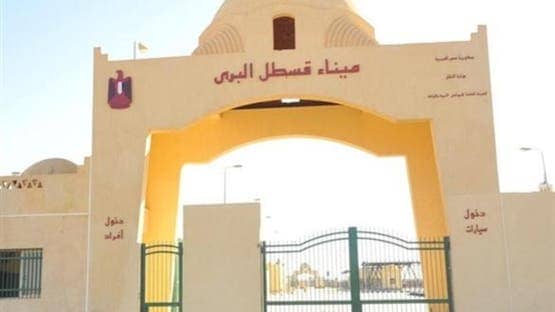
Egypt: Qustul Port Trucks Suspended Amid Sudan Border Security
Summary
- Egypt's Qustul Land Port administration indefinitely suspended truck crossings on October 15, 2026, due to security developments in Sudan's Northern State.
- This decision impacts commercial exchange through both the Egyptian Qustul and Sudanese Ashkeit ports.
- The suspension follows an October 10 incident where approximately 200 Sudanese miners were reportedly killed by warplane shelling near the border.
- Two days later, two Egyptian citizens were killed and one injured in a shooting targeting drivers south of Khartoum.
- Only buses, private cars, microbuses, and individual travelers are currently permitted to cross the border, as per directives from the Egyptian Ministry of Transport.
What Happened
The indefinite suspension of truck transit via the Qustul port marks a critical development for cross-border logistics Egypt Sudan.
On October 15, 2026, the Egyptian Qustul Land Port administration issued new directives, effectively suspending the movement of trucks through the port. These instructions mandate that all trucks destined for the port must first gather in the City Council garage. Their passage via ferries has been halted indefinitely, pending the issuance of further instructions.
This significant measure was implemented in response to escalating security concerns on the Sudanese side of the border, particularly within the Northern State. The restrictions are expected to have a direct impact on the flow of commercial exchange between Egypt and Sudan, specifically affecting operations at both the Egyptian Qustul port and its Sudanese counterpart, Ashkeit. The indefinite suspension of truck transit via the Qustul port marks a critical development for cross-border logistics Egypt Sudan.
Escalating Security Concerns
The decision to restrict truck movements follows a series of violent incidents in Sudan. On October 10, 2026, a grave incident occurred near the Egypt-Sudan border, involving the targeting of Sudanese miners. Eyewitness accounts from the scene reported a devastating attack by warplanes, resulting in the deaths of approximately 200 individuals.
This attack provoked widespread outrage, prompting strong reactions from various political forces, armed movements, and human rights organizations, all of whom called for an an international investigation to uncover the circumstances of the assault and identify those responsible. In response to the incident, Abdel Fattah al-Burhan, who serves as both the Chairman of the Transitional Sovereignty Council and the Commander-in-Chief of the Army, announced the formation of a committee tasked with fact-finding and investigating the incident. Just two days later, on October 12, 2026, another violent event unfolded when an armed individual opened fire on Egyptian drivers south of the capital, Khartoum, leading to the deaths of two Egyptian citizens and injuries to a third. These events highlight the severe Sudan Northern State security impact.
Official Directives and Permitted Traffic
The new restrictions on truck movement are formalized through a letter issued by the General Authority for Land and Dry Ports, an entity under the Egyptian Ministry of Transport. This communication was addressed to the head of the City Council, outlining the scope of the revised border crossing procedures.
According to the directive, during this period of heightened security, only specific categories of traffic are permitted to cross the border. These include buses, private cars, microbuses, and individual travelers. All truck movements, however, are now subject to these new directives, which effectively halt their passage. The letter explicitly states that these measures are based on instructions from the Authority's presidency, necessitated by the ongoing developments in Sudan and their potential repercussions on border operations.
Broader Implications for Trade
The indefinite suspension of truck crossings at Qustul port represents a significant Egypt Sudan border trade disruption. This measure, driven by the volatile security situation in Sudan, will inevitably impact supply chains and the movement of goods between the two nations. The Qustul Ashkeit port restrictions mean that businesses relying on this vital land route for commercial exchange must urgently reassess their logistical strategies.
While the movement of people continues, the halt in cargo transport underscores the severity of the security challenges. The directive from the Egyptian Ministry of Transport indicates a cautious approach to cross-border logistics Egypt Sudan, prioritizing security over the immediate resumption of full commercial traffic. Stakeholders in cross-border trade will need to monitor the situation closely for any new instructions that might ease these restrictions.
Practical Implications
Lawyers advising clients engaged in Egypt-Sudan cross-border trade or logistics must immediately inform them of the indefinite suspension of truck transit via the Qustul port. This requires urgent review of supply chain strategies and compliance with new transport restrictions affecting goods movement between the two countries.
Source
How does this affect you?
Get an AI analysis of this article grounded in your jurisdictions, practice areas, and any policy documents you've uploaded to Wansom.
Finish Reading the Full Story and the Expert Analysis.
Get the latest legal & regulatory intelligence in Sudan
Wansom is AI and can make mistakes.