
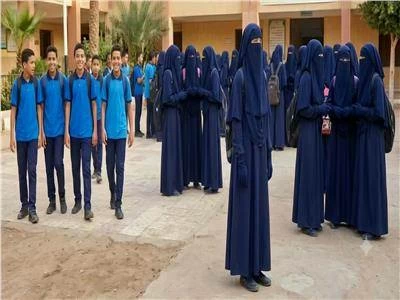
Egypt Ministry of Education: School Administrators Penalized Over Niqab Rumor
Summary
- A social media post falsely claimed a mandatory face veil policy at Nagaa Said Preparatory Co-educational School in Dishna, Qena Governorate.
- Egypt’s Ministry of Education and Technical Education confirmed the post was an error and promptly removed it.
- The school principal and the Facebook page administrator were referred to legal affairs for their role in the incident.
- The incident highlights the serious repercussions for school administrators disseminating unverified information.
False Niqab Mandate Sparks Controversy
Both the principal of the Nagaa Said Preparatory Co-educational School and the administrator of its official Facebook page have been formally referred to legal affairs, indicating a serious view of the incident by the authorities.
A recent incident involving a social media post claiming a mandatory face veil policy at an Egyptian educational institution has drawn significant attention. The post, which quickly circulated online, erroneously stated that students at the Nagaa Said Preparatory Co-educational School, located in Dishna within the Qena Governorate, would be required to adhere to a niqab mandate. This assertion, disseminated through official channels, created confusion and concern among the public.
The contentious social media update originated from the school's own Facebook page, leading many to believe it represented an official directive. The claim of a compulsory face veil policy at the Nagaa Said Preparatory School in Dishna, Qena Governorate, was later confirmed to be entirely unfounded, highlighting the potential for misinformation to spread rapidly through digital platforms, even when originating from seemingly authoritative sources.
Ministry's Swift Intervention and Accountability
In response to the erroneous declaration, Egypt’s Ministry of Education and Technical Education promptly intervened to clarify the situation. The ministry officially confirmed that the social media post regarding a mandatory niqab policy was published in error and did not reflect any actual policy or directive from the school or the ministry itself. This clarification was crucial in dispelling the false information that had begun to circulate.
Following the ministry's intervention, the misleading post was swiftly removed from the school's Facebook page. More significantly, the individuals responsible for its publication faced immediate repercussions. Both the principal of the Nagaa Said Preparatory Co-educational School and the administrator of its official Facebook page have been formally referred to legal affairs, indicating a serious view of the incident by the authorities. This referral underscores the accountability expected from school administrators regarding public communications, especially concerning sensitive topics like religious attire in educational settings.
Broader Implications of Misinformation in Education
This episode serves as a stark reminder of the critical importance of accurate and verified information, particularly when it pertains to educational policies and cultural sensitivities. The rapid spread of a false niqab mandate rumor at an Egypt school demonstrates how easily unverified claims can cause public distress and undermine trust in institutions. The Ministry of Education and Technical Education's decisive action to penalize the administrators involved highlights a commitment to maintaining clear and truthful communication channels.
The referral of the school principal and the Facebook page administrator to legal affairs sends a strong message about the severe consequences for institutional representatives who disseminate unverified or false information. Such incidents underscore the need for robust internal communication protocols and stringent social media policies within educational bodies to prevent similar errors. Ensuring accountability for public statements, especially those that touch upon deeply personal or religious matters, is paramount for maintaining order and public confidence in Egypt's educational system.
Practical Implications
This incident highlights the severe consequences for institutional representatives, even school administrators, who disseminate unverified or false information, particularly on sensitive social issues. Compliance officers and legal teams should review internal communication protocols and social media policies to prevent similar errors and ensure accountability for public statements.
Source
How does this affect you?
Get an AI analysis of this article grounded in your jurisdictions, practice areas, and any policy documents you've uploaded to Wansom.
Finish Reading the Full Story and the Expert Analysis.
Wansom is AI and can make mistakes.