
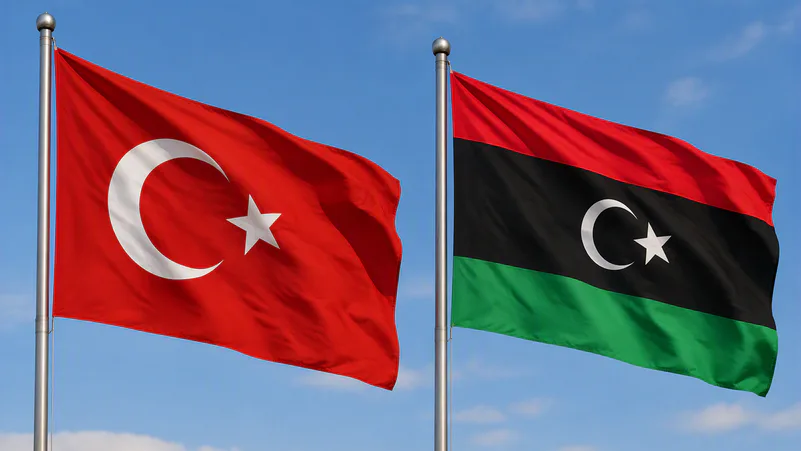
Egypt Rejects Libya-Turkey Maritime Deal Ratification as Invalid
Summary
- Egypt formally rejected the Libyan House of Representatives' ratification of a 2019 maritime deal with Türkiye on Wednesday.
- Cairo asserts that this ratification holds no legal validity for Egypt.
- The Egyptian Foreign Ministry reiterated its opposition to any actions that contradict Egypt's established maritime boundaries.
- Egypt maintains that the original 2019 memorandum was signed by a former Libyan government.
Egypt's Firm Rejection
The Egyptian Foreign Ministry explicitly communicated this stance, reinforcing its long-held opposition to any unilateral actions that could infringe upon its established maritime claims in the region.
Egypt has officially dismissed the recent ratification by Libya's eastern-based House of Representatives of a 2019 maritime memorandum with Türkiye. This rejection, announced on Wednesday, underscores Cairo's consistent position that such an agreement holds no legal standing or effect on its own sovereign interests and declared maritime boundaries. The Egyptian Foreign Ministry explicitly communicated this stance, reinforcing its long-held opposition to any unilateral actions that could infringe upon its established maritime claims in the region.
The declaration from Cairo makes it clear that Egypt views the ratification as an invalid act. This firm diplomatic response highlights the ongoing tensions surrounding maritime delimitations in the Eastern Mediterranean, with Egypt asserting its right to protect its territorial waters and economic zones against what it perceives as legally unfounded agreements. The statement serves as a direct challenge to the legitimacy of the ratification process undertaken by the Libyan legislative body.
The Contested 2019 Maritime Deal
At the heart of Egypt's objection lies the original 2019 maritime memorandum of understanding between Türkiye and Libya. Cairo's position has consistently been that this initial agreement, which purports to delineate maritime boundaries, was signed by a former Libyan government. This historical context is crucial to understanding Egypt's current rejection, as it implies a fundamental challenge to the authority and legitimacy of the parties involved in concluding the original deal.
The Türkiye Libya maritime memorandum itself has been a source of significant geopolitical friction, particularly concerning its implications for the Eastern Mediterranean. It outlines a maritime corridor that, from Egypt's perspective, encroaches upon its exclusive economic zone and conflicts with international law governing maritime boundaries. The recent ratification by Libya's eastern-based House of Representatives, therefore, is seen by Egypt not as a new agreement, but as an attempt to legitimize an already disputed and, in Cairo's view, illegal arrangement.
Regional Implications and Legal Stance
The Egyptian Foreign Ministry's reiteration of its opposition to any action conflicting with its declared maritime boundaries carries substantial legal and geopolitical weight. This move by Egypt signals continued diplomatic and potential legal challenges to the Türkiye-Libya maritime memorandum, impacting the broader Eastern Mediterranean region. The dispute over maritime boundaries in this energy-rich area has significant Eastern Mediterranean legal implications for resource exploration, navigation rights, and regional stability.
Egypt's steadfast position underscores the complex legal landscape of the Eastern Mediterranean, where various nations have competing claims to hydrocarbon resources and maritime zones. The rejection of the Libyan parliament’s ratification serves as a clear message that Egypt will not recognize agreements that it believes violate its sovereign rights or established international maritime law. This ongoing Egypt maritime boundaries dispute contributes to the uncertainty surrounding future energy projects and investment decisions in the disputed waters, highlighting the need for a comprehensive and internationally recognized framework for maritime delimitation in the region.
Practical Implications
Lawyers advising clients on energy exploration, shipping, or geopolitical risk in the Eastern Mediterranean should note Egypt's explicit rejection of the Libya-Turkey maritime deal. This signals ongoing legal and diplomatic challenges to the agreement's validity, potentially impacting future resource allocation, navigation rights, and investment decisions in the disputed waters.
Source
How does this affect you?
Get an AI analysis of this article grounded in your jurisdictions, practice areas, and any policy documents you've uploaded to Wansom.
Finish Reading the Full Story and the Expert Analysis.
Get the latest legal & regulatory intelligence in Egypt
Wansom is AI and can make mistakes.