
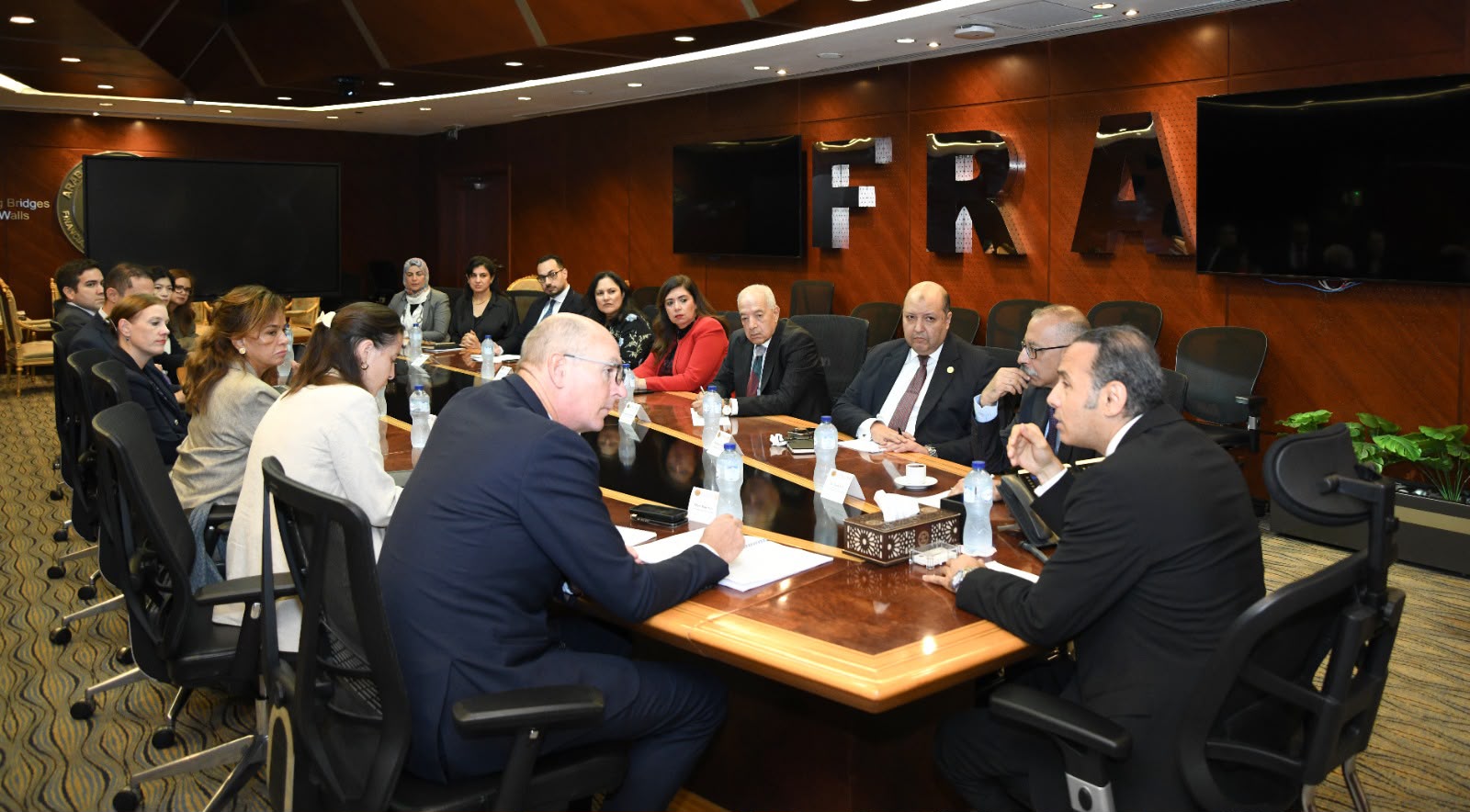
Egypt FRA: EBRD Cooperation Targets Non-Bank Financial Sector Growth
Summary
- FRA Chairperson Islam Azzam met with EBRD Vice President Mark Bowman and his delegation.
- Discussions focused on expanding the European Bank for Reconstruction and Development's investments and operations in Egypt.
- A key objective was to enhance cooperation between the EBRD and Egyptian institutions to support development efforts.
- Both parties specifically aimed to boost the attractiveness of Egypt's non-bank financial sector.
Overview of Recent Discussions
The overarching goal of this collaboration is to cultivate an environment that is highly conducive to growth and innovation within this specialized financial domain.
The Financial Regulatory Authority (FRA) of Egypt recently hosted a high-level meeting focused on enhancing collaboration with international development partners. Islam Azzam, Chairperson of the FRA, welcomed Mark Bowman, the European Bank for Reconstruction and Development's (EBRD) Vice President for Policy and Partnerships, along with his accompanying delegation. The primary objective of these discussions centered on exploring avenues for increased cooperation between the EBRD and various Egyptian institutions.
A significant part of the agenda involved strategizing ways to bolster development efforts across Egypt. Furthermore, the dialogue aimed at identifying opportunities to expand the European Bank for Reconstruction and Development's existing investments and operational footprint within the Egyptian market. This engagement underscores a mutual interest in fostering economic growth and stability through targeted interventions and partnerships.
A key area of focus during the deliberations was the non-bank financial sector in Egypt. Both parties expressed a keen interest in discussing measures to significantly boost the attractiveness of this vital segment of the financial landscape. This emphasis highlights a strategic recognition of the non-banking financial services' potential to contribute to broader economic diversification and resilience.
Strategic Objectives and Market Impact
The recent engagement between the Financial Regulatory Authority Egypt and the European Bank for Reconstruction and Development signals a concerted strategic effort to invigorate a crucial segment of the nation's economy. By specifically targeting the Egyptian non-banking financial services sector, the discussions underscore a deliberate intent to diversify financial offerings beyond traditional banking institutions. This focus is anticipated to attract additional capital and specialized expertise into the market, potentially leading to the introduction of new regulatory frameworks or innovative market instruments designed to benefit various non-bank financial institutions.
The overarching goal of this collaboration is to cultivate an environment that is highly conducive to growth and innovation within this specialized financial domain. Such developments are expected to enhance market efficiency, improve access to finance for a wider range of businesses and individuals, and ultimately contribute to broader economic stability and development across Egypt. The emphasis on boosting the sector's attractiveness suggests a proactive approach to addressing any existing barriers to entry or growth, paving the way for a more dynamic and competitive financial ecosystem.
Broader Context of International Cooperation
The ongoing dialogue between the FRA and the EBRD is indicative of Egypt's commitment to leveraging robust international partnerships for sustained economic advancement. The European Bank for Reconstruction and Development frequently engages with national regulatory bodies, such as the Financial Regulatory Authority Egypt, to strengthen financial infrastructure and promote sustainable development across its regions of operation. This proactive approach to international cooperation is a cornerstone of the EBRD's mandate, aiming to facilitate market-oriented economies and private sector development.
Such collaborative efforts, particularly in specialized areas like the Egyptian non-banking financial services, often encompass a multifaceted approach. This can include providing crucial technical assistance, offering expert policy advice, and facilitating direct investment, all of which can lead to significant regulatory evolution and market maturation. For various stakeholders operating within the non-bank financial sector, these discussions between the FRA EBRD cooperation Egypt could potentially pave the way for enhanced market access, the implementation of improved governance standards, and the establishment of a more robust and internationally aligned regulatory landscape. This strategic alignment with global best practices is vital for attracting foreign direct investment and fostering long-term growth within the sector.
Practical Implications
Lawyers and compliance officers advising non-bank financial institutions in Egypt should monitor the outcomes of FRA-EBRD cooperation discussions for potential regulatory reforms, new investment frameworks, or market development initiatives that could impact their clients' operations or compliance obligations.
Source
How does this affect you?
Get an AI analysis of this article grounded in your jurisdictions, practice areas, and any policy documents you've uploaded to Wansom.
Finish Reading the Full Story and the Expert Analysis.
Get the latest legal & regulatory intelligence in Egypt
Wansom is AI and can make mistakes.