
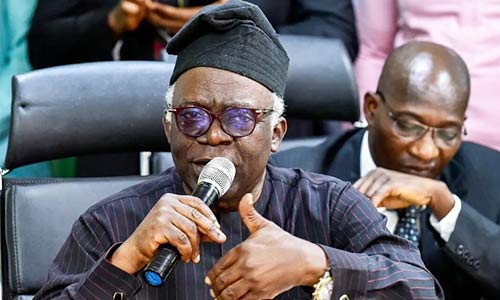
Femi Falana Defends EFCC's Osun Account Freeze: No Illegality
Summary
- Femi Falana defends EFCC's decision to freeze Osun State Government account.
- Falana argues that the EFCC did not act illegally in restricting the account.
- The move had been met with controversy, particularly given the context of the then-upcoming elections in Nigeria.
- Falana's comments came after a public directive from Bola Tinubu, who was then a prominent politician and is now the President of Nigeria, which some had interpreted as an attempt to influence the EFCC's actions.
What Happened
Falana emphasized that the EFCC must not look away from investigating corruption simply because elections are coming up.
Femi Falana, a Senior Advocate of Nigeria and human rights lawyer, has defended the Economic and Financial Crimes Commission's (EFCC) decision to freeze an account belonging to the Osun State Government. According to Falana, the EFCC did not act illegally in restricting the account, as it is within their powers to do so with the necessary court order. The move had been met with controversy, particularly given the context of the then-upcoming elections in Nigeria. Falana's comments came after a public directive from Bola Tinubu, who was then a prominent politician and is now the President of Nigeria, which some had interpreted as an attempt to influence the EFCC's actions.
Legal Context
The power of anti-graft agencies like the EFCC in Nigeria is governed by various laws and regulations. The EFCC Act 2004 grants the Commission the authority to investigate and prosecute financial crimes, including those involving government officials or institutions. In this case, the EFCC's decision to freeze the Osun State Government account was likely made under Section 34 of the EFCC Act, which allows for the freezing of assets in cases where there is a reasonable suspicion of money laundering or other financial crimes. The court order required for such actions ensures that the Commission's powers are not abused.
Why It Matters
Falana's defense of the EFCC's actions highlights the importance of allowing anti-graft agencies to operate independently, without interference from politicians or other external factors. The ruling may have significant implications for future anti-corruption investigations, particularly those involving state governments. Lawyers advising clients on matters related to financial crimes and government accountability should take note of this development and consider its potential impact on their cases. As Falana emphasized, the EFCC must not look away from investigating corruption simply because elections are coming up.
Practical Implications
Lawyers should note that the ruling may have implications for future anti-corruption investigations, particularly those involving state governments, and advise clients accordingly.
Source
How does this affect you?
Get an AI analysis of this article grounded in your jurisdictions, practice areas, and any policy documents you've uploaded to Wansom.
Wansom is AI and can make mistakes.