
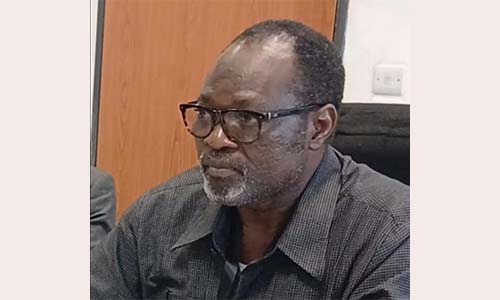
EFCC Appeals Jimoh Yisawu Forfeiture: Challenges $912,550 Rejection
Summary
- The Economic and Financial Crimes Commission (EFCC) has appealed a Federal High Court judgment concerning asset forfeiture.
- The judgment rejected the EFCC's application for the final forfeiture of $912,550 and two properties linked to Jimoh Olasunkanmi Yisawu.
- Jimoh Olasunkanmi Yisawu is the former Managing Director of the Warri Refining and Petrochemical Company.
- The appeal follows a judgment delivered by Justice J.K. Omotosho on Monday, November 9, 2026.
- The EFCC argues that the lower court failed to adequately evaluate its evidence in the initial ruling.
What Happened
The EFCC's decision to appeal the Jimoh Yisawu forfeiture case sends a clear signal regarding its resolve in anti-corruption efforts.
The Economic and Financial Crimes Commission (EFCC) has formally launched an appeal against a recent Federal High Court decision. This judicial action challenges the court's rejection of the EFCC's application for the final forfeiture of significant assets, including $912,550 and two distinct properties. These assets are directly linked to Jimoh Olasunkanmi Yisawu, who previously served as the Managing Director of the Warri Refining and Petrochemical Company.
The appeal by the Economic and Financial Crimes Commission follows a judgment delivered by Justice J.K. Omotosho on Monday, November 9, 2026. The core of the EFCC's challenge rests on the assertion that the lower court failed to adequately evaluate the evidence presented during the initial proceedings. This indicates a strong belief from the anti-graft agency that the evidence was sufficient to warrant the forfeiture of Jimoh Olasunkanmi Yisawu's assets.
Legal Context of the Forfeiture Attempt
The initial legal action saw the EFCC seeking a final forfeiture order for the substantial sum of $912,550 and two properties, alleging they were proceeds of illicit activities. This type of application is a common tool in the EFCC's arsenal for combating financial crime and recovering assets believed to have been acquired unlawfully. The Federal High Court's decision to reject this application meant that the assets in question would not be permanently confiscated by the government at that stage.
However, the EFCC's determination to appeal the Federal High Court forfeiture judgment underscores the agency's commitment to pursuing asset recovery, even when faced with an initial judicial setback. The agency's argument that the court did not properly consider its evidence suggests a procedural or substantive disagreement with the original ruling, setting the stage for a prolonged legal battle over the former Warri Refinery MD's assets.
Why This Appeal Matters
The EFCC's decision to appeal the Jimoh Yisawu forfeiture case sends a clear signal regarding its resolve in anti-corruption efforts. For legal practitioners advising clients on asset forfeiture or anti-corruption matters, this development highlights the persistent nature of the Economic and Financial Crimes Commission appeal process. It demonstrates that an initial rejection of a forfeiture application does not necessarily mark the end of the legal challenge.
This ongoing litigation, particularly concerning the $912,550 forfeiture appeal, indicates a high enforcement risk in asset recovery cases. Even after an initial court rejection, the EFCC is prepared to invest further resources in challenging unfavorable judgments, ensuring that cases involving significant sums and prominent individuals, such as the former Warri Refinery MD, are pursued through all available legal avenues. This reinforces the need for thorough preparation and robust defense strategies in such matters.
Practical Implications
Lawyers advising clients on asset forfeiture or anti-corruption matters should note the EFCC's determination to appeal unfavorable judgments, indicating prolonged litigation and a high enforcement risk in asset recovery cases, even after an initial court rejection.
Source
How does this affect you?
Get an AI analysis of this article grounded in your jurisdictions, practice areas, and any policy documents you've uploaded to Wansom.
Finish Reading the Full Story and the Expert Analysis.
Get the latest legal & regulatory intelligence in Nigeria
Wansom is AI and can make mistakes.