
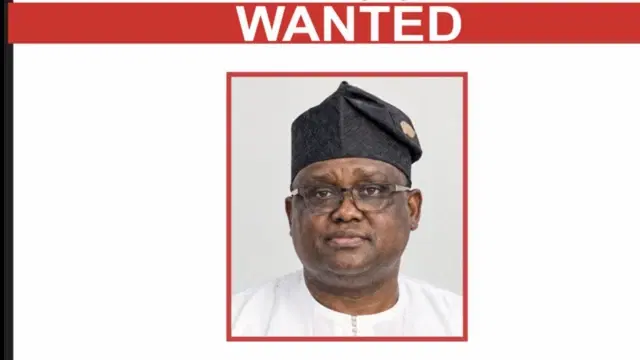
EFCC: Abdulrasheed Maina Wanted For Stolen Property
Summary
- The Economic and Financial Crimes Commission (EFCC) has declared Abdulrasheed Maina, former chairman of the Pension Reform Task Team (PRTT), as a wanted individual.
- Maina is wanted in connection with an alleged case of receiving stolen property.
- This action highlights the EFCC's ongoing focus on high-profile corruption cases involving public funds and former officials.
- The declaration signifies the gravity of the allegations and the agency's intent to apprehend him.
- The case underscores Nigeria's broader anti-corruption enforcement efforts and potential for asset tracing.
Recent Developments
This development signals the EFCC's continued focus on prosecuting high-profile corruption cases involving public funds.
The Economic and Financial Crimes Commission (EFCC) has officially declared Abdulrasheed Maina, who previously served as the chairman of the now-defunct Pension Reform Task Team (PRTT), as a wanted individual. This declaration stems from an ongoing investigation into an alleged case of receiving stolen property, marking a significant step in the anti-corruption agency's efforts.
Maina's status as a wanted person by a prominent federal agency underscores the gravity of the allegations. The EFCC, a key institution in Nigeria's fight against financial malfeasance, has initiated this action in connection with claims that Maina was involved in the acquisition of assets derived from illicit activities.
This move by the Economic and Financial Crimes Commission highlights its continued focus on pursuing individuals implicated in financial crimes, particularly those with past connections to public office and the management of public funds. The declaration serves as a formal notice of the charges and the agency's intent to apprehend him.
Legal and Regulatory Context
The declaration of Abdulrasheed Maina as wanted by the Economic and Financial Crimes Commission falls within the broader framework of Nigeria's anti-corruption enforcement. The EFCC is mandated to investigate financial crimes, including money laundering, fraud, and the recovery of stolen public assets. The allegation of receiving stolen property is a serious offense under Nigerian law, often linked to the proceeds of corruption or other illicit activities.
For an individual to be declared wanted by the EFCC, it typically signifies that efforts to bring them in for questioning or prosecution have been unsuccessful, or that their whereabouts are unknown. This status can have significant legal ramifications, including restrictions on movement and heightened scrutiny from law enforcement agencies both domestically and internationally, effectively making the individual a fugitive in Nigeria's legal system.
The case involving the former chairman of the Pension Reform Task Team, Abdulrasheed Maina, underscores the Nigerian government's ongoing commitment to addressing corruption, particularly within sectors responsible for public welfare. The Pension Reform Task Team itself was established to address issues within the pension system, making any allegations of stolen property against its former head particularly sensitive and indicative of the challenges in Nigeria's anti-corruption enforcement.
Why It Matters
This development signals the EFCC's continued focus on prosecuting high-profile corruption cases involving public funds. The pursuit of individuals like Abdulrasheed Maina, who held a significant position within the Pension Reform Task Team, demonstrates the agency's resolve to hold former public officials accountable for alleged financial misconduct, particularly concerning Nigeria alleged receiving stolen property.
The declaration also carries broader implications for legal and compliance professionals. Such actions by the Economic and Financial Crimes Commission often precede or run concurrently with efforts to trace and freeze assets believed to be the proceeds of crime. Lawyers and compliance officers should monitor for potential asset tracing, freezing orders, or related enforcement actions, particularly concerning individuals with past links to public office.
Ultimately, the EFCC's decision to declare Abdulrasheed Maina wanted reinforces the message that individuals implicated in the misappropriation of public resources will face concerted efforts by anti-corruption bodies. This sustained pressure is a critical component of Nigeria's strategy to combat corruption and ensure greater transparency and accountability in governance.
Practical Implications
This development signals the EFCC's continued focus on prosecuting high-profile corruption cases involving public funds. Lawyers and compliance officers should monitor for potential asset tracing, freezing orders, or related enforcement actions, particularly concerning individuals with past links to public office.
Source
How does this affect you?
Get an AI analysis of this article grounded in your jurisdictions, practice areas, and any policy documents you've uploaded to Wansom.
Finish Reading the Full Story and the Expert Analysis.
Get the latest legal & regulatory intelligence in Nigeria
Wansom is AI and can make mistakes.