
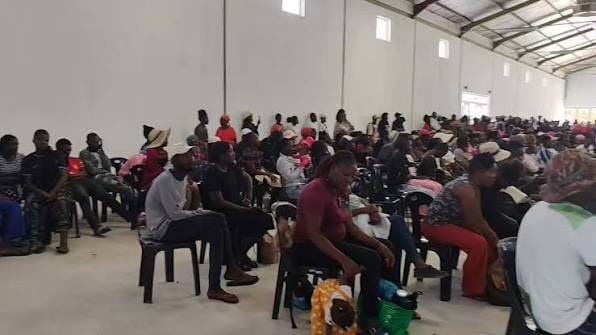
Eenhana Town Council: Enforces Eenhana Vendors Relocation Deadline
Summary
- Street vendors in Eenhana, Ohangwena region, must relocate to council-designated trading areas by the end of the current month.
- The Eenhana Town Council issued the directive to bring street trading under control and create a safer, more orderly environment.
- Eenhana Mayor Omri Kavandje stated the relocation aims to enhance public safety and organization.
- The move signifies increased enforcement of local by-laws concerning informal trading in Eenhana.
- Affected traders face a tight deadline to adapt their operations to new market locations.
Eenhana Vendors Face Relocation Deadline
Lawyers advising informal traders or businesses operating in Eenhana should be acutely aware of this council directive, as it signals increased enforcement of local by-laws regarding street trading.
Street vendors operating in Eenhana, a town situated within Namibia's Ohangwena region, have been issued a directive by the Eenhana Town Council to relocate from their current trading spots. The council has set a firm Eenhana vendors relocation deadline for the end of the current month, by which time all affected traders are expected to have moved to designated trading areas provided by the municipality. This mandate signals a significant shift in the local authority's approach to informal commerce within the town.
This move by the Eenhana Town Council aims to exert greater oversight over street trading activities. Mayor Omri Kavandje of the Eenhana Town Council articulated the primary objectives behind this directive, emphasizing the council's commitment to fostering a more secure and systematically organized commercial landscape. The relocation is presented as a measure to enhance public safety and improve the overall orderliness of the trading environment, impacting numerous informal traders across the town.
Council's Stated Objectives and Regulatory Context
The Eenhana Town Council's decision to enforce the relocation of street vendors is rooted in its stated goal of bringing street trading under more stringent control. This initiative aligns with broader municipal efforts often seen in urban centers across Namibia, where local councils strive to regulate informal economic activities to ensure compliance with urban planning and public health standards. The establishment of council-designated trading areas is a common strategy employed by local authorities to manage the spatial distribution of vendors and integrate them into formal market structures.
Mayor Omri Kavandje's remarks underscore the Eenhana Town Council street trading policy, which prioritizes the creation of a safer and more orderly environment for both traders and consumers. Such policies typically involve allocating specific zones for commerce, implementing hygiene standards, and potentially introducing licensing requirements. For informal traders in the Ohangwena region, this directive represents a formalization push that could significantly alter their operational models and access to customer bases, necessitating adaptation to new market dynamics and locations.
Implications for Ohangwena Region Informal Traders
The impending Eenhana market relocation presents a critical juncture for the informal traders affected by the Eenhana Town Council's directive. While the council frames the move as beneficial for order and safety, the practical implications for vendors can be substantial. Relocating to new, designated areas often involves adjusting to different foot traffic patterns, establishing new customer relationships, and potentially incurring costs associated with setting up in a new space. The success of such a relocation hinges on the suitability and accessibility of the new trading zones for both vendors and their clientele.
Legal and Practical Considerations for Compliance
The Eenhana Town Council's directive carries significant legal and practical implications for the affected street vendors. Lawyers advising informal traders or businesses operating in Eenhana should be acutely aware of this council directive, as it signals increased enforcement of local by-laws regarding street trading. Clients may require guidance on compliance with the relocation order, understanding their rights and obligations within the new designated trading areas, and potentially exploring avenues for engagement with the council regarding the terms of the move.
Advising clients on potential relocation impacts will be paramount, including assessing the economic viability of new trading spots and the legal ramifications of non-compliance with the Eenhana vendors relocation deadline. This situation may necessitate advising clients on challenging the directive through appropriate legal channels if there are grounds to do so, or more commonly, assisting them in navigating the transition to ensure continued lawful operation. The actions of the Eenhana Town Council, led by Mayor Omri Kavandje, highlight the evolving regulatory landscape for informal commerce in Namibia, demanding proactive legal counsel for affected parties.
Practical Implications
Lawyers advising informal traders or businesses operating in Eenhana should be aware of this council directive, as it signals increased enforcement of local by-laws regarding street trading and may necessitate advising clients on compliance, potential relocation impacts, or challenging the directive.
Source
How does this affect you?
Get an AI analysis of this article grounded in your jurisdictions, practice areas, and any policy documents you've uploaded to Wansom.
Finish Reading the Full Story and the Expert Analysis.
Get the latest legal & regulatory intelligence in Namibia
Wansom is AI and can make mistakes.