
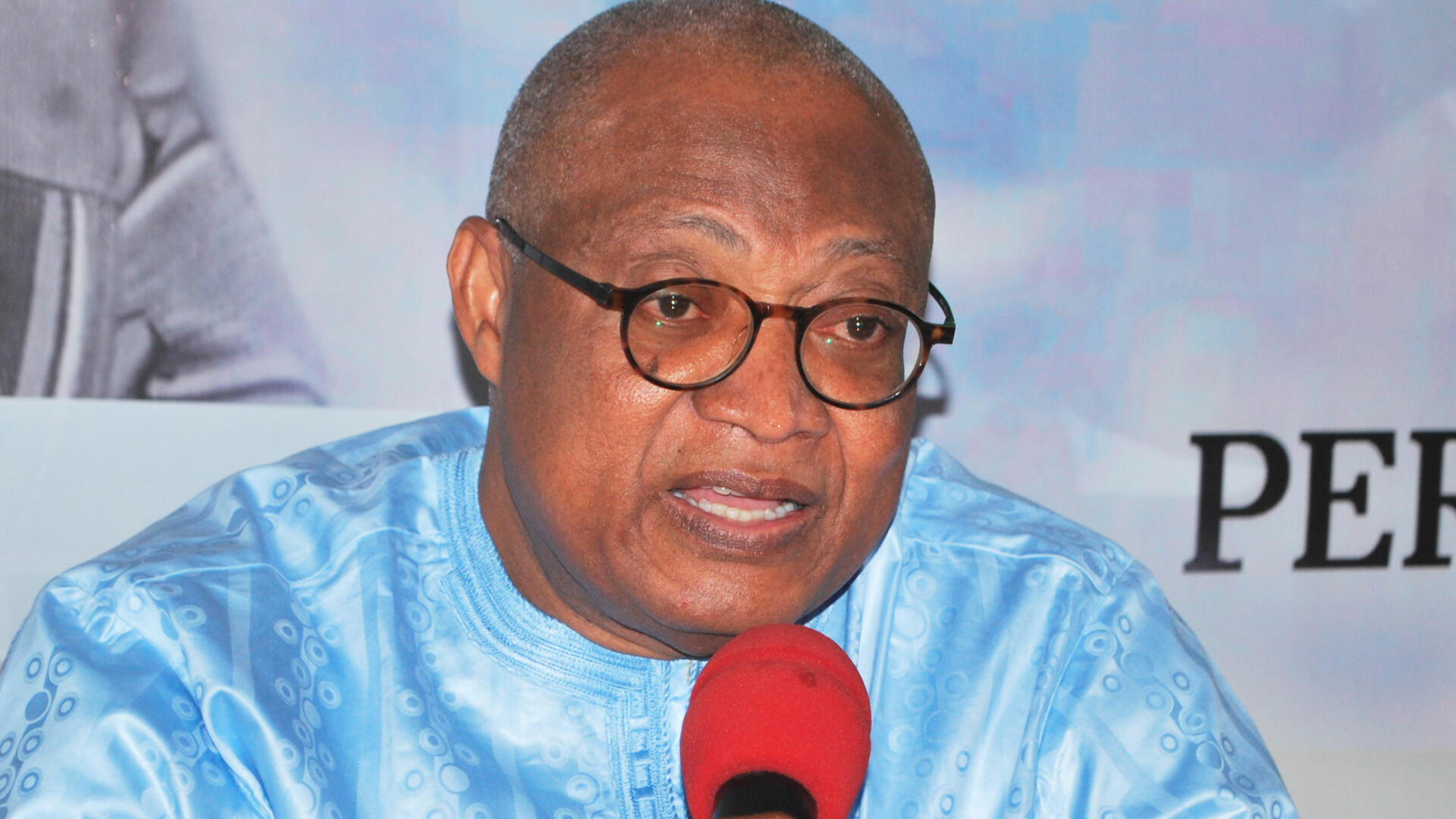
Jean-Pierre Fabre: Togo Constitutional Demands Intensify After ECOWAS Ruling
Summary
- Jean-Pierre Fabre, ANC president, demands the restoration of Togo's constitution and the departure of Faure Gnassingbé, citing them as non-negotiable conditions.
- An ECOWAS Court of Justice ruling on January 29, 2026, confirmed the ANC's earlier characterization of a constitutional amendment initiative as a 'constitutional coup d'état'.
- Despite the ECOWAS ruling and widespread condemnation, the Togolese government has not implemented any changes.
- Fabre's recent European tour involved engaging with EU institutions and submitting political notes to international bodies, aiming to isolate the current regime.
- The Togolese diaspora is actively mobilizing, and regional discussions are shifting from a 'crisis' to the 'normalization of Togo,' with Fabre promising 'alternance and change'.
Jean-Pierre Fabre's Urgent Constitutional Demands
For Fabre, the regime's persistent deafness to what he describes as an "unconstitutional change of government" is not a sign of firmness, but rather a dangerous entrapment, signaling a regime operating outside the bounds of law and increasingly without allies.
Following a recent European tour, Jean-Pierre Fabre, president of the National Alliance for Change (ANC), has intensified his calls for fundamental political reform in Togo, asserting that the nation's constitution must be restored to its people. Fabre's demands are unequivocal: Faure Gnassingbé, the current President of the Council, must relinquish power. He maintains that these two conditions are non-negotiable, emphasizing that if Gnassingbé does not depart voluntarily, he will be compelled to do so by both legal mechanisms and the collective will of the Togolese populace.
Fabre's renewed urgency stems directly from a significant ruling by the ECOWAS Court of Justice on January 29, 2026. This judicial decision, he argues, has provided critical validation for the opposition's long-standing position. The ANC had previously denounced and condemned an initiative to amend the Togolese constitution on March 15, 2024, characterizing the maneuver as a "constitutional coup d'état." The ECOWAS court's judgment, according to Fabre, has now officially confirmed this assessment, amplifying the widespread calls for change from various segments of society.
The ECOWAS Ruling and Government Inaction
The January 29, 2026, ruling by the ECOWAS Court of Justice has become a pivotal point in the ongoing political discourse in Togo. Despite this definitive legal pronouncement, the Togolese government has reportedly made no changes, remaining unresponsive to the court's findings. This inaction persists even as the ruling has intensified numerous appeals made by the sovereign people, political parties, civil society organizations, and the international community, all urging the Togolese authorities to address the situation.
For Fabre, the regime's persistent deafness to what he describes as an "unconstitutional change of government" is not a sign of firmness, but rather a dangerous entrapment, signaling a regime operating outside the bounds of law and increasingly without allies. He characterizes the ECOWAS ruling not merely as a document, but as a decisive instrument delivering a "coup de grâce" to a regime whose international standing is already severely damaged.
International Engagement and Diaspora Mobilization
During his recent European tour, which included stops in Paris, Brussels, Luxembourg, and Geneva, Jean-Pierre Fabre engaged extensively with international bodies and the Togolese diaspora. He reported initiating discussions with European Union institutions and submitting political memoranda to La Francophonie and the Organisation for Economic Co-operation and Development (OECD). These efforts were complemented by a co-written memorandum from the opposition and civil society organizations, signaling a unified front.
Fabre noted a significant shift in the international perception of Togo's political situation, stating that the "Togolese file" is no longer a confidential matter. He observed a highly engaged and informed diaspora, which he described as organized and demanding rather than merely requesting. This diaspora, he believes, understands its crucial role in the balance of power and the complementary nature of its actions with those on the ground in Togo. The combined force of these domestic and international actions, Fabre contends, will ultimately compel Faure Gnassingbé to relinquish his hold on power.
Forging a Path Towards Normalization
Since his return from Europe, Jean-Pierre Fabre has observed a surge in invitations and new contacts across the sub-region, indicating a notable shift in regional discourse. Discussions are now moving beyond the concept of a "Togolese crisis" towards the "normalization of Togo," reflecting a change in both terminology and outlook. Within the National Council for Consultation and Cooperation (CNCC), a concerted effort is underway to synergize the forces of political parties and civil society organizations.
Fabre emphasizes that this collaborative initiative requires broad support from all Togolese citizens, friends of Togo, and international institutions to succeed. He has pledged to the Togolese people, whom he calls upon to remobilize, a future of "alternance and change." This vision, he explains, is deeply embedded in the ANC's statutes and aligns with the profound aspirations of the Togolese population, encompassing citizens from diverse social strata both within Togo and across the diaspora.
Source
How does this affect you?
Get an AI analysis of this article grounded in your jurisdictions, practice areas, and any policy documents you've uploaded to Wansom.
Finish Reading the Full Story and the Expert Analysis.
Wansom is AI and can make mistakes.