
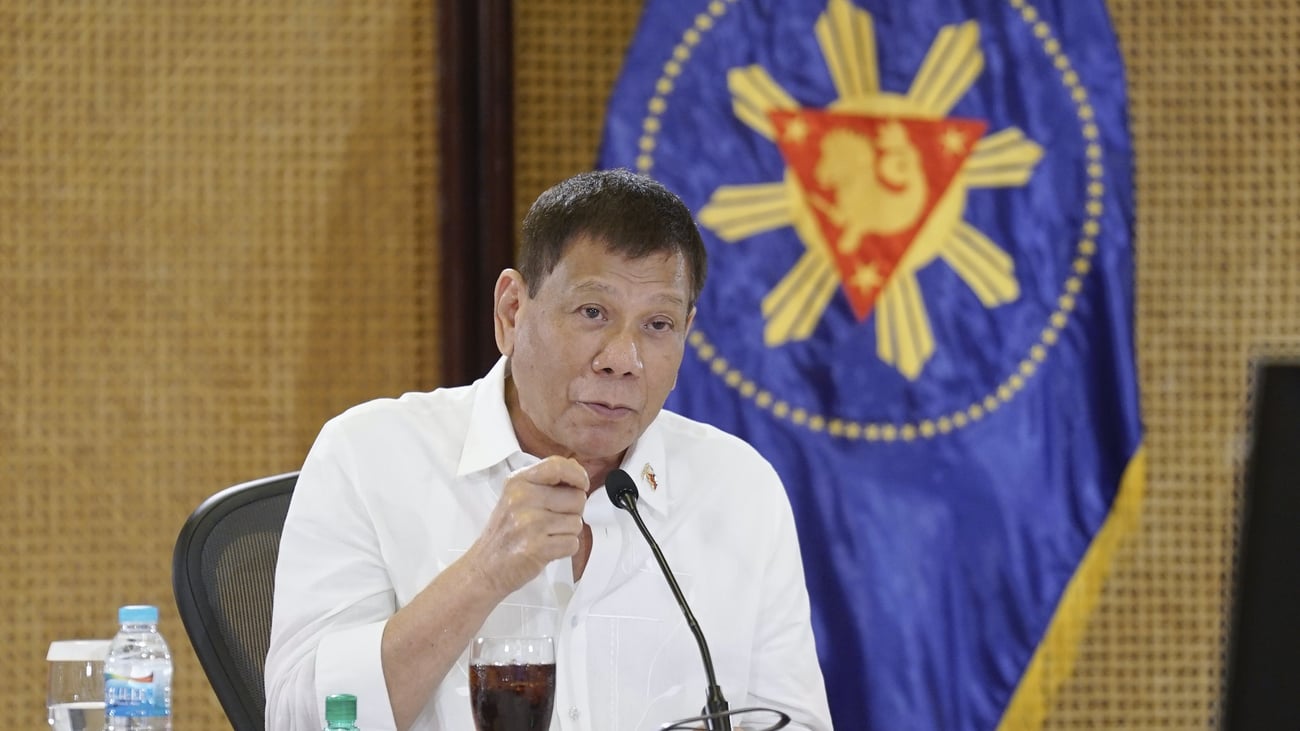
ICC: Duterte ICC Memory Impairment Defense Challenges Trial
Summary
- Former Philippine President Rodrigo Duterte's defense team claims he suffers from significant memory impairment, rendering him unfit to stand trial at the International Criminal Court.
- Duterte, 81, faces three counts of crimes against humanity related to his 'war on drugs,' with his trial scheduled for November 30.
- Judges ordered a medical assessment, but the defense criticized the expert report as 'incomplete and inadequate,' while the prosecution concluded Duterte is fit for trial.
- Specific memory lapses cited by the defense include Duterte believing he lived in 2007/2008 and forgetting his lawyer's name and the current U.S. president.
- If he appears in person at an upcoming pretrial hearing, Duterte would be the first former Asian head of state to do so before the ICC.
Duterte's Fitness to Stand Trial Disputed
The outcome of the competency assessment will critically shape the future trajectory of this high-profile case, setting a precedent for how the ICC handles claims of mental impairment, particularly memory loss, in defendants facing grave international charges.
Former Philippine President Rodrigo Duterte, aged 81, is at the center of a contentious debate regarding his mental fitness to stand trial before the International Criminal Court (ICC). His defense team asserts that Duterte suffers from significant memory impairment, a condition they claim prevents him from retaining recent information and reliably accessing past memories. This alleged cognitive decline, they argue, renders him incapable of meaningfully engaging with his legal proceedings or providing proper instructions to his counsel.
The defense's 13-page submission, made public on the ICC's website alongside the prosecution's response, details instances where Duterte reportedly struggles to recall his lead lawyer's name. Peter Haynes, Duterte's chief defense lawyer, stated that he is compelled to prepare the case without substantial input from his client due to these memory lapses. The trial for crimes against humanity, stemming from his controversial "war on drugs" during which prosecutors allege thousands were killed, is scheduled to commence on November 30. However, the court's judges are currently evaluating his competency to participate.
Legal Framework for Competency Assessments
Under the established rules of the International Criminal Court, proceedings cannot advance if a defendant is unable to comprehend the charges brought against them or to participate effectively in their own defense. In light of these rules, the ICC judges mandated an assessment by three medical experts to determine Duterte's mental capacity. While the experts' report itself has not been publicly released, both the defense and prosecution submitted their responses to its findings in documents dated September 14.
The defense team, in its submission, criticized the panel of doctors, labeling their report as "incomplete and inadequate" and requesting the opportunity to cross-examine its authors. According to the defense, the experts concluded that Duterte "may not have been fully applying himself" during the tests, complicating the interpretation of the results. Crucially, the experts were reportedly unable to ascertain whether Duterte's performance issues stemmed from "malingering or a lack of motivation" or from "a genuine inability to complete the tests as a consequence of an underlying neurological condition." This ambiguity highlights the challenges in assessing mental capacity in high-stakes international cases.
Conflicting Expert Opinions and Evidentiary Challenges
The defense's submission provided specific examples of Duterte's alleged memory deficits, including his belief that he was living in 2007 or 2008, his assertion of being 84 or 85 years old, and his inability to recall the name of the current U.S. president. Peter Haynes emphasized that such profound memory lapses make it impossible for his legal team to construct a reliable defense, as they cannot depend on information provided by their client. He further argued that any finding suggesting Duterte could offer accurate testimony in his own defense would be unreasonable, citing his inability to remember when he was last elected in the Philippines as an example.
Conversely, the prosecution, in its own heavily redacted seven-page submission, reached a different conclusion. They asserted that Duterte is "capable of meaningfully exercising his procedural and fair trial rights, and that he is fit for trial." This stark disagreement between the parties underscores the complex evidentiary hurdles in international criminal justice, particularly when a defendant's mental capacity is challenged. The court must now weigh these conflicting assessments to determine if Rodrigo Duterte's fitness to stand trial meets the stringent requirements of the ICC.
Implications for the Trial and International Precedent
The question of Rodrigo Duterte's fitness to stand trial has significant implications for the ongoing ICC proceedings. His past conduct during the "war on drugs" has led to three counts of crimes against humanity, with prosecutors alleging his involvement in at least 76 murders. Since his arrest and transfer to The Hague, Duterte has made only one public appearance, via video link at an initial hearing, where he reportedly appeared dazed, confused, mumbled, and dozed off. Following this, his defense team requested that he be excused from subsequent hearings on health grounds.
Presiding Judge Joanna Korner has since urged Duterte to appear at a pretrial hearing scheduled for Wednesday. No public request for an exemption has been made by the defense, suggesting the possibility of his physical presence at the ICC. Should he appear in person, Duterte would mark a historic moment as the first former Asian head of state to stand before the International Criminal Court. The outcome of the competency assessment will critically shape the future trajectory of this high-profile case, setting a precedent for how the ICC handles claims of mental impairment, particularly memory loss, in defendants facing grave international charges.
Practical Implications
This case highlights the critical legal and evidentiary challenges in international criminal proceedings when a defendant's mental fitness to stand trial is disputed, particularly concerning memory impairment. Lawyers and compliance officers advising clients facing international charges should note the ICC's process for assessing competency and the potential for conflicting expert opinions, emphasizing the need for robust medical evidence and strategic legal arguments.
Source
Source: Original reporting via AFP
How does this affect you?
Get an AI analysis of this article grounded in your jurisdictions, practice areas, and any policy documents you've uploaded to Wansom.
Finish Reading the Full Story and the Expert Analysis.
Get the latest legal & regulatory intelligence in United States
Wansom is AI and can make mistakes.