
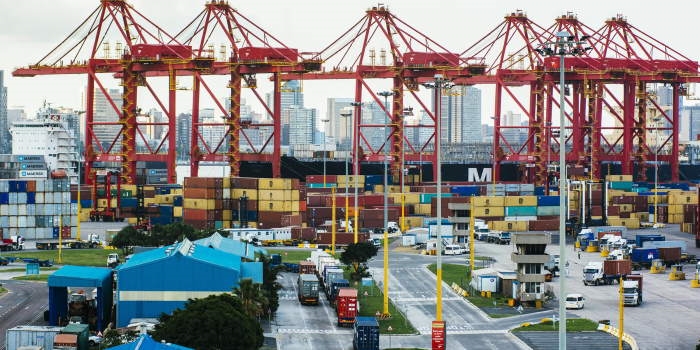
Durban Gateway Terminal: License Threat Over Transnet Equipment Failures
Summary
- Durban Gateway Terminal (DGT) operator, ICTSI, blames severe delays on years of under-investment and poor maintenance of Transnet equipment.
- The government has threatened to revoke DGT's license if ship waiting times, currently up to 20 days, do not improve.
- These port inefficiencies have caused critical medical supply shortages and significantly impacted South Africa's car export industry.
- Transport Minister Barbara Creecy has initiated measures to divert ships and prioritize essential cargo, while also criticizing DGT's timing for a new operating system.
- Despite the introduction of a private-public model with ICTSI, the terminal, historically one of the world's worst, has yet to see performance improvements.
Operational Crisis at Durban Gateway Terminal
The government's explicit Durban Gateway Terminal license threat highlights the intense regulatory scrutiny now focused on the facility.
South Africa's largest shipping container facility, the Durban Gateway Terminal (DGT), is currently experiencing severe operational delays, which its operator attributes to the deteriorating condition of essential Transnet equipment. These prolonged inefficiencies have led to critical shortages, including medical supplies, and significantly impacted the nation's vital car export sector. Manila-based International Container Terminal Services Inc (ICTSI), which commenced operating DGT at the beginning of the year, issued a statement on Thursday acknowledging "continued service shortcomings" and their "unfortunate impact" on clients and partners.
The terminal operator explicitly stated that the core issue stems from "poor and unsafe condition of equipment at the facility," a direct consequence of "years of under-investment and inadequate maintenance." This explanation comes in response to a government warning that DGT faces a potential loss of its operating license if the current ship waiting times, which can extend up to 20 days, do not show marked improvement. The Durban Gateway Terminal license threat underscores the gravity of the situation and the mounting pressure on the private-public partnership tasked with managing this critical infrastructure.
Industry Impact and Government Intervention
The ripple effects of the port's persistent delays are acutely felt across key South African industries. The automotive manufacturing sector, in particular, has been severely affected, facing increased logistics expenses and a significant erosion of the predictability and competitiveness required for effective domestic and export market operations. Neale Hill, president of Ford Motor Co.'s Africa unit, emphasized the urgent need for relevant parties to resolve the current uncertainty and provide a clear path forward for the industry.
In response to the escalating crisis, Transport Minister Barbara Creecy announced on Wednesday that the government is implementing immediate measures, including diverting vessels to alternative terminals. Priority is being given to ships carrying essential goods such as automotive parts and critical medicines to mitigate the most severe impacts. While Minister Creecy acknowledged the necessity of investment in the port's equipment, she also voiced criticism regarding DGT's decision to implement a new operating system just prior to the busy festive season, suggesting a potential misstep in operational planning.
Persistent Inefficiencies and Regulatory Scrutiny
The current challenges at Durban Gateway Terminal are not isolated incidents but rather a continuation of long-standing operational inefficiencies that have plagued the facility for years. The terminal, which handles over half of South Africa's shipping containers, has consistently ranked among the world's least efficient ports. It was precisely these chronic shortcomings and the substantial investment required for modernization that prompted the government to engage ICTSI as a private investor, hoping to leverage private sector expertise to enhance performance.
However, the new private-public operational model has yet to deliver the anticipated improvements, with the terminal's performance remaining a significant concern. The government's explicit Durban Gateway Terminal license threat highlights the intense regulatory scrutiny now focused on the facility. This situation underscores the complex challenges involved in revitalizing critical national infrastructure and the high stakes for both the operating company and the South African economy dependent on efficient port operations.
Practical Implications
Lawyers advising clients with operations reliant on Durban Gateway Terminal should review supply chain contracts for force majeure clauses and potential breach of contract claims arising from persistent delays, while also monitoring the regulatory implications of the threatened license revocation and potential litigation between DGT and Transnet.
Source
How does this affect you?
Get an AI analysis of this article grounded in your jurisdictions, practice areas, and any policy documents you've uploaded to Wansom.
Finish Reading the Full Story and the Expert Analysis.
Get the latest legal & regulatory intelligence in South Africa
Wansom is AI and can make mistakes.