
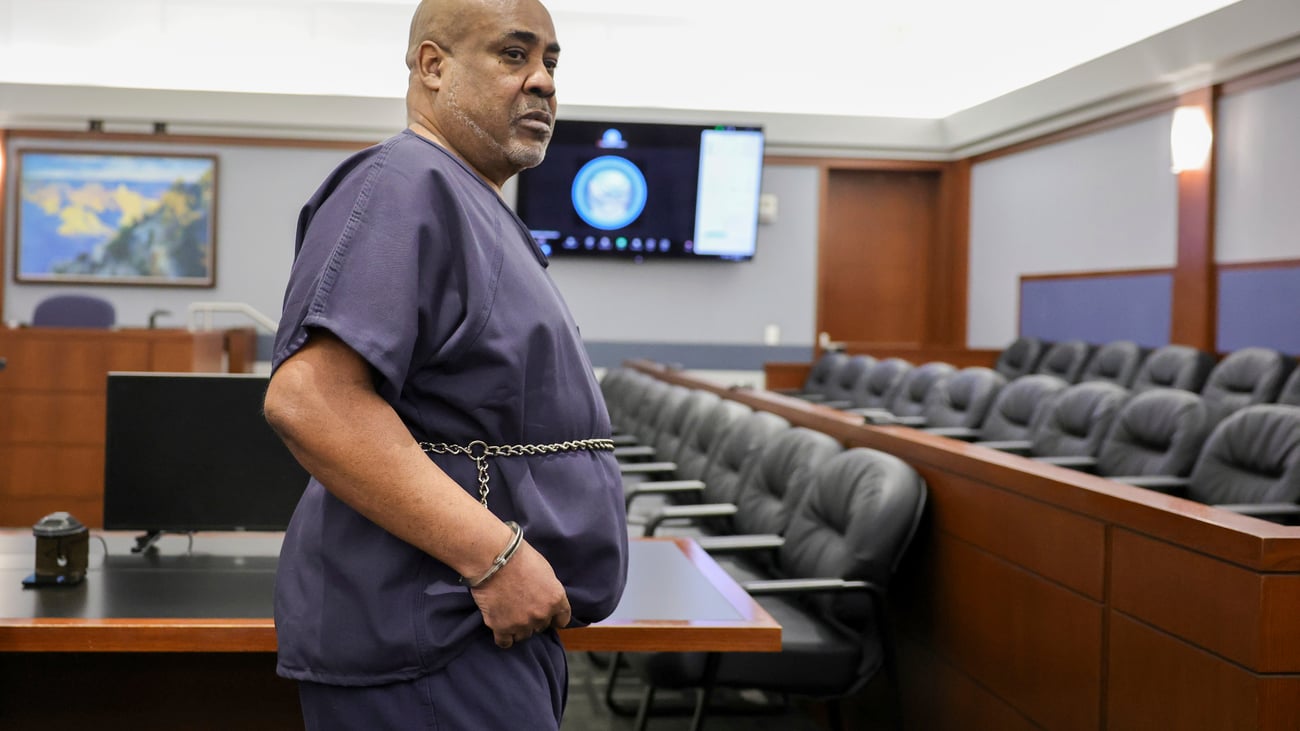
Las Vegas Court: Duane 'Keffe D' Davis Trial for Tupac Murder
Summary
- Duane 'Keffe D' Davis, a suspect in Tupac Shakur's murder, went on trial in Las Vegas.
- Prosecutors argue that Davis handed a gun to Orlando Anderson, who shot Shakur.
- The trial is expected to last into September and has significant implications for case law in the US.
- Defense attorneys have raised questions about the reliability of witnesses with criminal histories.
- The outcome of this trial will have far-reaching implications for those involved in gang-related violence and murder charges.
What Happened
Duane Davis knew that in his world, that required a response,
The trial of Duane 'Keffe D' Davis, a suspect in the 1996 murder of rapper Tupac Shakur, began on Monday with opening statements from prosecutors and defense attorneys. According to Chief Deputy District Attorney Binu Palal, Davis did not fire the shots that killed Shakur but instead handed a gun to Orlando Anderson, who was in the backseat at the time. This act of violence was allegedly motivated by Davis's anger over Shakur's involvement in the beating of his nephew, which occurred on September 7, 1996, in Las Vegas. The incident escalated a long-standing gang rivalry between the South Side Compton Crips and Mob Piru gangs.
Prosecutors have presented evidence that Davis had multiple public statements over the years, including one where he said he would have fired the gun but was on the wrong side of the vehicle. This testimony is expected to be crucial in establishing Davis's involvement in the crime. Meanwhile, defense attorney Michael Sanft argued that his client was known to 'bullshit' and that prosecutors had waited almost 30 years to charge him with a crime.
Legal Context
The trial is expected to last into September and has significant implications for case law in the US. The prosecution's argument hinges on Davis's statements over the past three decades, which are seen as evidence of his involvement in Shakur's murder. Defense attorneys have raised questions about the reliability of witnesses with criminal histories who will be called by prosecutors. This high-profile trial is being closely watched by lawyers and experts in gang-related violence and murder charges.
The investigation into Shakur's death has been ongoing for nearly three decades, with law enforcement gathering evidence and interviewing witnesses. The case has been marked by controversy and delay, with some critics arguing that the prosecution's timing is suspicious given their decision to wait almost 30 years to charge Davis with a crime.
Why It Matters
The outcome of this trial will have far-reaching implications for those involved in gang-related violence and murder charges. Lawyers should be paying close attention to the potential for new evidence or witness testimony to emerge, which could impact their clients' cases. The trial also highlights the complexities of gang culture and the challenges of investigating and prosecuting crimes committed within these groups.
The case has significant cultural and historical importance, given Shakur's status as a music icon and his involvement in the Los Angeles hip-hop scene. The trial is expected to shed new light on the events surrounding Shakur's death and provide closure for those affected by the tragedy.
Practical Implications
Lawyers should watch for the potential for new evidence or witness testimony to emerge in this high-profile trial, which could impact their clients' cases involving gang-related violence or murder charges.
Source
How does this affect you?
Get an AI analysis of this article grounded in your jurisdictions, practice areas, and any policy documents you've uploaded to Wansom.
Wansom is AI and can make mistakes.