
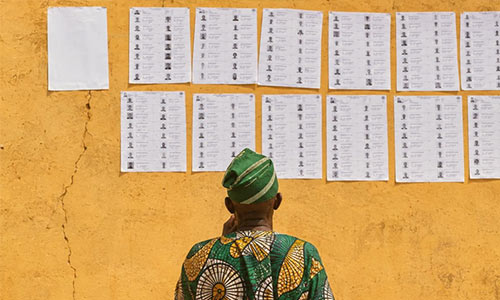
DRLI: INEC SIECs Data Privacy Failures Alarm Nigeria Voters
Summary
- The Digital Rights Lawyers Initiative (DRLI) has voiced concerns over the protection of voters' personal information in Nigeria.
- DRLI alleges widespread gaps in transparency, accountability, and compliance with the Nigeria Data Protection Act (NDPA) 2023.
- These failures are attributed to the Independent National Electoral Commission (INEC) and the 36 State Independent Electoral Commissions (SIECs).
- Babalola and Okedara raised an alarm, noting that voter protection has become a function of geography due to these inconsistencies.
- The alleged data privacy failures pose a significant threat to democratic principles and individual privacy rights in Nigeria.
What Happened
The implications of these alleged INEC SIECs data privacy failures Nigeria extend far beyond administrative shortcomings, posing a direct and substantial threat to the foundational principles of democracy and individual privacy rights.
The Digital Rights Lawyers Initiative (DRLI) has recently articulated profound concerns regarding the security and protection of personal information belonging to voters across Nigeria. The organization specifically pointed to what it describes as extensive deficiencies in the transparency, accountability, and overall adherence to the provisions of the Nigeria Data Protection Act (NDPA) 2023. These alleged shortcomings were attributed to both the Independent National Electoral Commission (INEC) and the 36 State Independent Electoral Commissions (SIECs) operating nationwide.
This significant alarm over INEC SIECs data privacy failures Nigeria was prominently raised by figures such as Babalola and Okedara, who underscored a critical vulnerability within the country's electoral infrastructure. Their observations suggest that the safeguarding of sensitive voter data is not uniformly applied, leading to a fragmented approach to data protection. The DRLI's assessment indicates that the level of security and privacy afforded to citizens' personal electoral information may fluctuate considerably, depending on which specific electoral commission is responsible for its management.
The DRLI's warning emphasizes that the absence of stringent and consistent data protection measures creates an environment ripe for potential misuse or compromise of voter details. This situation, they argue, undermines the fundamental right to privacy for millions of Nigerians who participate in the democratic process. The organization's findings call into question the robustness of current practices in handling one of the most critical datasets in any democracy: the personal information of its electorate.
Legal Context
The Nigeria Data Protection Act (NDPA) 2023 represents a pivotal legislative advancement in Nigeria's digital landscape, establishing a comprehensive legal framework designed to govern the collection, storage, processing, and ultimate protection of personal data. For governmental entities, particularly electoral bodies like INEC and the various State Independent Electoral Commissions privacy protocols are not merely best practices but statutory obligations, given the highly sensitive nature of the voter registration information they manage. This data often includes names, addresses, biometric details, and other personally identifiable information.
The allegations put forth by the DRLI suggest a potential widespread non-compliance with these crucial statutory requirements. Such a scenario implies that the mechanisms intended to prevent unauthorized access, disclosure, or manipulation of citizens' private electoral information may be either absent or inadequately implemented. Adherence to the Nigeria Data Protection Act 2023 compliance is not just a matter of legal formality; it is essential for maintaining the integrity and trustworthiness of the electoral system itself.
A failure by these commissions to uphold their responsibilities under the NDPA 2023 could expose them to significant legal repercussions, including potential fines and litigation. More broadly, it risks eroding public confidence in the ability of electoral bodies to safeguard fundamental rights, thereby undermining the democratic process. The Act mandates specific standards for data handling, security measures, and accountability, all of which are critical when dealing with the sensitive personal data of an entire voting population.
Why It Matters
The implications of these alleged INEC SIECs data privacy failures Nigeria extend far beyond administrative shortcomings, posing a direct and substantial threat to the foundational principles of democracy and individual privacy rights. The concerns raised by the Digital Rights Lawyers Initiative INEC highlight a disturbing reality: that the security of voter information can become alarmingly contingent on geographical location, a sentiment encapsulated by the phrase, "Voters’ Protection Has Become A Function Of Geography." This means that citizens residing in different states might experience vastly disparate levels of data security, creating an inequitable and potentially vulnerable environment for voter data protection electoral commissions.
This inconsistency not only compromises individual privacy but also introduces systemic risks to the fairness and credibility of elections. If voter data is not uniformly protected, it opens avenues for manipulation, unauthorized access, or even identity theft, which could have profound consequences for electoral outcomes and public trust. The Babalola Okedara data alarm serves as a critical reminder that the integrity of the electoral process is not solely dependent on the transparent casting and counting of ballots, but equally on the secure and ethical management of the vast amounts of personal data that underpin the entire system.
Ensuring robust Nigeria Data Protection Act 2023 compliance is therefore paramount for all electoral bodies. It is a fundamental requirement for upholding democratic values, protecting citizens' rights, and fostering an environment where elections are perceived as free, fair, and credible. The current situation, as highlighted by the DRLI, suggests an urgent need for comprehensive audits and corrective actions to fortify the data privacy frameworks of all electoral commissions across the nation.
Practical Implications
Lawyers should advise clients on the heightened risk of data privacy breaches concerning voter information by electoral bodies, particularly in light of alleged non-compliance with the Nigeria Data Protection Act 2023. Compliance officers should review their own data handling practices, especially if interacting with public sector data, to ensure robust protection against similar vulnerabilities and prepare for potential regulatory scrutiny or litigation arising from these failures.
Source
How does this affect you?
Get an AI analysis of this article grounded in your jurisdictions, practice areas, and any policy documents you've uploaded to Wansom.
Finish Reading the Full Story and the Expert Analysis.
Get the latest legal & regulatory intelligence in Nigeria
Wansom is AI and can make mistakes.