
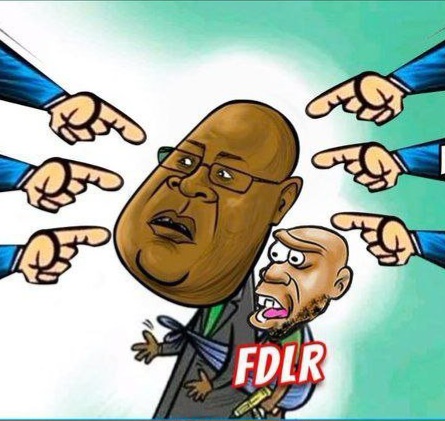
Kinshasa Court: No FDLR Relocation Plan Without Rwanda's Consent
Summary
- The DRC government has proposed relocating some of the FDLR's fighters to a third African country, which is seen as another breach of the Washington Accords.
- Kinshasa's actions suggest a lack of seriousness in addressing the FDLR issue, with inconsistencies in its rhetoric and policies.
- The neutralization of the FDLR is crucial to preventing further violence and ensuring stability in the region.
- The recent protocol signed between the DRC regime and the FDLR is seen as a political ploy to evade responsibility.
Kinshasa's Relocation Plan: A Tactic to Evade Responsibility
Kinshasa's shifting rhetoric tells its own story. At different times, the Congolese government has denied the FDLRs presence, downplayed it, claimed it was confined to M23-held territory, and now acknowledges it only in the context of demobilisation.
The Democratic Republic of Congo (DRC) government, under President Félix Tshisekedi, is facing criticism for its handling of the FDLR, a militia responsible for massacres in Rwanda. After years of refusing to neutralize the genocidal group, Kinshasa has proposed relocating some of its fighters to a third African country. However, this move is seen as another breach of the Washington Accords, which require the neutralization of the FDLR. The proposal was made by DRC Minister of Regional Integration Anzuluni, who revealed that a country had already been identified to receive certain FDLR members, although he declined to name it due to ongoing discussions.
The Washington Accords: A Framework for Resolution
The Washington Accords provide a clear framework for resolving the FDLR issue. The agreements explicitly state that the neutralization of the group is a security commitment between Rwanda and the DRC. Furthermore, the Concept of Operations (CONOPS) outlines targeted military action against the FDLR. However, Kinshasa's actions suggest a lack of seriousness in addressing the problem. The government has been accused of downplaying the FDLR's presence, denying its involvement, or claiming it was confined to M23-held territory.
The Consequences of Inaction
The failure to address the FDLR issue has significant implications for regional security and compliance with international agreements. The group's neutralization is crucial to preventing further violence and ensuring stability in the region. Moreover, the recent protocol signed between the DRC regime and the FDLR is seen as a political ploy to evade responsibility. This tactic undermines the peace process meant to eradicate the threat posed by the FDLR.
Practical Implications
Lawyers and compliance officers should watch for potential breaches of the Washington Accords, which require the neutralisation of the genocidal FDLR. Kinshasa's relocation plan may be a stalling tactic to evade responsibility, and its implementation could have significant implications for regional security and compliance with international agreements.
Source
Source: Original reporting via RFI
How does this affect you?
Get an AI analysis of this article grounded in your jurisdictions, practice areas, and any policy documents you've uploaded to Wansom.
Wansom is AI and can make mistakes.