
DRC C64: Nationwide Protests Against Constitutional Change Lead To Arrests
Summary
- The C64 opposition coalition organized nationwide protests against proposed constitutional changes in the Democratic Republic of Congo.
- Protests in Kinshasa saw gatherings of militants and police oversight, while demonstrations in several other cities were either banned or dispersed.
- Approximately twenty militants were arrested in Lubumbashi, and an official and several militants were detained in Kananga following police dispersal with tear gas.
- Provincial authorities cited security concerns or an Ebola outbreak as reasons for prohibiting marches in Matadi, Kananga, and Gemena.
- The C64 coalition asserted that the bans violated the constitutional right to protest, despite one march successfully occurring in Bandundu.
Overview of Nationwide Protests
The C64 coalition maintained its stance that the prohibition of the march constituted a violation of the constitutionally guaranteed right to protest.
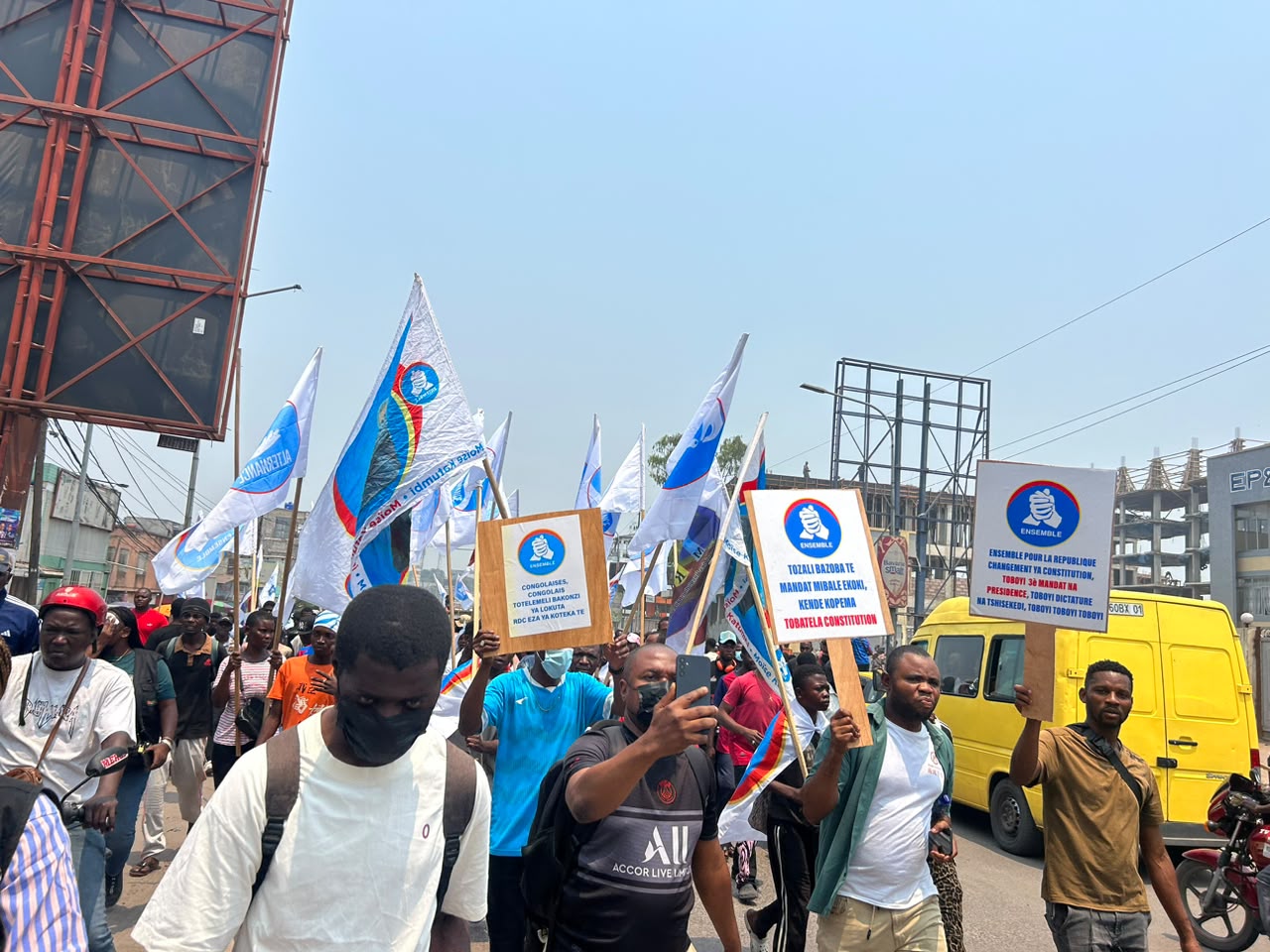
The C64 opposition coalition in the Democratic Republic of Congo organized a nationwide day of protest on Tuesday, opposing any proposed changes to the country's Constitution. These demonstrations unfolded amidst a substantial security presence across Kinshasa and several other cities throughout the DRC. While some gatherings managed to proceed, others were either prevented from starting or swiftly dispersed by authorities, creating a varied landscape of public expression.
In Kinshasa, the capital, police deployments were notably reinforced at strategic points. Despite the heightened security, daily activities largely continued as normal in many neighborhoods. However, at the Limete Exchanger, numerous militants affiliated with opposition parties congregated, displaying their flags and engaging in chants. The head of police for Kinshasa province, Israel Bankulu Kantu, was observed at the scene, assessing the situation and overseeing efforts to maintain order. Separately, supporters of Ensemble pour la République also marched in Bandalungwa, and by 11:20 local time, they were observed near the Makele bridge, proceeding towards the Moulaert roundabout, which had been designated as a central rally point for the C64 coalition.
Confrontations and Arrests Across Provinces
Beyond the capital, several provinces experienced direct confrontations and official interventions. In Lubumbashi, located in Haut-Katanga, the morning began calmly with schools and businesses operating as usual. However, at Square Forrest, a planned rally point, a group including several members of parliament from Ensemble pour la République and other activists gathered before being dispersed by police. These individuals reportedly intended to submit a memorandum to the provincial assembly. Security sources indicated that approximately twenty militants were arrested during this event, including individuals accompanying MP Christian Mwando. Another parliamentarian, Khiller Mubambe of Ensemble pour la République, was also detained but subsequently released. Authorities confirmed that no fatalities were recorded during these demonstrations.
Further incidents of suppression occurred in Kananga, Kasaï-Central, where a security cordon was established early in the morning at the Notre-Dame roundabout, the designated starting point for a march that the mayor had prohibited for security reasons. By 9:30, police used tear gas to disperse the gathering. An official from the Ensemble pour la République party, along with several militants, were arrested. They had been marching from the headquarters of Jean-Marc Kabund's Alliance pour le Changement party towards the Notre-Dame roundabout. The C64 coalition maintained its stance that the prohibition of the march constituted a violation of the constitutionally guaranteed right to protest.
Official Bans and the Right to Protest
The government's response to the DRC constitutional reform protest varied, with provincial authorities issuing outright bans in several locations. In Matadi, Kongo-Central, hundreds of C64 militants gathered at 10:25 at the Simon Kimbangu roundabout, their intended starting point, only to be prevented from proceeding by security forces. Their objective was to deliver a memorandum against the proposed constitutional changes to the provincial assembly, but the provincial authorities had already declared the march illegal. Similarly, in Gemena, Sud-Ubangi, the planned march did not materialize after provincial authorities prohibited it, citing the recent declaration of an Ebola virus disease epidemic the previous Friday.
In other areas, police action preempted any significant gatherings. In Kisangani, Tshopo, police units were deployed early on major thoroughfares, effectively thwarting any attempts at assembly. The opposition march in Mbuji-Mayi, Kasaï-Oriental, also failed to take place. These actions underscore the ongoing tension surrounding the right to protest RDC, with the C64 coalition explicitly asserting that such bans infringe upon fundamental constitutional protections.
Mixed Outcomes and Political Tensions
Despite widespread efforts to suppress the DRC C64 protest constitutional change, some demonstrations did manage to proceed. Notably, in Bandundu, Kwilu province, the C64 march successfully took place. However, even there, the office of Martin Fayulu's ECIDé party was barricaded by police. Despite this, local sources reported that activities generally unfolded without major disruption.
The mixed outcomes of these nationwide demonstrations highlight the deep political divisions and the government's firm stance against opposition-led public assemblies, particularly concerning the sensitive issue of constitutional reform. The C64 coalition Congo continues to challenge these proposed changes, setting the stage for ongoing political contention as authorities navigate the balance between maintaining public order and upholding constitutional rights. The events of the day, marked by both successful rallies and forceful dispersals, underscore the volatile political climate in the country.
Practical Implications
This article highlights the ongoing political tensions in the DRC surrounding proposed constitutional changes and the government's response to opposition protests. Lawyers should advise clients on potential business disruptions, security risks, and the legal implications of restrictions on public assembly, especially concerning the right to protest guaranteed by the Constitution.
Source
How does this affect you?
Get an AI analysis of this article grounded in your jurisdictions, practice areas, and any policy documents you've uploaded to Wansom.
Finish Reading the Full Story and the Expert Analysis.
Get the latest legal & regulatory intelligence in DR Congo
Wansom is AI and can make mistakes.