
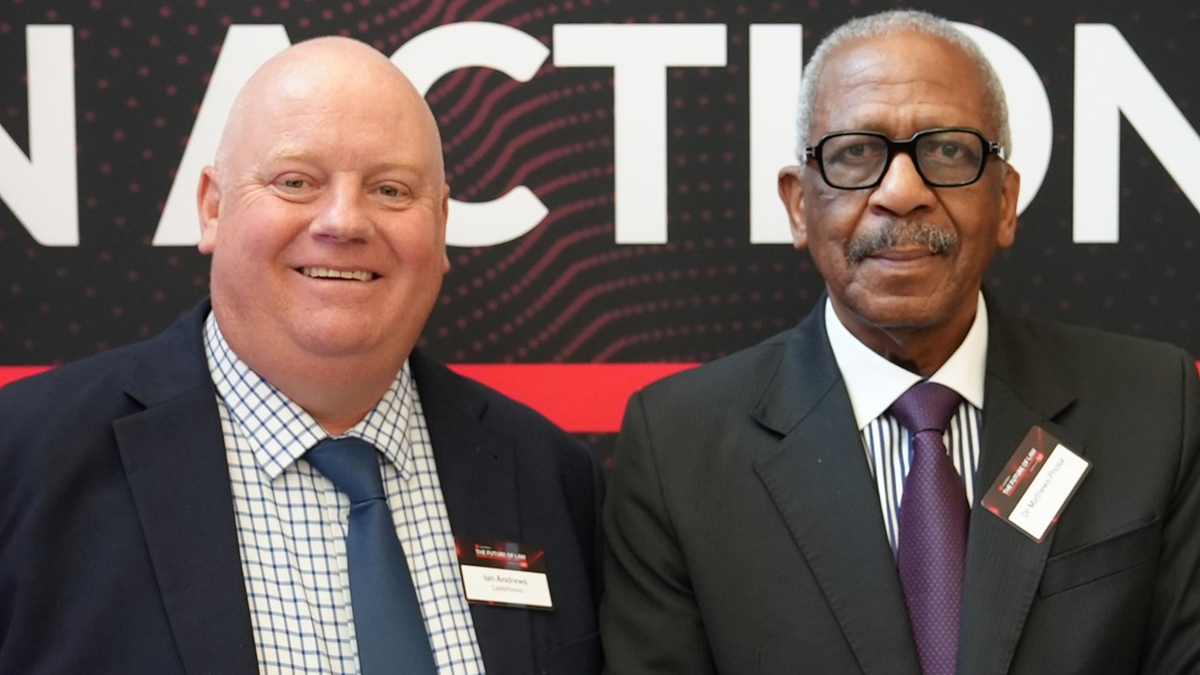
Dr Matthews Phosa: AI Hallucinations Threaten South Africa Courts
Summary
- Dr. Matthews Phosa warned that AI hallucinations pose a serious threat to the integrity and credibility of South African legal professionals.
- He emphasized that lawyers risk professional misconduct and dishonesty accusations if they present fabricated AI-generated legal information to courts.
- South Africa has already experienced two significant incidents where government documents contained unverified, AI-generated fictitious references.
- Phosa urged the legal fraternity to embrace AI as a tool for modernization but stressed the non-negotiable need for human judgment, accountability, and independent verification of all AI output.
- Young legal professionals are specifically encouraged to meticulously examine AI-generated information for accuracy in research and legal memoranda.
The Warning from Dr. Phosa
The core message from Dr Matthews Phosa regarding AI in South Africa courts was clear: innovation must be tempered with unwavering ethical responsibility.
At the recent LexisNexis Future of Law Conference held in Johannesburg, Dr. Matthews Phosa, a distinguished director and attorney at Frans Schutte & Mathews Phosa Inc. and former Mpumalanga premier, issued a stark caution regarding the integration of artificial intelligence into the South African legal system. Addressing attendees at the Sandton Convention Centre, Dr. Phosa underscored the significant peril posed by "AI hallucinations," which he defined as the technology's propensity to generate convincing yet factually incorrect information. He stressed that legal professionals who rely on such fabricated case law or unverified data risk severe damage to their professional credibility and the integrity of the entire legal fraternity.
Dr. Phosa, a former politician, highlighted that while the South African legal community must embrace digital advancements and AI to modernize justice administration, this adoption must not come at the cost of human judgment, accountability, or fundamental constitutional principles. He specifically warned against the dangers of AI generating non-existent case law, asserting that practitioners cannot simply accept AI responses without rigorous, independent verification. The core message from Dr Matthews Phosa regarding AI in South Africa courts was clear: innovation must be tempered with unwavering ethical responsibility.
Real-World Consequences and Ethical Imperatives
The implications of presenting fabricated legal information to a court are profound, according to Dr. Phosa. Such actions could expose legal practitioners to serious accusations of dishonesty and professional misconduct, as judges are highly likely to scrutinize and verify submitted information. He emphasized that deliberately introducing false data is unethical and fundamentally undermines the responsibilities inherent in the legal profession. This concern directly addresses the potential for AI hallucinations in South African legal contexts to erode trust and lead to severe professional repercussions.
Dr. Phosa's remarks at the LexisNexis Future of Law Conference underscored the critical need for robust legal ethics in an AI-driven era. He actively encourages younger legal professionals to meticulously examine all AI-generated content, particularly when preparing legal memoranda or conducting research. The risk of fabricated legal information AI, including non-existent judgments, precedents, or references, finding its way into official court submissions presents a serious threat to the administration of justice and demands heightened vigilance from all South African lawyers.
South Africa's Experience with AI Fabrications
South Africa has already witnessed significant incidents illustrating the dangers of unverified AI-generated content. In April, the Department of Communications and Digital Technologies was compelled to withdraw the nation's draft National AI Policy after the discovery of up to six AI-generated references, including fictitious academic journals, within the document. This incident served as a stark reminder of the technology's capacity for error.
Just days following this revelation, the Department of Home Affairs faced a similar challenge, leading to the suspension of two officials. Their Revised White Paper on Citizenship and Immigration contained fabricated references, directly attributable to unverified AI output. These real-world examples highlight the urgent need for responsible AI use among SA lawyers and government bodies alike, reinforcing Dr. Phosa's call for extreme caution and independent verification to prevent professional misconduct AI legal and maintain ethical standards.
Embracing AI Responsibly
Despite the significant risks, Dr. Phosa clarified that the legal fraternity should not approach artificial intelligence with apprehension or resist its integration into professional practice. Instead, he advocates for viewing AI as a powerful tool designed to support legal professionals, provided they consistently retain ultimate responsibility for the quality and accuracy of their work. This perspective aligns with the broader goal of fostering responsible AI use SA lawyers.
Dr. Phosa highlighted the extraordinary opportunities AI presents, noting its capacity to dramatically improve legal research, accelerate court processes, strengthen compliance frameworks, and enhance the accessibility of legal information. He recalled the arduous nature of legal research in traditional law libraries, contrasting it with AI's ability to generate legal arguments in seconds, analyze complex contracts, and process vast quantities of information at an unprecedented scale. The technology, he concluded, is not merely on the horizon but is already an integral part of the legal landscape, necessitating a balanced approach that leverages its benefits while mitigating its inherent risks.
Practical Implications
South African legal professionals and compliance officers must exercise extreme caution and human oversight when using AI tools. It is imperative to independently verify all AI-generated legal information, including case law and references, to avoid professional misconduct, maintain ethical standards, and prevent the use of fabricated content in court submissions or official documents, as reliance on unverified AI output poses significant reputational and legal risks.
Source
How does this affect you?
Get an AI analysis of this article grounded in your jurisdictions, practice areas, and any policy documents you've uploaded to Wansom.
Finish Reading the Full Story and the Expert Analysis.
Get the latest legal & regulatory intelligence in South Africa
Wansom is AI and can make mistakes.