
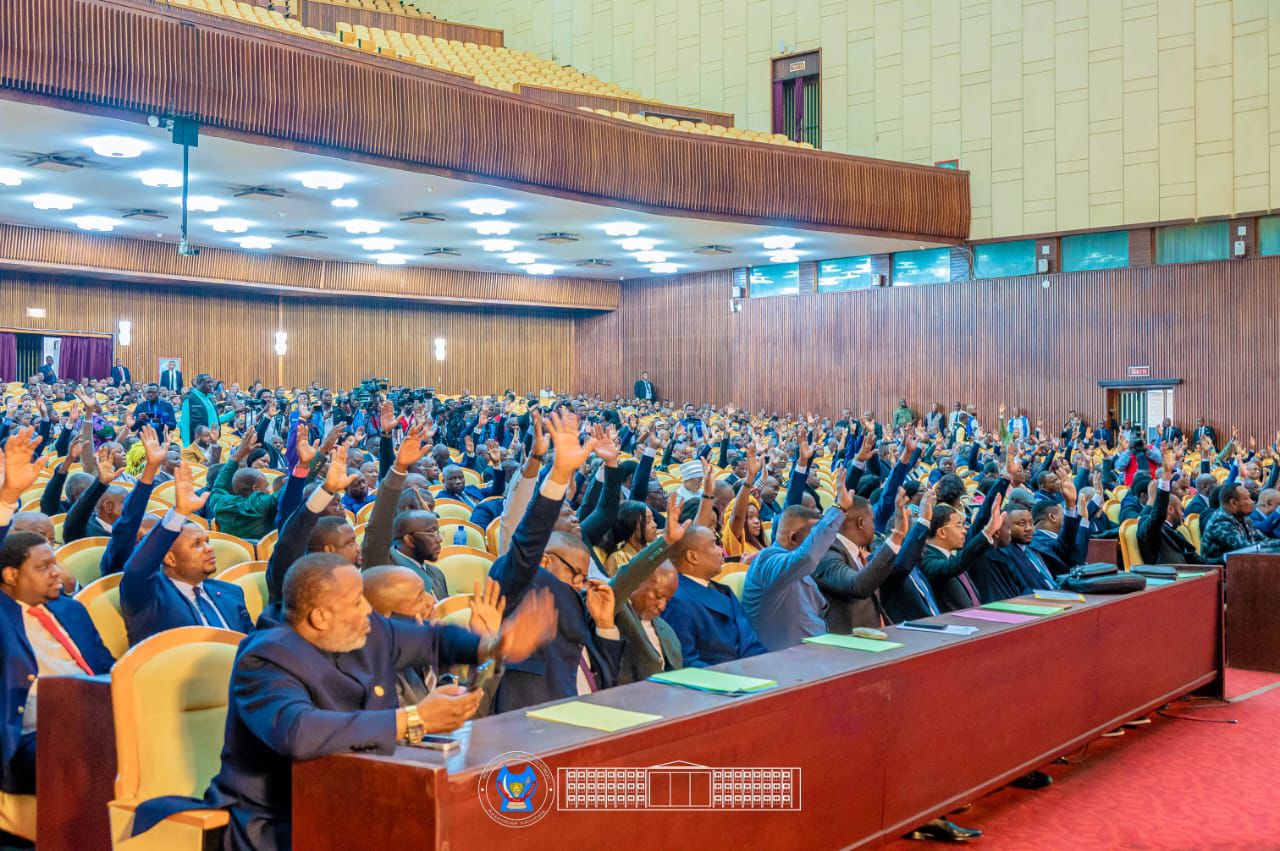
RDC Loi Référendum Union Sacrée: Coalition Advances Bill, C64 Struggles
Summary
- Congolese media is currently focused on a proposed referendum law being discussed in the September parliamentary session.
- The Union Sacrée pour la Nation is actively advancing this referendum bill through the legislature.
- The C64 coalition is reportedly struggling to form a unified opposition against the proposed law.
- Former President Joseph Kabila and opposition leader Moïse Katumbi are noted to be in retreat from the debate surrounding the bill.
- The legislative progress of this referendum bill could lead to significant constitutional or electoral changes in the DRC.
Legislative Focus on Referendum Bill
Lawyers and compliance officers in the DRC are therefore advised to closely monitor the legislative progress of this referendum bill, as its eventual passage could introduce significant constitutional or electoral changes, potentially impacting legal frameworks, political stability, and future business operations.
Current political discourse in the Democratic Republic of Congo's capital is heavily influenced by the ongoing September parliamentary session. Media outlets, including both traditional newspapers and online platforms, are closely scrutinizing the legislative agenda. A prominent item commanding significant attention within these discussions is a proposed referendum law. This bill is not merely a procedural matter but has emerged as a central point of political commentary and debate across the nation.
The deliberations surrounding this `Loi sur le référendum RDC` are taking place amidst a dynamic political environment. Lawmakers are engaged in the intricate process of arbitration, weighing various perspectives and potential impacts of the proposed legislation. The very nature of a referendum bill suggests the possibility of direct public consultation on matters of national importance, making its progression through parliament a critical indicator of future governance directions in the `République Démocratique du Congo législation`.
Political Alignments and Strategic Positions
The political landscape surrounding the `RDC loi référendum Union Sacrée` reveals distinct and contrasting approaches from key political actors. The ruling coalition, known as the Union Sacrée pour la Nation (USN), is actively driving this legislative initiative forward. Their concerted efforts indicate a clear intent to see the referendum bill advance through the parliamentary process, signaling a strategic move to potentially reshape aspects of the country's legal or constitutional framework. The `Union Sacrée pour la Nation RDC` appears to be leveraging its parliamentary strength to push this agenda.
In contrast, the C64, a grouping of political forces, is reportedly facing significant challenges in organizing a unified and effective opposition to the proposed law. Their struggle to "make a front" suggests difficulties in coalescing dissenting voices or presenting a cohesive alternative vision. This apparent disunity or lack of strong counter-movement from the `C64 RDC référendum` could facilitate the smoother passage of the bill. Furthermore, two influential political figures, former President Joseph Kabila and prominent opposition leader Moïse Katumbi, are noted to be in a state of retreat or reduced engagement concerning this particular legislative debate. Their diminished public presence or active involvement in the referendum discussions marks a notable shift in the political dynamics, potentially leaving a vacuum for the USN's agenda to proceed with less direct high-profile challenge.
Broader Implications for DRC Governance
The progression of this referendum bill holds substantial implications for the future of governance and political stability within the Democratic Republic of Congo. Should the `Loi sur le référendum RDC` successfully navigate the legislative hurdles, it could potentially introduce significant constitutional or electoral changes. Such alterations could redefine the powers of various state institutions, modify electoral processes, or even impact fundamental rights, thereby reshaping the legal frameworks that underpin the nation.
The current political momentum, characterized by the `Union Sacrée pour la Nation RDC`'s proactive stance and the `C64 RDC référendum`'s apparent difficulties in mounting a robust opposition, suggests a period of potential legislative transformation. The observed withdrawal of figures like `Joseph Kabila RDC référendum` and `Moïse Katumbi RDC référendum` from the immediate fray surrounding this bill further underscores the unique political climate in which these critical decisions are being made. Lawyers and compliance officers in the DRC are therefore advised to closely monitor the legislative progress of this referendum bill, as its eventual passage could introduce significant constitutional or electoral changes, potentially impacting legal frameworks, political stability, and future business operations.
Practical Implications
Lawyers and compliance officers in the DRC should closely monitor the legislative progress of this referendum bill, as its eventual passage could introduce significant constitutional or electoral changes, potentially impacting legal frameworks, political stability, and future business operations.
Source
How does this affect you?
Get an AI analysis of this article grounded in your jurisdictions, practice areas, and any policy documents you've uploaded to Wansom.
Finish Reading the Full Story and the Expert Analysis.
Get the latest legal & regulatory intelligence in DR Congo
Wansom is AI and can make mistakes.