
DRC: Government, INAP Propose Public Agent Salary Reform for Pay Equity
Summary
- A joint commission in Kinshasa, comprising government and public administration unions, developed recommendations for public agent salary reform.
- The proposed reform aims to reduce pay disparities and improve social conditions for state employees in the Democratic Republic of Congo.
- Key recommendations include cleaning payroll files, rationalizing bonuses, and integrating technicality bonuses into basic salaries.
- The reform document will be submitted to the Council of Ministers for validation before regulatory formalization.
- Vice-Prime Minister Jean-Pierre Lihau views the recommendations as a roadmap to modernize salary policy and enhance social justice.
Recent Developments in Public Sector Pay
Jean-Pierre Lihau, the Vice-Prime Minister responsible for the Fonction publique, articulated that the outcomes of these discussions represent a genuine roadmap for elevating the social conditions of public agents.
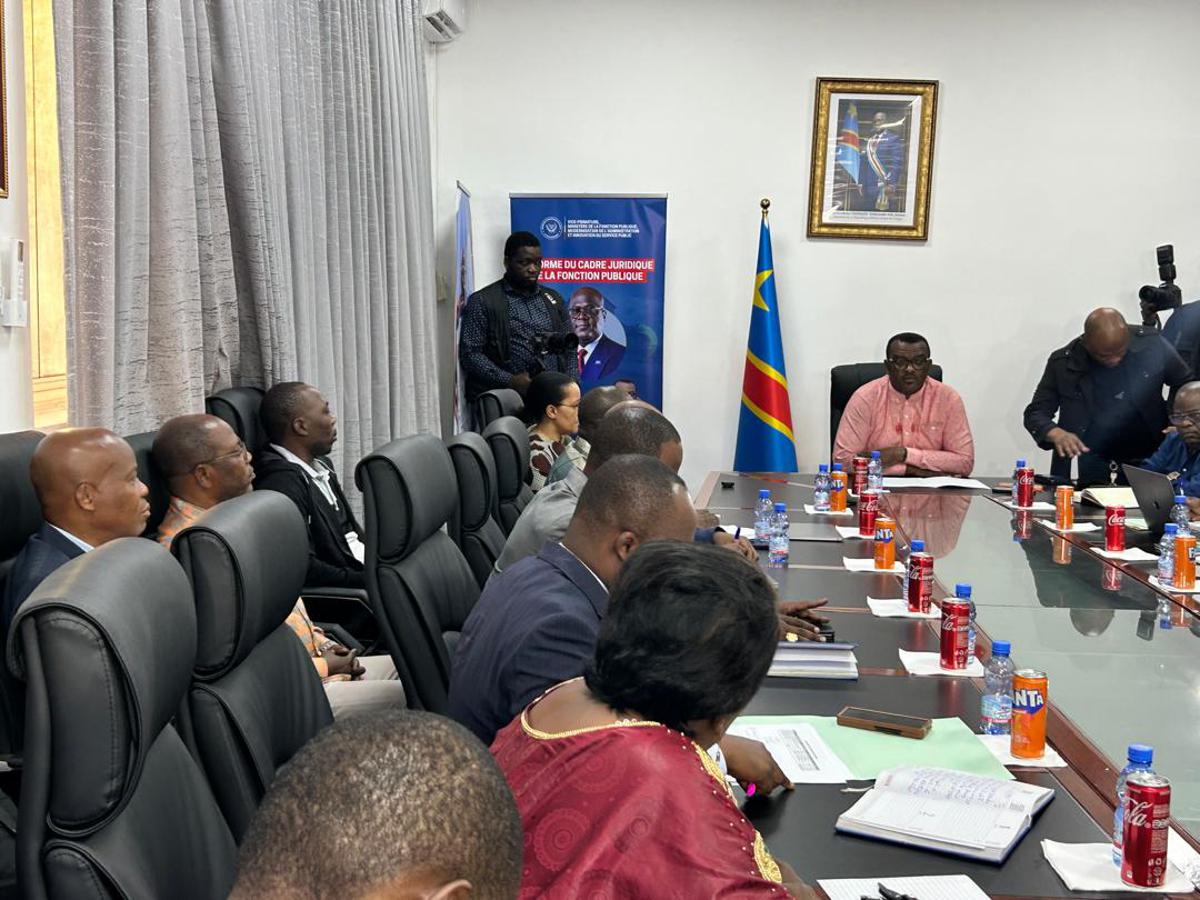
A significant step towards addressing remuneration imbalances within the République démocratique du Congo fonction publique was recently taken during a joint commission meeting in Kinshasa. On November 6 and 7, representatives from the government and the Intersyndicale nationale de l’administration publique (INAP) convened to deliberate on a comprehensive DRC public agent salary reform. This Kinshasa commission paritaire salaires aimed to formulate recommendations designed to narrow existing pay disparities and enhance the social welfare of state employees.
The discussions culminated in the development of a foundational reference document, which outlines the proposed changes. This document is now slated for review by the Council of Ministers, marking a crucial stage before its official formalization through regulatory channels. The overarching objective of this initiative is to foster a more equitable and harmonized remuneration framework across the diverse categories of state agents and services, thereby promoting greater Congo civil service pay equity. This move signifies the nation's commitment to advancing its public sector compensation policies.
Core Proposals for Salary Reform
The recent deliberations highlighted several critical areas for immediate attention as part of the broader réforme salariale agents publics RDC. Participants emphasized the necessity of purifying the existing payroll records, a process known as "assainissement du fichier de paie," to ensure accuracy and transparency. Furthermore, a key recommendation involves the rationalization of various bonuses currently in place, with a view to streamline compensation structures.
A progressive integration of technicality-based bonuses directly into the basic salary structure was also proposed, aiming to simplify and standardize remuneration. It is important to note that the ultimate adoption of the final report and the revised salary scale remains contingent upon the validation and arbitration by the government, specifically through the Council of Ministers. This ensures that all proposed adjustments align with national policy and fiscal realities. These measures are central to achieving the stated goal of reducing salary disparities observed across different governmental departments and employee classifications.
Implementation Pathway and Vision
Beyond the immediate structural adjustments, the commission also put forth recommendations concerning the implementation process and future budgetary planning. A significant point raised was the imperative to account for newly registered agents who have not yet received remuneration (N.U.), encompassing both central and provincial administrations. This ensures that all eligible public servants are properly integrated into the payroll system.
The integration of the new salary grid into upcoming financial laws is another crucial recommendation, providing the necessary legal and budgetary framework for its sustained application. The implementation of this comprehensive DRC public agent salary reform is envisioned to be progressive, carefully calibrated to align with the state's budgetary capacities. Jean-Pierre Lihau, the Vice-Prime Minister responsible for the Fonction publique, articulated that the outcomes of these discussions represent a genuine roadmap for elevating the social conditions of public agents. He further stated that the recommendations provide concrete strategies for modernizing the public administration's salary policy and reinforcing social justice within the Congolese civil service.
Practical Implications
Lawyers advising public sector entities or employees in the DRC should closely monitor the upcoming formalization and implementation of this proposed salary reform. It will likely lead to new regulations impacting compensation structures, potentially affecting budget allocations, collective bargaining, and compliance requirements for public bodies and their personnel.
Source
How does this affect you?
Get an AI analysis of this article grounded in your jurisdictions, practice areas, and any policy documents you've uploaded to Wansom.
Finish Reading the Full Story and the Expert Analysis.
Get the latest legal & regulatory intelligence in DR Congo
Wansom is AI and can make mistakes.