
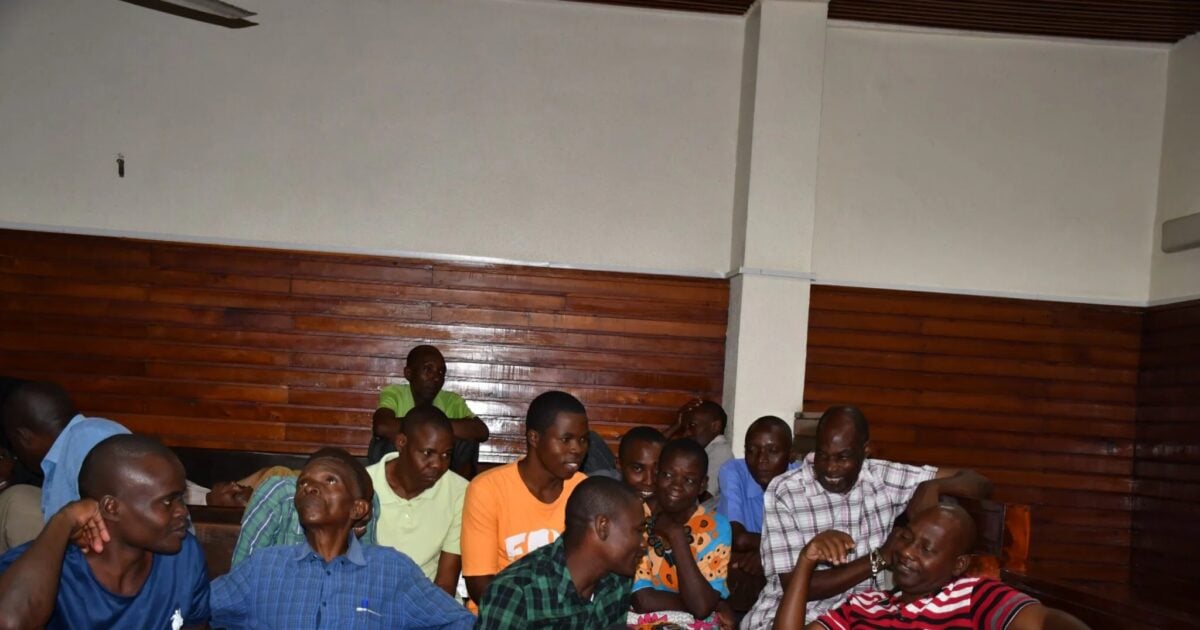
Kenya DPP Seeks Death Penalty for Pastor Mackenzie in Shakahola Massacre
Summary
- The Director of Public Prosecutions has requested the death penalty for Paul Nthenge Mackenzie in the Shakahola massacre case.
- Mackenzie and 28 co-accused were convicted of 191 murder counts, including 190 children.
- The prosecution cited Section 204 of the Penal Code and Muruatetu jurisprudence to support capital punishment.
- Life imprisonment was sought for 27 other convicts, with differentiated sentencing proposals based on culpability and rehabilitation potential.
- Sentencing for all 29 convicted individuals is scheduled for November 6, 2026, by Justice Diana Kavedza.
Prosecution Seeks Capital Punishment
The Director of Public Prosecutions (DPP) has formally requested the High Court in Mombasa to impose the death penalty on Paul Nthenge Mackenzie, the controversial preacher implicated in the tragic Shakahola massacre.
The Director of Public Prosecutions (DPP) has formally requested the High Court in Mombasa to impose the death penalty on Paul Nthenge Mackenzie, the controversial preacher implicated in the tragic Shakahola massacre. This plea was made during the ongoing sentencing proceedings, where Deputy Director of Public Prosecutions Jami Yamina presented the state's arguments. The prosecution contends that capital punishment represents the most fitting retribution for Mackenzie, citing the extreme gravity of the offenses and the devastating loss of 191 lives, which included 190 children.
Mackenzie, alongside 28 co-accused individuals, was found guilty on 191 counts of murder. These convictions stem from the deaths that occurred within the Shakahola Forest, located in Malindi Sub-County, Kilifi County, over a period spanning from January 2021 to September 2023. The prosecution's stance emphasizes that while supporting the death penalty for Mackenzie, it remains contingent on the court's consideration of any mitigating factors he might present, such as remorse, regret, or potential for rehabilitation.
Legal Framework and Sentencing Arguments
In advocating for the death penalty, the prosecution specifically invoked Section 204 of Kenya's Penal Code, alongside the Supreme Court's pivotal Muruatetu jurisprudence. These legal precedents, according to the state, firmly establish that the circumstances surrounding the Shakahola case unequivocally warrant the ultimate penalty. The arguments presented underscored a multi-faceted approach to sentencing, aiming to achieve retribution, deter future crimes, safeguard the public, and unequivocally denounce the heinous nature of the offenses committed.
Beyond Mackenzie, the DPP also urged the court to sentence 27 other convicted individuals to life imprisonment. This recommendation is rooted in the belief that such a punishment would adequately reflect the severity of their crimes while simultaneously protecting society from any further potential harm. The prosecution highlighted the importance of considering restorative justice and rehabilitation as part of the sentencing objectives, even for those facing life sentences, acknowledging the complex factors at play in such a profound case.
Differentiated Approaches for Co-Accused
The prosecution's submissions also detailed a nuanced approach for the co-accused, recognizing varying levels of culpability and potential for rehabilitation. Yamina argued that many of the other convicts had been profoundly indoctrinated by Mackenzie, rendering them susceptible to reoffending. Consequently, the court was urged to meticulously assess each individual's degree of involvement and their ongoing risk of radicalisation. To facilitate this, the National Counter Terrorism Centre (NCTC) provided recommendations, proposing that these convicts voluntarily engage in rehabilitation programs and participate in counter-narrative initiatives to aid their eventual reintegration into society.
Furthermore, the DPP presented specific proposals should the court opt against imposing life imprisonment for the 27 co-accused. In such a scenario, consecutive sentences were suggested, emphasizing that each of the 191 deaths constitutes a distinct murder offense. To guide sentencing, the prosecution also recommended categorizing victims into three age groups: children up to seven years old, those between eight and 14, and minors aged 15 to 18. A unique arrangement was proposed for Enos Amanya Ngala, who pleaded guilty to all 191 murder counts. For Ngala, the prosecution requested adherence to his plea-bargaining agreement, suggesting a custodial rehabilitation program lasting between 24 and 30 months, with periodic progress reports to inform a subsequent review of his sentence. This proposal factors in a proposed 11-year custodial term, the time Ngala has already spent in remand, and applicable remission. Justice Diana Kavedza is scheduled to deliver the sentences for all 29 convicted individuals on November 6, 2026.
Practical Implications
This case sets a precedent for the DPP's aggressive stance on capital punishment in mass murder cases, particularly those involving religious extremism, and provides insight into the sentencing factors and legal arguments (e.g., Muruatetu jurisprudence, Section 204 Penal Code) that prosecutors will deploy in such high-profile matters. Lawyers should note the differentiated sentencing proposals for co-accused based on culpability, age, and plea bargains, which could inform defense strategies in complex multi-defendant trials.
Source
How does this affect you?
Get an AI analysis of this article grounded in your jurisdictions, practice areas, and any policy documents you've uploaded to Wansom.
Wansom is AI and can make mistakes.