
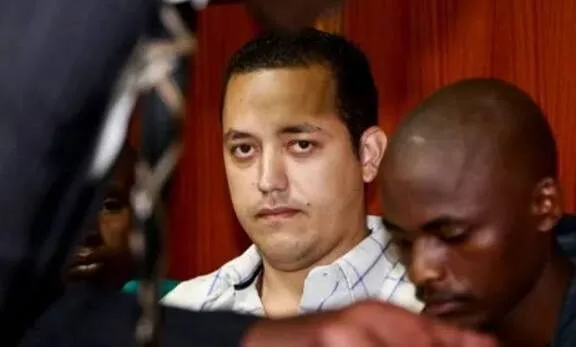
DPP Supreme Court: Seeks to Uphold Dwight Sagaray Diplomatic Immunity
Summary
- The DPP has urged Kenya's Supreme Court to uphold the 20-year murder conviction of former Venezuelan diplomat Dwight Sagaray.
- Sagaray's appeal, Petition No. E030 of 2026, challenges Kenyan courts' jurisdiction, claiming his diplomatic immunity was not expressly waived.
- The prosecution argues Sagaray's diplomatic functions were terminated by Venezuelan authorities, negating his immunity.
- The conviction, upheld by the Court of Appeal in March 2025, relies on the cumulative weight of circumstantial evidence.
- The Supreme Court's decision will clarify the precise scope and termination of diplomatic immunity for foreign officials in Kenya.
The Ongoing Legal Battle at the Supreme Court
The Supreme Court's forthcoming decision in this DPP Supreme Court Dwight Sagaray diplomatic immunity appeal is poised to offer crucial clarity on the precise scope and termination of diplomatic functions for foreign officials operating within Kenya's jurisdiction.
The Director of Public Prosecutions (DPP) has formally requested Kenya's Supreme Court to affirm the conviction and 20-year prison sentence handed down to Dwight Sagaray, a former official at the Venezuelan Embassy. Sagaray was found guilty in connection with the 2012 murder of Ambassador Olga Fonseca Jimenez in Nairobi. This appeal follows a judgment by the Court of Appeal on March 7, 2025, which had already upheld the initial conviction.
Sagaray initiated his challenge before the Supreme Court on August 7, 2026, under Petition No. E030 of 2026. His petition specifically contests the appellate court's ruling, primarily arguing that Kenyan judicial bodies lacked the authority to prosecute him. This jurisdictional claim is central to his appeal, alongside a challenge to the evidential basis that led to his conviction. The Supreme Court Deputy Registrar has since issued a directive for the petition to be presented to the Deputy Chief Justice, who will oversee the empanelment of a judicial bench and provide further procedural instructions for the case.
Contesting Diplomatic Immunity and Jurisdiction
A core contention in the DPP Supreme Court Dwight Sagaray diplomatic immunity case revolves around the applicability and termination of diplomatic functions for the former Venezuelan diplomat. Sagaray asserts that Kenyan courts were without proper jurisdiction to try him because the Venezuelan government had not explicitly waived his diplomatic immunity, which he claims remained active. This argument posits that without such an express waiver, his prosecution was fundamentally unlawful.
Conversely, the DPP maintains that Sagaray's diplomatic status had ceased prior to his prosecution. The prosecution's position is grounded in official communications from Venezuelan authorities, which reportedly confirmed the termination of his diplomatic mission and the cancellation of his diplomatic passport. Furthermore, the DPP contends that any residual immunity Sagaray might have possessed would not extend to shield him from legal action for acts committed outside the scope of his official diplomatic duties, thereby defining Venezuelan diplomat immunity limits within the context of the Olga Fonseca Jimenez case. This particular aspect is crucial for clarifying Kenya diplomatic immunity jurisdiction.
The Evidential Foundation of the Conviction
Beyond the jurisdictional dispute, the appeal also scrutinizes the evidentiary foundations of Sagaray's conviction. The prosecution, in its written submissions, argues that the evidence presented during the initial trial was robust and sufficient to warrant the conviction, which was subsequently affirmed by the Court of Appeal. They emphasize that the conviction was not based on mere suspicion, perceived motive, or Sagaray's association with another suspect, Mohammed Ahmed Mohammed Hassan, but rather on the accumulated weight of circumstantial evidence meticulously considered by both the trial court and the appellate body.
Specific circumstantial elements highlighted by the prosecution include a dispute over the control of the Venezuelan Embassy, the nature of Sagaray's relationship with Hassan, and various events surrounding Ambassador Fonseca's murder. The DPP's legal argument posits that a conviction can be sustained by circumstantial evidence, provided that the collective facts establish guilt beyond a reasonable doubt and effectively rule out any plausible alternative explanations for the events. However, Sagaray disputes this, contending that the courts improperly relied on his alleged motive and the benefits he supposedly stood to gain, along with his connection to Hassan, without presenting direct evidence that unequivocally linked him to the killing.
Broader Implications for Diplomatic Protections in Kenya
The Olga Fonseca Jimenez case has, since its inception in July 2012, drawn significant public and legal attention to the complexities surrounding diplomatic immunity and the extent of legal protections afforded to foreign diplomatic officials in Kenya. The Supreme Court's forthcoming decision in this DPP Supreme Court Dwight Sagaray diplomatic immunity appeal is poised to offer crucial clarity on the precise scope and termination of diplomatic functions for foreign officials operating within Kenya's jurisdiction.
This ruling will provide vital guidance for legal practitioners advising foreign missions, diplomats, and international organizations regarding potential jurisdictional risks and the applicability of local criminal law, particularly in situations where diplomatic functions are contested or officially concluded. The outcome of Supreme Court Petition E030 of 2026 will therefore establish an important precedent, shaping the understanding of Kenya diplomatic immunity jurisdiction and the Venezuelan diplomat immunity limits for years to come.
Practical Implications
This Supreme Court appeal will clarify the precise scope and termination of diplomatic immunity in Kenya, providing critical guidance for lawyers advising foreign missions, diplomats, and international organizations on jurisdictional risks and the applicability of local criminal law, particularly when diplomatic functions are disputed or terminated.
Source
How does this affect you?
Get an AI analysis of this article grounded in your jurisdictions, practice areas, and any policy documents you've uploaded to Wansom.
Finish Reading the Full Story and the Expert Analysis.
Get the latest legal & regulatory intelligence in Kenya
Wansom is AI and can make mistakes.