
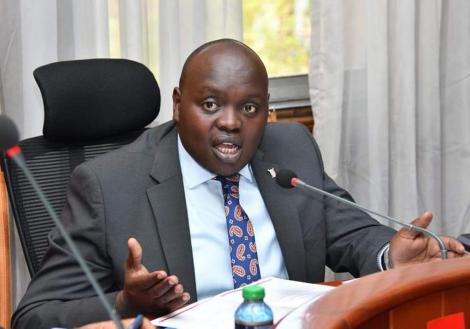
Cherargei Kenya: Presidential Term Limit Extension Proposal Revived
Summary
- Nandi Senator Samson Cherargei threatened to revive a proposal to extend presidential term limits if the opposition fails to organize for the 2032 elections.
- His previous Constitution of Kenya (Amendment) (No. 2) Bill, 2024, sought to extend terms for the President and other elected leaders from five to seven years.
- Under the prior proposal, a president serving two terms would remain in office for 14 years instead of the current 10.
- The Senate Justice, Legal Affairs and Human Rights Committee recommended rejecting the 2024 Bill after 99.99% of 168,801 submissions opposed it.
- Cherargei's own party, the United Democratic Alliance (UDA), distanced itself from the previous bill, citing incompatibility with its policies and constitutional values.
Renewed Threat to Presidential Term Limits
Any move to alter these fundamental aspects of the Constitution of Kenya would inevitably spark intense national debate and could potentially impact political stability.
Nandi Senator Samson Cherargei recently issued a statement indicating his potential intention to reintroduce a contentious proposal aimed at extending presidential term limits in Kenya. The senator explicitly stated that he might revive his plan to prolong President William Ruto's time in office if the political opposition fails to adequately organize itself in preparation for the 2032 general elections.
Addressing President Ruto directly, Senator Cherargei dismissed the President's detractors, asserting that they lacked a coherent political agenda. He emphasized that the national focus should remain on achieving equitable development across the country, rather than on the upcoming 2027 General Election. Cherargei confidently declared that President Ruto had already secured victory for 2027 and advised critics to direct their planning efforts towards 2032. He reiterated his warning, stating that any lack of organization from the opposition could prompt him to reintroduce his proposal for extending term limits, thereby allowing President Ruto to continue governing.
Details of the Previous Extension Proposal
Senator Cherargei's recent remarks echo a prior legislative effort he spearheaded through the Constitution of Kenya (Amendment) (No. 2) Bill, 2024. This earlier bill sought to significantly alter the tenure of various elected officials, proposing an extension from the current five years to seven years for the President and other leaders. Under this proposed amendment, a president serving the maximum two terms would potentially remain in office for a total of 14 years, a notable increase from the existing 10-year limit.
The scope of the 2024 Bill was not limited to the presidency; it also aimed to extend the terms of governors, senators, Members of Parliament (MPs), and Members of County Assemblies to seven years. Cherargei had previously defended these longer terms by arguing that a five-year period was insufficient for elected leaders to effectively implement their development agendas and fulfill campaign promises, suggesting that an extended tenure would provide administrations with more time to deliver on their commitments.
Overwhelming Public and Political Rejection
The proposed amendments outlined in the Constitution of Kenya (Amendment) (No. 2) Bill, 2024, encountered substantial opposition during the public participation phase. On November 1, 2024, the Senate Justice, Legal Affairs and Human Rights Committee formally recommended the rejection of the Bill. This recommendation followed an extensive review of public input, which included 168,801 submissions, with an overwhelming 99.99 percent of these submissions expressing opposition to the suggested changes, as reported by People Daily.
Furthermore, the proposal created a rift within Senator Cherargei's own political faction. The United Democratic Alliance (UDA), the party to which Cherargei belongs, publicly distanced itself from the Bill. The UDA characterized the proposed legislation as inconsistent with the party's established policies and fundamental constitutional values, underscoring the broad disapproval that the term limit extension proposal garnered across the political spectrum.
Implications for Kenyan Governance and Electoral Law
The recurring discussion around extending presidential term limits, particularly through proposals like the one advanced by Nandi Senator Cherargei, carries significant implications for Kenya's democratic framework and electoral law changes. Such initiatives, if ever formally re-introduced and pursued, challenge the established constitutional provisions that define the duration of leadership tenures, which are foundational to the country's governance structure.
Any move to alter these fundamental aspects of the Constitution of Kenya would inevitably spark intense national debate and could potentially impact political stability. The previous widespread opposition to the Constitution of Kenya (Amendment) (No. 2) Bill, 2024, highlights the public's strong sentiment regarding the preservation of existing term limits and the principles of democratic accountability.
Practical Implications
Lawyers and compliance officers should monitor any actual legislative reintroduction of proposals to extend presidential term limits, as such changes would have profound constitutional implications for Kenya's governance structure and political stability, impacting long-term legal and business planning. While currently a political threat, any formal bill would require close scrutiny for its potential effects on democratic processes and the rule of law.
Source
How does this affect you?
Get an AI analysis of this article grounded in your jurisdictions, practice areas, and any policy documents you've uploaded to Wansom.
Finish Reading the Full Story and the Expert Analysis.
Get the latest legal & regulatory intelligence in Kenya
Wansom is AI and can make mistakes.