
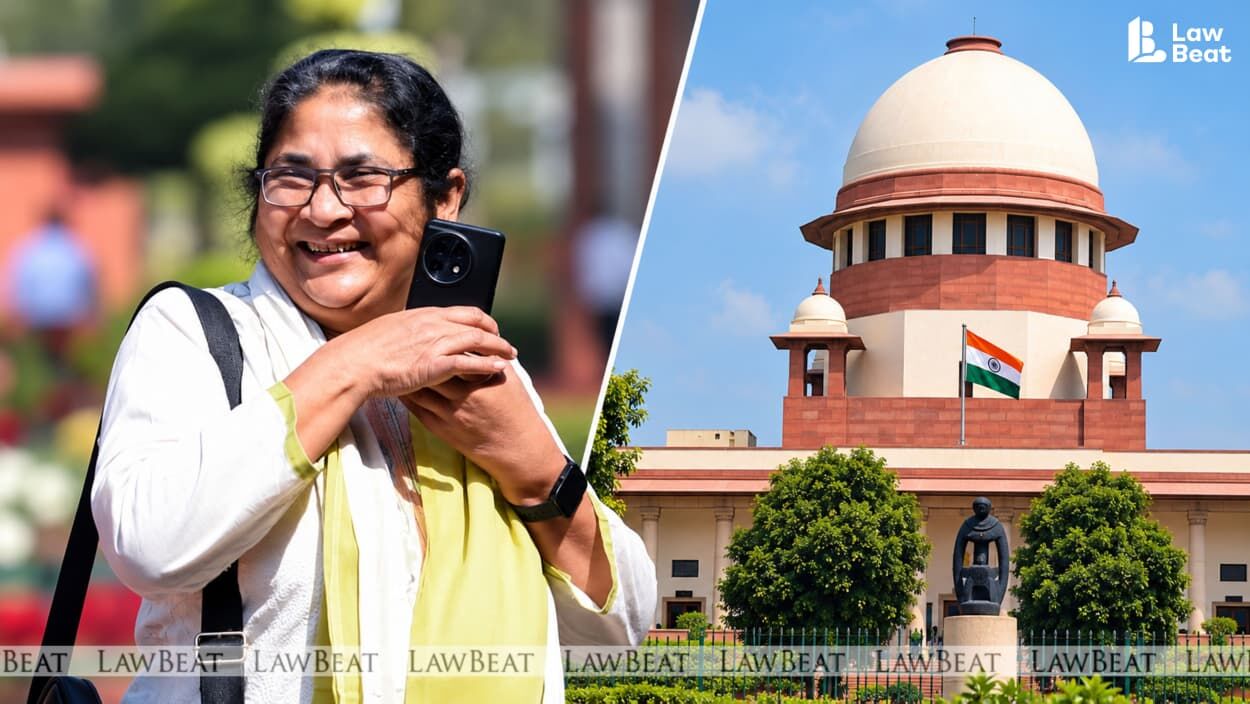
Dola Sen Challenges ECI Form 6 Tampering in Supreme Court
Summary
- TMC MP Dola Sen has petitioned the Supreme Court, alleging the Election Commission of India tampered with online Form 6 and falsely claimed judicial authorization for these changes.
- The Supreme Court has issued notice on Dola Sen's plea, which is being tagged with other petitions challenging the ECI's functioning.
- A batch of petitions questions Chief Election Commissioner Gyanesh Kumar's authority, alleging unilateral decisions on Special Intensive Revision of electoral rolls without the concurrence of other Election Commissioners.
- The ECI, in an affidavit, asserts that all SIR orders were issued unanimously and in compliance with constitutional provisions and the 2023 Act.
- The ECI clarified that it cannot amend Form 6, as only the Central government has the authority to do so.
Allegations of Form 6 Tampering Reach Supreme Court
The Court's eventual rulings will not only clarify the extent of the Chief Election Commissioner's powers within the multi-member body but also set precedents for how the ECI must demonstrate collective decision-making, particularly in sensitive areas like voter registration and electoral roll management.
TMC Member of Parliament Dola Sen has initiated proceedings in the Supreme Court, challenging what she describes as the Election Commission of India's (ECI) alleged alterations to the online Form 6. This form is crucial for voter registration. Sen's petition specifically highlights the ECI's purported justification for these changes, claiming the Supreme Court had authorized such modifications, particularly during the Special Intensive Revision (SIR) of electoral rolls in Bihar.
Appearing for Ms. Sen, Senior Advocate Menaka Guruswamy presented the case before the Supreme Court, emphasizing the ECI's "audacity" in asserting judicial approval for the alleged tampering. Guruswamy informed the bench that while the ECI issued a press note suggesting Supreme Court authorization for these changes, no such directive was given by the court regarding the Bihar SIR. She requested the court to issue a notice on the plea and consolidate it with other related matters already before the judiciary. The Supreme Court subsequently issued a notice concerning Ms. Sen's petition, while Senior Advocate Maninder Singh, representing the ECI, voiced objections to the remarks made by Ms. Sen's counsel, suggesting they were inappropriate for the judicial setting.
Broader Scrutiny of ECI's Functioning and CEC's Authority
The Supreme Court is currently addressing a series of petitions that collectively question the operational integrity of the Election Commission of India, extending beyond the specific allegations raised by Dola Sen. A bench led by Chief Justice of India Surya Kant, and including Justice Joymalya Bagchi and Justice V. Mohana, recently adjourned hearings on these consolidated matters. These petitions primarily focus on the exercise of powers by Chief Election Commissioner (CEC) Gyanesh Kumar, alleging that significant decisions, particularly those related to the Special Intensive Revision (SIR) of electoral rolls, were made without the necessary concurrence of the other two Election Commissioners.
Among these, a petition filed by Rakesh Kumar Singh is a prominent case. His counsel, Senior Advocate Vikas Singh, requested additional time to submit a rejoinder to the ECI’s counter-affidavit. Furthermore, Mr. Singh urged the Court to mandate the preservation of all internal communications and file notings within the ECI. This measure aims to enable the court to ascertain whether the contentious decisions were indeed reached through a unanimous process or if they were unilaterally imposed. In a related development, opposition leaders Rahul Gandhi and Mallikarjun Kharge have also filed a separate writ petition under Article 32 of the Constitution, echoing concerns that the CEC independently wielded the "collective powers" of the ECI during the SIR process. Their petition seeks a court order to compel the ECI to produce its internal files, minutes, and notings to verify the legality of its decision-making.
ECI's Defense and Constitutional Compliance
In response to the mounting legal challenges, the Election Commission of India submitted an affidavit to the Supreme Court two days prior to the recent hearing. This affidavit, filed by Deputy Election Commissioner Bhanu Prakash Yeturu, directly addresses the petition against Chief Election Commissioner Gyanesh Kumar. The ECI asserts that all Special Intensive Revision (SIR) orders, including those for Bihar and subsequent schedules for other states and union territories, were issued following unanimous decisions by the full Election Commission.
The ECI's affidavit further clarifies that these decisions were made in strict adherence to Article 324 of the Constitution of India, which outlines the powers of the Election Commission, and Section 18 of the Chief Election Commissioner and other Election Commissioners (Appointment, Conditions of Service and Term of Office) Act, 2023. The Commission also informed the Supreme Court that its decision-making process is comprehensive, incorporating suggestions, observations, varying viewpoints, and queries from all officials within its chain of command before a final decision is reached by the competent authority. Crucially, the ECI unequivocally refuted the "misleading contention" that it had amended Form 6, as specified in the Registration of Electors Rules, 1960. The Commission clarified that any amendment to Form 6 can only be enacted by the Central government, not by the ECI itself.
Implications for Electoral Integrity and ECI Autonomy
The ongoing legal proceedings before the Supreme Court carry significant implications for the integrity of India's electoral process and the operational autonomy of the Election Commission of India. The core of these challenges revolves around the transparency and legality of decisions made during critical electoral processes, such as the Special Intensive Revision of electoral rolls. Should the allegations of unilateral decision-making by the Chief Election Commissioner or unauthorized changes to voter registration forms be substantiated, it could undermine public confidence in the fairness and impartiality of elections.
The Court's eventual rulings will not only clarify the extent of the Chief Election Commissioner's powers within the multi-member body but also set precedents for how the ECI must demonstrate collective decision-making, particularly in sensitive areas like voter registration and electoral roll management. The demand for preserving internal communications and file notings underscores a broader push for greater accountability and transparency from constitutional bodies. The outcome of these cases will therefore be crucial in defining the boundaries of the ECI's authority and ensuring that electoral procedures remain robust and beyond reproach.
Practical Implications
Lawyers advising political parties or involved in election law should monitor this case closely, as the Supreme Court's decision on alleged ECI Form 6 tampering and the challenge to the CEC's decision-making process could significantly impact electoral procedures, voter registration validity, and the interpretation of the Election Commission's constitutional powers.
Source
How does this affect you?
Get an AI analysis of this article grounded in your jurisdictions, practice areas, and any policy documents you've uploaded to Wansom.
Finish Reading the Full Story and the Expert Analysis.
Wansom is AI and can make mistakes.